What is a cylinder liner and what does it do?
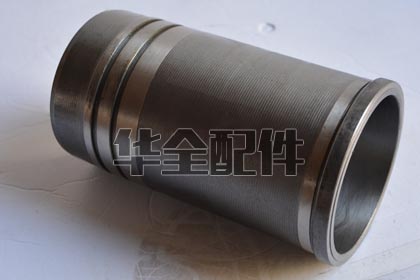
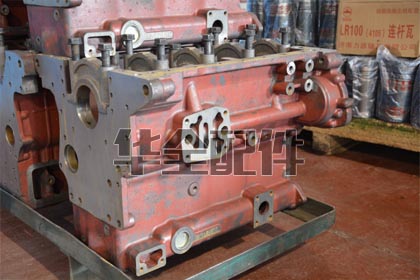
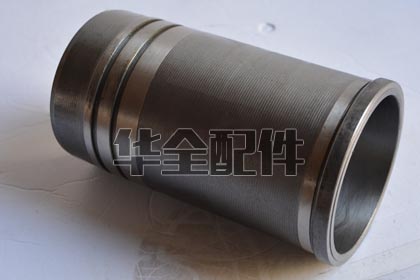
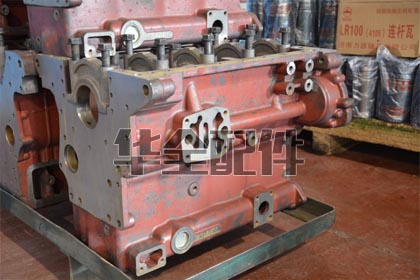
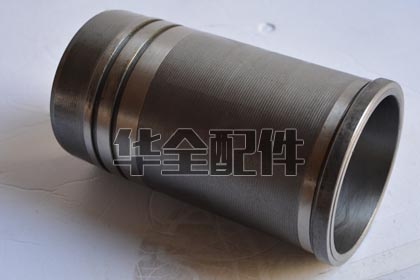
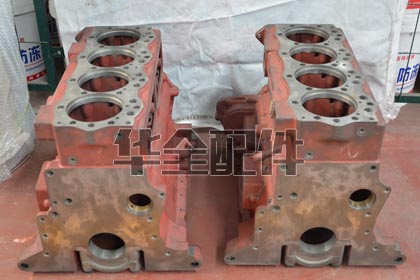
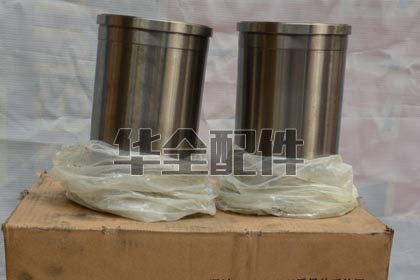
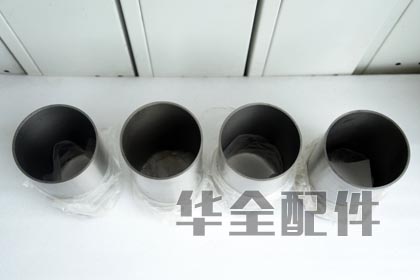
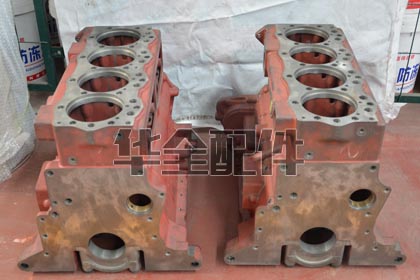
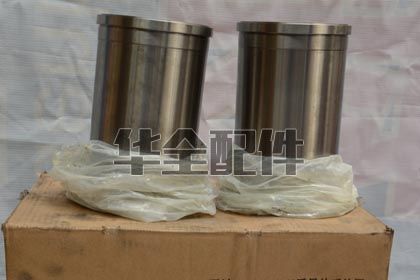
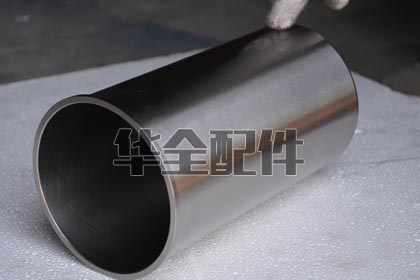
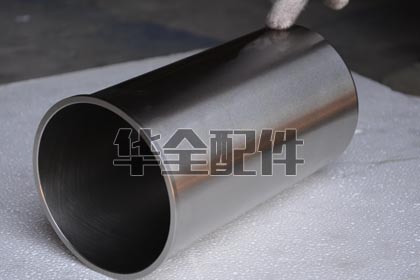
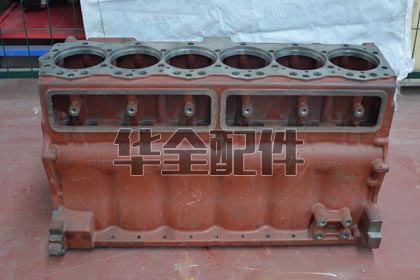
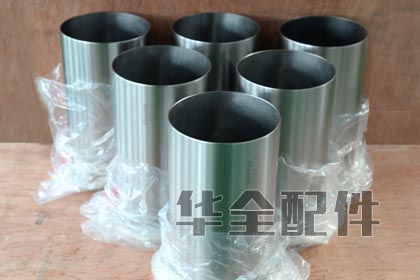
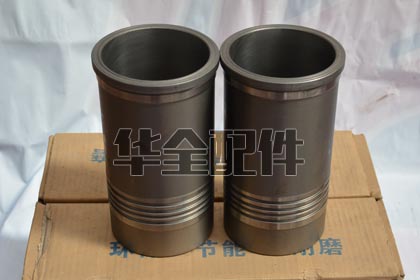
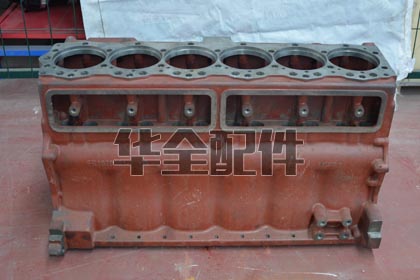
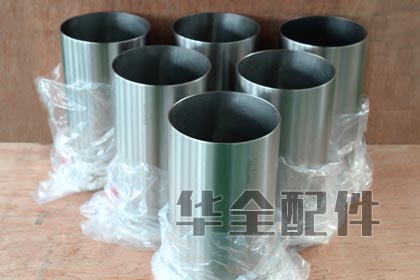
A cylinder liner (also called a cylinder sleeve) is a replaceable cylindrical insert pressed or fitted into the engine block that forms the bore in which the piston reciprocates. It provides the precision running surface for piston rings — the critical oil control and compression sealing interface. Key functions: (1) Wear surface — sacrificial component that takes all piston ring friction, manufactured from centrifugal-cast alloy iron with a plateau-honed cross-hatch pattern optimized for oil retention and ring seating; (2) Heat transfer — conducts combustion heat (the flame front temperature reaches 2,500+ degrees C) through the liner wall into the engine coolant (wet liners) or block casting (dry liners); (3) Combustion chamber containment — withstands peak pressure of 180-220 bar. The liner bore geometry must maintain 0.005-0.01mm cylindrical accuracy over diameters of 100-170mm — precision nearly at the level of optical manufacturing.
What is the difference between wet and dry cylinder liners?
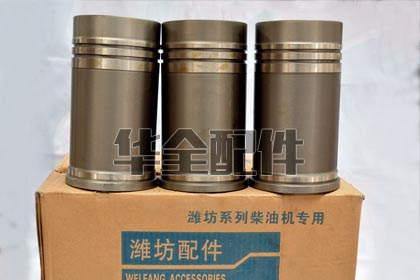
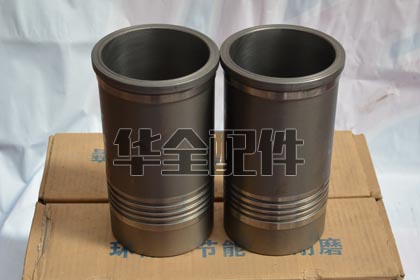
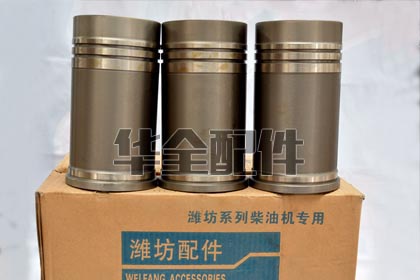
Wet liners have their outer surface in direct contact with engine coolant, sealed at the top by a flange and fire dam and at the bottom by 2-3 O-ring seals (usually EPDM or FKM rubber). Advantages: superior cooling, individual replacement without block machining, dominant in engines above 4 liters. Dry liners are press-fit into a fully machined bore in the block casting — no coolant contact. Advantages: block structural rigidity, no coolant leakage risk. Emerging third option: mid-stop liners, where coolant only contacts the upper portion (the hottest zone), with the lower portion supported by the block. HUAQUAN supplies all three types.
What are the symptoms of worn cylinder liners?
Worn liner symptoms: (1) Blue/grey exhaust smoke — oil passing worn rings in enlarged bores; (2) Increased oil consumption — typically doubling or tripling between overhauls; (3) Blow-by — combustion gas escaping past the rings, visible as pressure pulsing at the oil filler cap or crankcase breather; (4) Reduced compression — 10-20% lower across cylinders; (5) Hard starting — particularly on cold starts when piston-ring clearance is maximum; (6) Coolant in oil — progressing to wet liner O-ring failure, confirmed by milky oil on the dipstick (IMMEDIATELY SHUT DOWN). Measure bore wear at top ring reversal point, mid-stroke, and skirt area — taper exceeding 0.05mm or out-of-round exceeding 0.03mm mandates rebore/replacement.
Which engine brands are HUAQUAN cylinder liners compatible with?
HUAQUAN cylinder liners are manufactured for: Cummins (4BT, 6BT, 6CT, ISB, ISC, ISL, QSB, QSL, NT855, KTA19/38/50, QSK series), Perkins (1103-4008), Deutz (912-2015), Weichai (WD615, WD618, WP10/12/13/17, 226B, 6160-6200), Yuchai (YC4, YC6, YCK), Shangchai (SC4H-SC33W), Doosan, and all Chinese diesel platforms. Available in standard bore, oversizes: +0.25mm, +0.50mm, +0.75mm, +1.00mm. Each liner is centrifugal-cast from boron-alloyed iron (HB 210-280), plateau-honed to Ra 0.2-0.4 micrometers with 30-40-degree cross-hatch angle, and individually inspected for bore geometry.
What is cavitation erosion on wet cylinder liners?
Cavitation erosion is the most common failure mode of wet cylinder liners. Mechanism: high-frequency piston slap vibration (particularly on the thrust side) creates alternating pressure and vacuum waves in the adjacent coolant. During the vacuum phase, microscopic vapor bubbles nucleate on the liner's outer surface. During the following pressure phase, these bubbles collapse violently — the implosion creates a micro-jet of coolant impacting the liner surface at localized pressures exceeding 10,000 bar, physically removing cast iron particles. Over thousands of hours, this creates pinholes that eventually penetrate the liner wall — coolant leaks into the cylinder, and the engine hydrolocks. Prevention: maintain SCA nitrite levels at 1,200-3,200 ppm in the coolant; nitrite forms a sacrificial oxide film that absorbs cavitation energy.
What is the proper cylinder liner protrusion specification?
Liner protrusion (liner flange height above the block deck) is arguably the single most critical engine measurement after an overhaul. Typical specification for diesels: 0.02-0.08mm (0.0008-0.003 inches). Too low — the head gasket fire ring receives insufficient preload, combustion pressure will leak between the liner flange and the gasket, causing gasket erosion and eventual blow-out. Too high — excessive fire ring compression causes the gasket to crack, and the localized clamp load can distort the liner bore. Each liner must be individually measured with a dial indicator and shimmed or counterbored to spec. Variation between adjacent liners must not exceed 0.02mm to ensure uniform head gasket compression across all cylinders.
How do I remove and install wet cylinder liners?
Removal: (1) Use a hydraulic liner puller or purpose-built puller bridge — never hammer out (risks cracking the block counterbore); (2) Address seized liners with penetrating oil (24-hour soak) and gradual force. Installation: (1) Thoroughly clean the block counterbore — any debris under the flange distorts the liner and creates a coolant leak; (2) Test-fit the liner WITHOUT O-rings first — verify protrusion, smooth rotation in the counterbore; (3) Install new O-rings lubricated with rubber assembly lubricant (not petroleum grease — swells EPDM); (4) Press liner in by hand if possible — use a press only with even, controlled force; (5) Re-measure protrusion — if different from the test-fit, check for pinched O-ring or debris; (6) Verify bore gauge measurement in the installed position — confirm no distortion. Treat each liner as a precision instrument.
What is the plateau honing process for cylinder liners?
Plateau honing is a two-stage process that creates an optimized running surface: Stage 1 — rough honing with coarse stones (120-150 grit) creates deep cross-hatch valleys (0.5-0.8 micrometers depth) that serve as oil reservoirs; Stage 2 — finish plateau honing with fine stones or brushes removes the sharp peaks created by rough honing without deepening the valleys, producing a surface where 60-80% of the area is a smooth plateau (Ra 0.1-0.2 micrometers) for ring contact and the remaining area is deeper valleys holding oil. This reduces break-in time from 100+ hours to 20-50 hours while improving long-term oil control. All HUAQUAN cylinder liners are plateau-honed to the engine manufacturer's exact specifications.
How do I measure cylinder liner wear?
Use a calibrated dial bore gauge accurate to 0.001mm: (1) Measure at three vertical positions — top ring reversal zone (approximately 10-15mm from top when the top ring changes direction), mid-stroke (approximately 60-80mm), and skirt area (approximately 10mm from the bottom); (2) At each position, measure at two axes — parallel and perpendicular to the crankshaft; (3) Record all measurements. Calculate: taper (difference between top and bottom), out-of-round (difference between axes at each position), and maximum wear (largest diameter minus original bore specification). Compare to the engine's service limits — typically: maximum taper 0.05-0.08mm, maximum out-of-round 0.03-0.05mm, maximum overall wear 0.10-0.15mm for medium-duty diesels. Exceeding any limit requires reboring to oversize or liner replacement.
What is the cross-hatch angle and why does it matter?
The cross-hatch angle is the intersection angle of honing scratches — typically 30-50 degrees included angle (that is, 30 to 50 degrees between lines, or 15 to 25 degrees from horizontal). This angle is a precise compromise: a shallower angle (closer to horizontal/15 degrees) retains more oil in the grooves, providing better ring lubrication but potentially higher oil consumption; a steeper angle (closer to vertical/25 degrees) drains oil faster for lower consumption but may compromise top ring lubrication. The ideal balance for diesel generators is 30-40 degrees. HUAQUAN liners are honed on CNC honing machines that automatically maintain angle, stone pressure, and stroke speed for consistent, documented results.
What causes cylinder liner scoring?
Liner scoring — deep vertical scratches on the bore surface — is caused by: (1) Dirt/debris ingestion through failed or poorly maintained air filtration — the number one cause; (2) Piston ring breakage — broken ring fragments embed in the piston skirt and machine grooves in the liner; (3) Fuel wash — excess unburned fuel washes away the oil film and piston rings run dry on the liner; (4) Overheating — oil film breaks down above 200 degrees C liner surface temperature; (5) Insufficient break-in — rings not yet fully seated combined with high load causes localized galling; (6) Coolant contamination — glycol in the oil reduces its lubricity. Shallow scoring (under 0.02mm) can be honed out during overhaul. Deep scoring (over 0.05mm) requires reboring to oversize or liner replacement.
Can cylinder liners be rebored to oversize?
Yes, cylinder liners can be rebored to oversize if: (1) The manufacturer specifies oversize pistons are available (typically 0.25mm, 0.50mm, 0.75mm, 1.00mm oversize); (2) Wall thickness after boring remains above the minimum (typically 4-5mm minimum wall at the thinnest point for wet liners); (3) The liner is removed, bored/honed on a rigid boring machine (not a portable bar), plateau-honed to specification, and reinstalled with the correct protrusion. For dry liners: after reboring to oversize, a new oversize liner is pressed in, then the ID may require final honing to fit the piston. HUAQUAN supplies both standard and oversize pistons and rings to match rebored liners.
What is the relationship between cylinder liner surface finish and oil consumption?
The liner surface finish directly controls oil consumption. The plateau-honed surface creates two functional zones: the plateaus (60-80% of the surface area) provide the bearing surface for ring contact — they must be smooth enough (Ra 0.1-0.2 micrometers) to prevent excessive ring wear, yet rough enough to hold a boundary layer of oil. The valleys (20-40% of the area) are cross-hatch grooves 0.5-0.8 micrometers deep that serve as oil reservoirs — too deep causes high oil consumption (oil burns off before the next stroke); too shallow causes insufficient ring lubrication and accelerated wear at ring reversal points. Getting this balance wrong by even 0.1 micrometers in Ra can increase oil consumption by 30-50% — hence plateau honing is always performed on CNC-controlled equipment with continuous surface measurement feedback.
How often should cylinder liners be replaced?
Replace cylinder liners at major overhaul intervals typically: 15,000-25,000 operating hours for medium-speed diesels (1,500 RPM), 10,000-15,000 hours for high-speed diesels (1,800+ RPM), or when: (1) Wear exceeds the service limit for taper, out-of-round, or maximum diameter; (2) Cavitation erosion exceeds 50% of wall thickness; (3) Any crack is detected — even a hairline crack behind a sealing surface; (4) Chrome or Nikasil-plated liners show wear-through exposing the base iron; (5) Visible scoring deeper than 0.03mm that won't clean up with honing. For standby generators with low hours, time-based replacement follows the manufacturer's major overhaul schedule — typically 10-15 years regardless of operating hours due to potential corrosion from condensation during idle periods.