
Generator Starting System — Components, Batteries, and Troubleshooting
A generator’s most critical moment is starting — if the engine cannot crank, all the power capacity in the world is useless. The starting system must deliver reliable, powerful cranking under all conditions: cold mornings, after months of standby, with partially depleted batteries, and under the urgent pressure of a power outage. This guide covers all starting system components, battery selection and maintenance, common failure modes, and troubleshooting procedures.
Starting System Components
| Component | Function | Common Issues |
|---|---|---|
| Starter Motor | Converts electrical energy into mechanical rotation to crank the engine | Worn brushes, solenoid failure, bendix drive sticking, burnt windings from extended cranking |
| Starter Solenoid | Electromagnetic switch that engages the starter gear and connects battery power to motor | Contacts burnt/pitted, coil open circuit, plunger sticking |
| Battery | Stores and delivers high-current electrical energy for cranking | Sulfation from undercharging, plate deterioration, low electrolyte (flooded), internal short |
| Battery Charger | Maintains battery at full charge during standby periods | Overcharging (boils electrolyte), undercharging (sulfation), float voltage too high/low |
| Block Heater | Warms engine block for easier cold-weather starting; reduces battery load | Element burnout, thermostat failure, cord damage |
| Starting Relay / Contactor | Low-current control circuit that switches high-current to the solenoid | Contact welding, coil failure, intermittent connection |
| Control Wiring | Carries starting signal from generator controller to starter circuit | Corrosion at terminals, rodent damage, chafing causing shorts |
Battery Selection by Generator Size
| Generator kW | System Voltage | Recommended Battery | CCA Required |
|---|---|---|---|
| 10-30 kW | 12V | Group 24 or 27, 12V flooded or AGM | 500-800 CCA |
| 30-80 kW | 12V | Group 31 or 4D, 12V; AGM preferred for vibration resistance | 800-1100 CCA |
| 80-200 kW | 24V (2x 12V series) | 2x Group 4D or 8D, 12V; AGM or gel for low-maintenance | 800-1400 CCA per battery |
| 200-500 kW | 24V | 2x Group 8D or heavy-duty industrial batteries | 1400-2000 CCA per battery |
| 500+ kW | 24V (may use dual starters) | 4x Group 8D (parallel-series); industrial AGM | Consult engine manufacturer specification |
Battery Charger Settings
| Battery Type | Float Voltage (per 12V battery) | Bulk/Absorption Voltage | Equalization |
|---|---|---|---|
| Flooded Lead-Acid | 13.2 – 13.5V | 14.4 – 14.8V | 15.0 – 15.5V every 30-60 days for 2-4 hours |
| AGM (Absorbent Glass Mat) | 13.4 – 13.6V | 14.2 – 14.6V | Do NOT equalize unless manufacturer specifies |
| Gel Cell | 13.5 – 13.7V | 14.0 – 14.2V (strict: overcharging destroys gel batteries) | NEVER equalize gel batteries |
| LiFePO4 (Lithium) | 13.3 – 13.6V | 14.0 – 14.6V (charger must have lithium profile) | N/A (BMS manages balancing internally) |
Frequently Asked Questions
1. Why does my generator crank slowly or not at all on cold mornings?
Cold affects three things simultaneously: (1) Battery capacity drops ~30-50% at freezing temperatures — a battery that reads 12.6V may have significantly reduced cranking capacity, (2) Engine oil thickens — increasing cranking resistance by 2-3x, and (3) Diesel fuel may gel (if not winterized) — preventing fuel delivery even if the engine cranks. Solution: install a block heater and plug it in 2-4 hours before starting; use 5W-40 or 0W-40 synthetic oil in cold climates; and ensure the battery is fully charged (a trickle charger with temperature compensation is ideal).
2. How often should I replace generator batteries?
Generator starting batteries typically last 3-5 years in standby service, but failure is often sudden and complete (not gradual like in automotive use). Recommendations: (1) perform a load test annually using a carbon-pile or conductance tester, (2) replace at 3-4 years as preventive maintenance, regardless of test results — the cost of a battery is trivial compared to the cost of generator failure, (3) always replace both batteries in a 24V system together (a new battery paired with an old one will be rapidly degraded by the old battery), and (4) keep a spare battery on site for rapid replacement.
3. Why did my starter motor burn out?
Starter motors are designed for short-duration, high-current operation (typically 15-30 seconds with 2-minute rest between attempts). Common causes of starter burnout: (1) extended cranking beyond 30 seconds — the windings overheat and insulation breaks down, (2) repeated cranking without adequate rest — heat accumulates in the windings, (3) low battery voltage — a weak battery causes the starter to draw higher current (V=IR), actually increasing heat generation, and (4) engine mechanical resistance — hydrolock, seized bearings, or extremely cold oil dramatically increases cranking load. A starter motor that is too hot to touch after cranking has been abused — allow it to cool completely before the next attempt.
4. What is the correct cranking procedure for a generator that won’t start?
Proper cranking discipline: (1) Crank for a maximum of 15 seconds, (2) Rest for a minimum of 30 seconds between attempts (2 minutes if the starter is hot), (3) Maximum of 3-4 attempts before diagnosing the no-start cause, (4) Do NOT use starting fluid (ether) in diesel engines with glow plugs or intake heaters — explosion risk, (5) Do NOT jump-start from a running vehicle alternator — voltage spikes can damage the generator controller, (6) If jump-starting from another battery, connect positive-to-positive and negative-to-engine-ground (not battery negative — sparks near a battery can ignite hydrogen gas).
5. Can I use a lithium battery for my generator starting system?
Lithium LiFePO4 starting batteries are increasingly viable for generator applications with these considerations: (1) Advantages — 60% lighter, 2-4x longer cycle life, very low self-discharge (<3% per month vs. 5-15% for lead-acid), consistent cranking power down to very low state-of-charge, (2) Disadvantages — higher initial cost (2-3x lead-acid), requires a lithium-compatible charger (lead-acid float voltage will not fully charge lithium), BMS can disconnect suddenly if a cell goes out of range, and (3) Cold-weather limitation — lithium batteries cannot be charged below 0°C (the BMS will block charging); this is critical for outdoor generators in cold climates. If choosing lithium, ensure the entire system (charger, alternator, wiring) is rated for lithium use.
6. How does a block heater work and do I need one?
A block heater is a resistive heating element (typically 500-1500W) installed in a freeze plug hole in the engine block. It heats the engine coolant, warming the block to 30-50°C. Benefits: (1) dramatic reduction in cranking effort — warm oil flows easily, (2) reduced wear — approximately 80% of engine wear occurs during cold starts, (3) faster loading — a warm engine can accept full load within seconds vs. minutes for cold, and (4) reduced white smoke and emissions during start-up. You should install a block heater if: ambient temperatures regularly drop below 10°C during generator exercise or standby periods, or the generator is critical enough that cold-weather starting reliability is essential. Cost: $100-300 installed for the heater plus ~$0.10-0.20 per hour of electricity usage.
Related Articles
- Complete Generator Maintenance Guide
- Generator Engine Parts — Systems Overview
- Generator Batteries and Chargers
- Generator Starter Motors
- Generator Troubleshooting Guide
- Generator Lubrication System
- Generator Coolant and Engine Oil Guide
Product Gallery
Cummins
Various
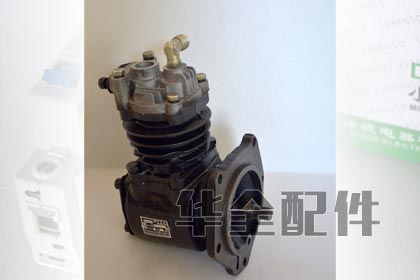
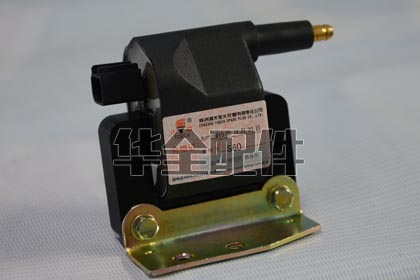
Weichai
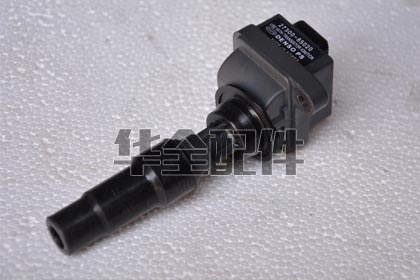
Weifang
FAQ
Q: What components make up a complete generator starting system?
A: A generator starting system includes: (1) Starter Motor — DC electric motor providing 2.5-9kW cranking power; (2) Starting Battery(ies) — typically 12V or 24V lead-acid batteries sized for the starter’s CCA requirement; (3) Battery Cables — heavy-gauge copper cables connecting battery to starter and ground; (4) Battery Disconnect Switch — allows complete electrical isolation for maintenance; (5) Start Relay/Solenoid — the control relay that sends the start signal from the controller to the starter solenoid; (6) Battery Charger — float charger maintaining batteries at optimal charge (13.5-13.8V for 12V flooded, 13.2-13.5V for 12V AGM); (7) Engine Controller — the ‘brain’ that initiates the start sequence, monitors crank RPM via magnetic pickup, and controls crank/rest cycles; (8) Key Switch or HMI Start Button — manual start interface; (9) Battery Isolator (dual-battery systems) — prevents the starting battery from being discharged by auxiliary loads. All components must work in concert — a weak link anywhere in the chain results in no-start.
Q: What type and size of battery does my generator need?
A: Battery selection criteria: (1) Voltage — 12V for generators up to ~150kW, 24V for larger generators (two 12V batteries in series); (2) CCA (Cold Cranking Amps) — the starter’s minimum required CCA is stamped on the starter data plate or engine specification. Common requirements: 4BT/6BT Cummins: 800-1,000 CCA at 12V; 6CT/ISC Cummins: 1,000-1,200 CCA; KTA19: 24V with 800-1,000 CCA per battery; (3) Type — flooded lead-acid is standard and lowest cost; AGM (Absorbed Glass Mat) is recommended for standby generators because it holds charge 2-3x longer, has lower self-discharge (1-3% per month vs 5-15% for flooded), and is spill-proof; (4) Reserve Capacity (RC) — minutes the battery can supply 25 amps before dropping to 10.5V. Critical for extended cranking scenarios — minimum 90 minutes recommended. Never undersize — a marginal battery that works in summer will fail on the cold night when the generator is needed most.
Q: How do I troubleshoot a generator that won’t crank?
A: No-crank troubleshooting sequence: (1) Check the controller display for fault codes — many controllers log specific start-fail reasons (low battery, no speed signal, emergency stop active); (2) Measure battery voltage at the battery posts (not the cable terminals) — below 12.4V (12V system) or 24.8V (24V system): charge or replace battery; (3) Turn on the battery disconnect switch — surprisingly common oversight after maintenance; (4) Check the emergency stop button — if pressed, the controller will not initiate a start; (5) Attempt manual start from the controller — if it works, the auto-start circuit has a fault; (6) Listen for a click at the starter — a strong click means the solenoid is engaging but the motor isn’t turning (bad solenoid contacts or dead battery). No click means the start signal isn’t reaching the starter; (7) Measure voltage at the starter ‘S’ terminal during a start attempt — should be within 0.5V of battery voltage. If not, trace back through the start relay and controller output; (8) Check all battery cable connections — remove, wire brush, and re-torque. Corrosion between the terminal and post creates high resistance that a voltage reading doesn’t detect.
Q: What is the proper battery charger configuration for standby generators?
A: Battery charger requirements: (1) Type — automatic float charger (not a trickle charger which overcharges) with temperature compensation. Output: 10-20 amps for 12V systems, 5-10 amps for 24V systems; (2) Float voltage — 13.5-13.8V for flooded lead-acid (at 25 degrees C), 13.2-13.5V for AGM, 13.5-13.8V for gel. Reduce by 0.03V per degree C above 25 degrees C (temperature compensation); (3) The charger must be powered from the generator output side so it charges when the generator runs, OR from utility power with an AC fail alarm; (4) Two chargers for 24V dual-battery systems — one for each battery. Series-connected batteries drift apart in charge state if charged as a single 24V unit; (5) Charger failure alarm — the generator controller should monitor charger output and alarm on failure. A failed charger allows the batteries to self-discharge over weeks, leaving you with a dead start battery when the outage hits. HUAQUAN supplies compatible smart chargers with all mounting hardware.
Q: How often should generator starting batteries be replaced?
A: Battery replacement guidelines: (1) Standby generators: replace every 3-4 years for flooded lead-acid, 4-5 years for AGM, regardless of appearance. Battery failure is the #1 cause of standby generator failure to start; (2) Prime power: replacement at 2-3 years due to more charge/discharge cycles; (3) Replace at the FIRST sign of: slow cranking (RPM below spec during start), needing to add water more than twice a year (flooded only), visible case swelling (internal short), or a load test showing less than 80% of rated CCA; (4) Always replace as a set in 24V systems — mixing new and old batteries causes the new battery to be overcharged and the old to be undercharged; (5) Write the installation date on the battery with a permanent marker for easy age tracking.
Q: What is the difference between auto and manual start modes?
A: Auto mode: the controller continuously monitors the utility/mains supply via voltage and frequency sensing. When it detects an outage (voltage below 70-80% of nominal for a programmable time delay, typically 1-5 seconds), it initiates the start sequence automatically: pre-heat (if equipped), crank, and transfer load. When utility returns and stabilizes (programmable return delay, typically 1-5 minutes to avoid short-cycling), it transfers load back, runs a cool-down period, and shuts down. Manual mode: the controller requires a human operator to press the start button. The controller will still protect the engine (low oil pressure and high temperature shutdowns), but will not initiate start or stop automatically. Always confirm the mode before servicing the generator — auto-start during maintenance is a serious safety hazard.
Q: How do I test the starting system health without actually starting the engine?
A: Non-start tests: (1) Battery voltage — measure open-circuit voltage. 12.6V = 100% charge, 12.4V = 75%, 12.2V = 50%, 12.0V = 25% (flooded lead-acid at 25 degrees C). Subtract 0.1V for AGM; (2) Load test — apply a carbon-pile load tester at 50% of CCA rating for 15 seconds. Voltage should stay above 9.6V at 21 degrees C; (3) Voltage drop test — measure the voltage drop across each cable (positive and ground) while cranking. Each cable should drop less than 0.2V for 12V systems, 0.4V for 24V; (4) Specific gravity (flooded batteries only) — use a hydrometer. All cells should be within 0.050 of each other; (5) Charger output test — with the charger connected and batteries fully charged, measure charger output current. It should be near zero (float mode). A constant 1-2 amp output indicates the batteries are not reaching full charge; (6) Visual inspection — check for corroded terminals, swollen battery case, cracked cables.
Q: What causes a starter motor to click but not crank?
A: Single click with no cranking is the classic ‘dead battery or dead solenoid’ symptom. Diagnostic steps: (1) Measure battery voltage during the start attempt — a battery reading 12.6V at rest that drops below 9V during crank attempt is dead (internal resistance too high); (2) If battery voltage holds above 10V during the click but the motor doesn’t turn, the solenoid main contacts are burned; (3) Try manually bridging the two large terminals on the starter solenoid with a heavy-gauge jumper cable (INSULATED handles, safety glasses) — if the motor spins, the solenoid contacts are the problem; (4) If the motor spins slowly when jumped, check all battery cable connections — a loose or corroded connection passes voltage but drops under the hundreds of amps the starter draws; (5) If the motor doesn’t spin at all when jumped, the starter motor itself is seized or the armature is shorted — remove and bench test.
Q: What are starting system best practices for cold weather?
A: Cold weather starting provisions: (1) Battery capacity — CCA rating drops 30-50% at -18 degrees C while cranking torque demand doubles (thick oil). Size batteries for the coldest expected temperature; (2) Battery heaters — thermostatically controlled heating pads that maintain batteries at 10-20 degrees C; (3) Engine block heater — 1,500-3,000W coolant heater maintaining engine at 30-40 degrees C. Reduces cranking torque by 50-70%; (4) Oil pan heater — silicone pad heater for the oil pan; (5) Intake air pre-heater (grid heater) or glow plugs — heats intake air for combustion initiation; (6) Synthetic oil — 0W-40 or 5W-40 synthetic flows 2-3x faster than 15W-40 mineral at cold temperatures; (7) Battery maintainer with temperature compensation — increases float voltage in cold. Combine these measures rather than relying on a single solution.
Q: What is a battery isolator and when is it needed?
A: A battery isolator separates the starting battery from auxiliary batteries, ensuring the starting battery is always fully charged. Two types: (1) Diode isolator — uses high-current diodes to allow charging current to flow from the alternator to multiple batteries but prevents current from flowing backward. Simple and reliable but causes a 0.6-0.7V voltage drop; (2) Voltage-sensitive relay (VSR) — electrically connects batteries when charging voltage is present (engine running) and disconnects when voltage drops. Zero voltage drop but has mechanical contacts. Isolators are essential when the generator shares a battery bank with auxiliary equipment or when multiple generators share a single starting battery bank.
Q: How do I properly size battery cables for the starting system?
A: Cable sizing depends on total circuit length (positive + ground path) and starter current draw. Key rules: (1) Voltage drop should not exceed 0.5V for 24V systems or 0.25V for 12V systems during cranking; (2) Example: for a 24V 350A starter with 5m total circuit length, use 70mm2 (2/0 AWG); same starter at 12V requires 120mm2 (4/0 AWG); (3) Always measure the ACTUAL total circuit length — positive cable from battery to starter + ground cable from engine to battery; (4) Use fine-stranded welding/battery cable, not building wire; (5) Crimp AND solder all terminals — crimp-only connections develop internal corrosion; (6) Apply anti-corrosion compound to all connections; (7) Secure cables every 300-400mm to prevent vibration fatigue.
Q: What is a crank limiter and why is it important?
A: A crank limiter is a controller function that limits the maximum continuous cranking time and enforces rest periods between attempts. Typical settings: 10-15 seconds crank, 20-30 seconds rest, 3-5 attempts before lockout with alarm. Without a crank limiter, a persistent start failure can: (1) Overheat the starter motor — continuous cranking beyond 30 seconds can damage armature insulation; (2) Drain the battery completely; (3) Flood the engine with unburned fuel — bore washing and sump dilution; (4) Hydrolock risk — fuel accumulates and can hydrolock. The crank limiter and cool-down timer should be configured during commissioning and NEVER bypassed except for specific diagnostic purposes.
Q: How do I troubleshoot a generator that cranks but won’t start?
A: Cranks-but-no-start diagnosis: (1) Listen for the fuel solenoid click when the controller initiates start — if no click, check solenoid wiring and controller output; (2) Check for visible smoke from the exhaust during cranking — white smoke (unburned fuel) means fuel is injected but not igniting. No smoke means fuel is not being delivered; (3) Crack a high-pressure injection line at the injector and crank — fuel should spurt forcefully; (4) Check the emergency stop solenoid/fuel shutoff lever — mechanical shutoffs can be accidentally left in STOP; (5) Verify cranking RPM — the controller needs 100-150 RPM minimum from the magnetic pickup to enable fueling; (6) For electronic engines (J1939), check for active fault codes — many ECMs will not fuel with certain active codes; (7) Air in the fuel system from a recent filter change — bleed the system.
Q: What is the difference between a 12V and 24V starting system?
A: 12V systems: used on generators up to ~150kW. Single battery (or two in parallel for more capacity). Simpler, lower component cost. Disadvantage: higher current for the same starter power, requiring thicker cables. 24V systems: standard on generators above ~150kW. Two 12V batteries in series. Advantages: half the current for the same starter power, reducing cable size, voltage drop, and connection heating. Better cold-start performance. Disadvantages: more complex — two batteries to maintain, charger must be 24V. The choice is determined by the engine manufacturer — the starter motor voltage is integral to the engine specification.
Q: How do I maintain generator starting batteries for maximum reliability?
A: Battery maintenance program: (1) Monthly — check charger output voltage and current, clean battery tops (dirt holds moisture causing self-discharge), check terminal tightness and corrosion. For flooded batteries: check electrolyte level and top up with distilled water only; (2) Quarterly — perform a specific gravity check on each cell (flooded). Perform a load test — battery should maintain 9.6V+ at 50% CCA for 15 seconds; (3) Semi-annually — clean and re-torque all battery cable connections. Measure voltage drop across each cable during load test; (4) Annually — professional load test with calibrated tester. Consider preventive replacement at 3-4 year mark for flooded, 4-5 year for AGM in critical applications; (5) Always keep a maintenance log — a battery that passes a voltage check (12.6V) can still fail a load test.