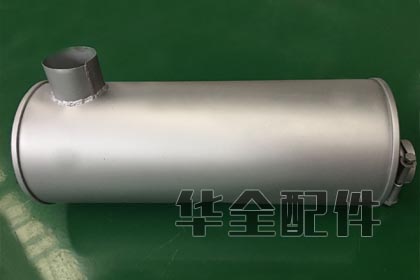
What is a generator muffler/silencer and what does it do?
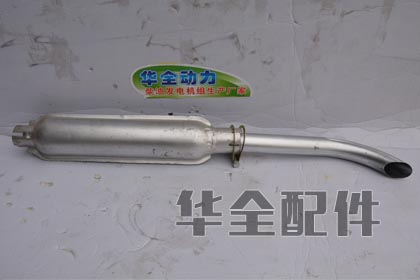
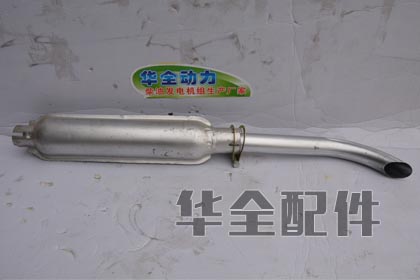
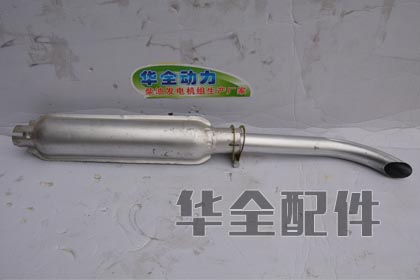
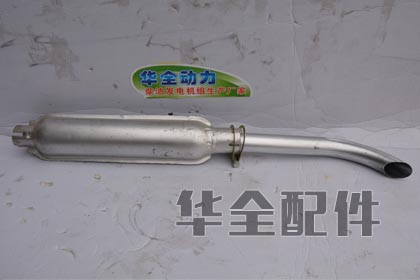
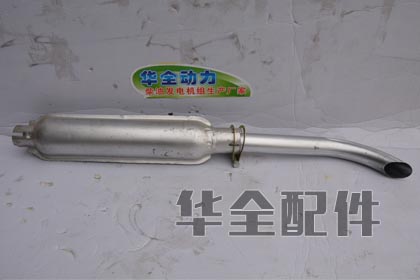
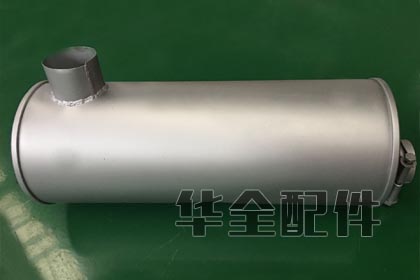
A generator muffler (silencer) is an exhaust acoustic device that reduces the noise generated by high-velocity, high-pressure exhaust gas pulses exiting the engine cylinders. The exhaust noise at the exhaust manifold outlet is typically 110-120 dBA — well above the threshold for permanent hearing damage. The muffler attenuates this noise through three mechanisms: (1) Reactive (reflective) attenuation — internal chambers and tubes of specific lengths create reflected sound waves that cancel certain frequencies (primarily low-frequency firing-order noise at 63-250 Hz); (2) Absorptive attenuation — sound-absorbing material (fiberglass, mineral wool, basalt wool) lining the internal passages converts acoustic energy into heat through friction; (3) Expansion chamber — a sudden increase in cross-sectional area reduces sound pressure level. A properly selected muffler reduces exhaust noise to 75-85 dBA at 1 meter — a reduction of 25-40 dBA, which is perceived by the human ear as approximately 1/10th the original loudness.
What are the different grades of generator silencers?
Generator silencers are classified by attenuation grades: (1) Industrial Grade (12-18 dBA attenuation) — basic reactive silencer, adequate for outdoor installations in non-noise-sensitive areas, lowest backpressure and cost; (2) Residential Grade (18-25 dBA attenuation) — combines reactive chambers with some absorptive material, suitable for suburban generator installations where noise ordinances apply; (3) Critical Grade (25-35 dBA attenuation) — large-volume silencer with multiple reactive chambers and extensive absorptive lining, used for hospitals, hotels, residential neighborhoods; (4) Hospital Grade (35-42 dBA attenuation) — the maximum attenuation available, large physical size, required for generators near patient care areas; (5) Super-Critical Grade (42-50 dBA attenuation) — specialized applications like recording studios, research facilities. The grade is selected based on the site's noise regulations and the distance to the nearest noise-sensitive receptor.
How do I select the right silencer for my generator?
Selection parameters: (1) Engine exhaust flow rate (CFM or m^3/min) at rated power — this determines the silencer inlet/outlet diameter and internal flow capacity; (2) Desired attenuation level (dBA) — based on site noise requirements; (3) Maximum allowable exhaust backpressure — typically 3-5 kPa (12-20 inches H2O) for diesel engines. Higher attenuation silencers have higher backpressure; exceeding the backpressure limit reduces power and increases EGT; (4) Physical space — Critical and Hospital grade silencers are physically large (up to 3x the engine's footprint); (5) Inlet/outlet orientation — specify the direction of exhaust inlet and outlet for space-constrained installations; (6) Mounting type — rigid flange mount, flexible mount (with bellows), or remote mount with separate supports; (7) Material — aluminized steel for indoor, 304/409 stainless steel for outdoor/corrosive environments. HUAQUAN engineering support is available for silencer sizing — provide engine model, rating, and noise target.
Which engine brands are HUAQUAN silencers compatible with?
HUAQUAN silencers are manufactured for all diesel generator engine platforms: Cummins (up to QSK95), Perkins, Deutz, Weichai (all models including 6200 series), Yuchai, Shangchai, Doosan, and all Chinese diesel platforms. Inlet sizes from 1.5 inch to 12+ inch diameter with matching ANSI, DIN, or JIS flanges. Attenuation grades: Industrial (12-15 dBA), Residential (18-25 dBA), Critical (25-35 dBA), Hospital (35-42 dBA). Standard materials: aluminized steel (409 stainless steel as extra-cost option for corrosion resistance). Custom configurations: combination spark-arrestor silencers for fire-sensitive areas, side-inlet/side-outlet for low-clearance installations, and vertical discharge with rain cap.
What causes excessive exhaust noise even with a silencer installed?
Loud exhaust despite a silencer indicates: (1) Internal silencer failure — internal baffles or tubes have corroded through or broken, creating a straight-through path that bypasses the attenuation chambers. Often sounds 'blatty' or harsh rather than the deeper tone of a healthy muffled system; (2) Exhaust leak between the engine and the silencer — a leak at a flange or flex joint emits unmuffled noise directly to the atmosphere; (3) Silencer undersized for the application — if the engine was upgraded to a higher rating but the silencer was not, the exhaust velocity may be too high for effective attenuation; (4) Missing or failed absorptive packing (in absorptive silencers) — the fiberglass/mineral wool packing has degraded and blown out over time, leaving bare steel chambers; (5) Exhaust pipe resonance — a section of unsupported exhaust pipe is vibrating at its natural frequency and radiating noise. Start the diagnosis by checking for leaks, then inspect inside the silencer with a borescope through the outlet or a removed section.
What is the correct exhaust system backpressure and how do I measure it?
Maximum allowable exhaust backpressure is typically 3-5 kPa (12-20 inches H2O or 0.4-0.7 PSI) for diesel generator engines. Measurement procedure: (1) Drill and tap a 1/8 inch NPT port in the exhaust pipe 2-3 pipe diameters downstream of the turbocharger outlet (pre-turbo is not accessible on most applications); (2) Connect a manometer or low-pressure gauge (0-15 kPa range); (3) Run the engine at rated load and speed; (4) Record the pressure reading. If backpressure exceeds specification: (1) Inspect the silencer internal condition — collapsed internal baffles; (2) Check for soot/carbon buildup in the pipes — years of carbon accumulation effectively reduces pipe diameter; (3) Verify the exhaust pipe diameter is adequate — general rule: 1 inch diameter per 100 HP for 1,500 RPM engines; (4) Check flexible bellows for inner liner collapse; (5) Inspect for external pipe damage or crushing. High backpressure raises exhaust temperature by 50-100 degrees C and reduces power output by 1-2% per kPa above specification.
What is a spark arrestor silencer and when is it required?
A spark arrestor is a silencer with an integrated centrifugal or screen-type device that traps carbon particles and sparks emitted from the engine exhaust. It is required for generators operating in: (1) Fire hazard areas — forests, grasslands, oil & gas facilities, chemical plants; (2) Agricultural applications — near dry crops, grain storage; (3) Regulatory compliance — US Forest Service specification FS 5100-1, SAE J335, or local fire code requirements. The arrestor uses either centrifugal separation (spinning the exhaust gas to throw carbon particles outward into a collection chamber) or a fine-mesh stainless steel screen (typically 0.023 inch openings) that blocks particles above the critical size. A spark arrestor silencer adds 2-4 kPa backpressure and requires regular cleaning — every 100-250 operating hours, remove the clean-out plug and tap out accumulated carbon. A clogged arrestor is a common cause of unexplained power loss and high EGT.
How should a generator silencer be mounted and supported?
Proper mounting: (1) Never rigidly mount the silencer directly to the engine — engine vibration will fatigue the silencer and exhaust piping. Use a flexible exhaust bellows between the engine manifold/turbo outlet and the rigid exhaust/silencer system to decouple engine vibration; (2) Support the silencer with its own support structure — the silencer should be independently supported from the generator base frame, skid, or building structure; (3) Use silencer mounting brackets designed for the silencer's weight — a Critical Grade silencer for a 500kW generator can weigh 80-150 kg; (4) Allow for thermal expansion — at full load, exhaust components at the silencer inlet can reach 550 degrees C, causing 4-6mm of thermal growth per meter of pipe — the system must be able to grow without stressing components; (5) In outdoor installations, use stainless steel hardware (Grade 304 minimum) to prevent rust-seizure of adjustment points. A silencer that falls off its mounts can tear open the exhaust system and create a fire and carbon monoxide hazard.
What maintenance does a generator silencer require?
Silencer maintenance: (1) Visual inspection at every major service (1,000-2,000 hours) — look for rust, corrosion, and exhaust leaks at welds and seams; (2) Drain condensate — silencers and low points in the exhaust system accumulate acidic condensate (sulfuric and nitric acid from exhaust gas combining with moisture). Drain plugs must be checked and opened regularly — accumulated condensate corrodes the silencer from the inside; (3) Spark arrestor cleaning (if equipped) — every 100-250 hours, remove the clean-out plug and tap out carbon; (4) Internal inspection — every 5,000 hours or at major overhaul, use a borescope through the outlet to inspect internal baffles and absorptive material condition; (5) External repainting — if surface rust is present, wire-brush, prime with high-temperature paint (rated to 650+ degrees C), and repaint to prevent further corrosion. Draining condensate is the most important maintenance task — it doubles the silencer's service life.
How does silencer design affect generator performance?
Silencer design impacts two performance parameters: (1) Exhaust backpressure — more attenuation requires more internal baffling, which restricts flow and increases backpressure. A Hospital Grade silencer may have 3-5 kPa backpressure compared to 1-2 kPa for an Industrial Grade on the same engine. Since the engine manufacturer specifies the maximum allowable backpressure, the silencer must be selected so the total system backpressure (pipes + silencer + fittings) is below this limit; (2) Weight — a large Critical/Hospital silencer weighing 100-200 kg affects the generator set's center of gravity and requires stronger support structures. HUAQUAN provides pressure drop curves for all silencer grades — the pressure drop at the engine's rated exhaust flow should be below 70% of the maximum allowable, leaving margin for piping, bends, and future fouling.
What are the options for reducing generator exhaust noise beyond the silencer?
Additional noise reduction measures: (1) Secondary/resonator silencer — a smaller secondary silencer installed downstream of the primary silencer targets specific frequencies that the primary cannot adequately attenuate; (2) Exhaust pipe lagging — wrapping the exhaust pipe with acoustic insulation (mineral wool with aluminum outer jacket) reduces noise radiated from the pipe surface and also reduces heat radiation into the generator room; (3) Exhaust discharge orientation — pointing the exhaust outlet away from noise-sensitive areas and upward at 45 degrees or vertically reduces ground-level noise by 3-5 dBA; (4) Sound-attenuated generator enclosure — an acoustic enclosure lined with sound-absorbing foam adds 15-25 dBA overall noise reduction, including exhaust noise radiated from the silencer body; (5) Underground exhaust — routing the exhaust discharge into an underground concrete pit with gravel absorption bed for extreme noise-sensitive applications. Contact HUAQUAN for a complete generator noise control consultation.