What is a generator radiator and how does it work?
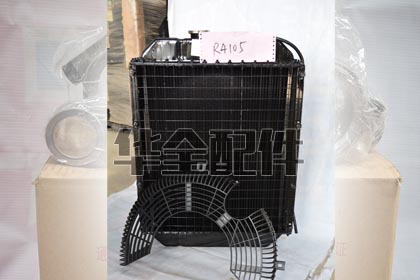
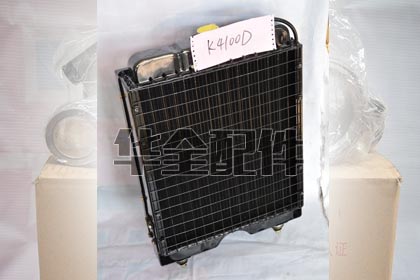
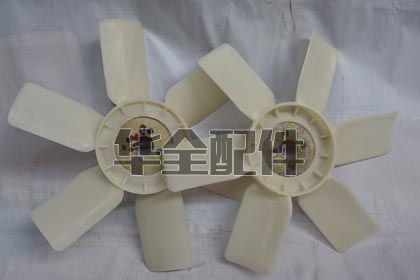
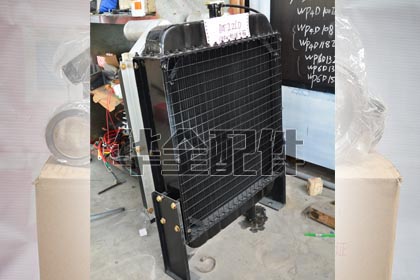
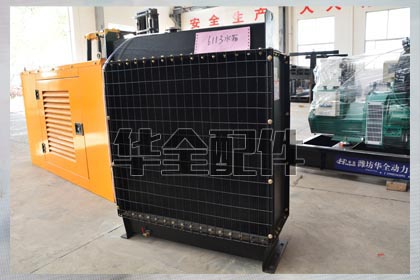
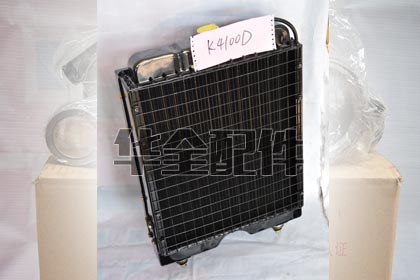
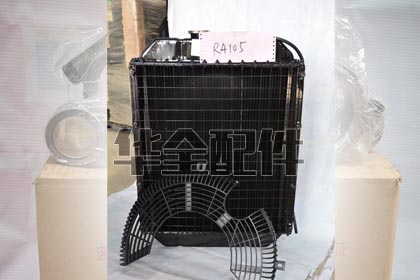
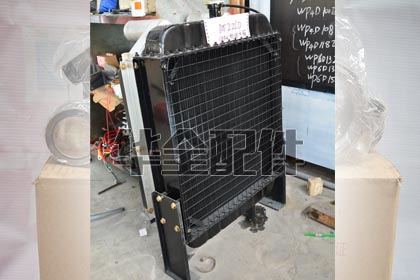
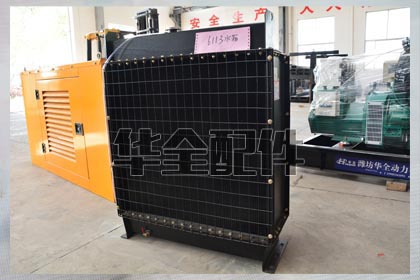
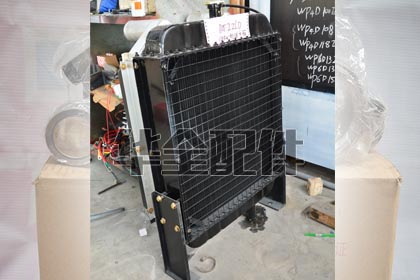
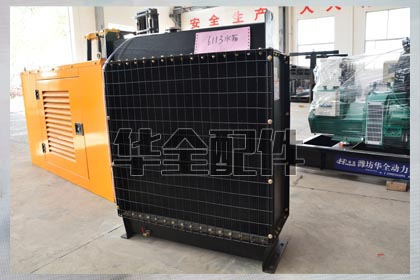
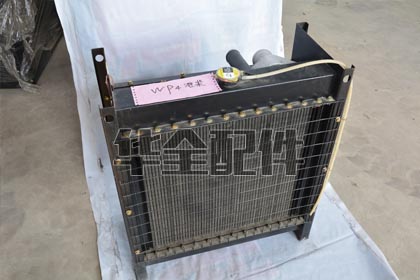
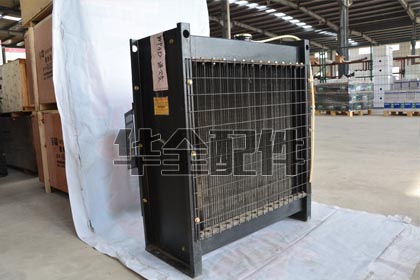
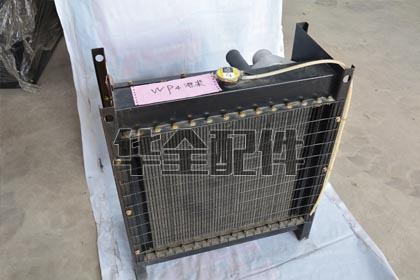
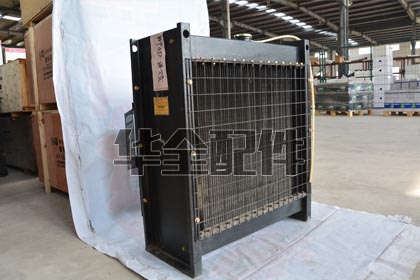
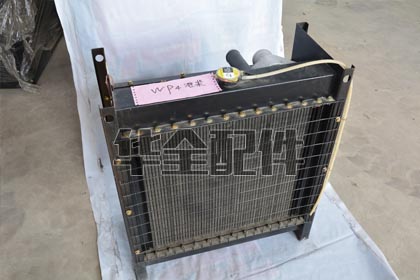
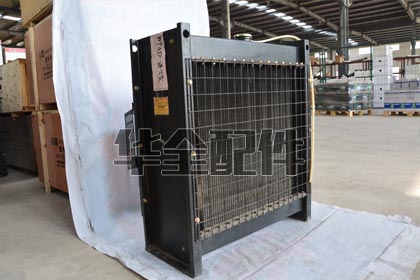
A generator radiator is a cross-flow or down-flow heat exchanger that rejects engine heat from the coolant (water/glycol mixture) to the ambient air. The hot coolant enters the top tank (typically 85-95 degrees C), flows down through the core — hundreds of flattened tubes with thin metal fins brazed between them — and exits the bottom tank at 75-85 degrees C, cooled by 5-10 degrees C. A high-volume axial fan (driven by the engine crankshaft or an electric motor) pulls or pushes ambient air through the core at 500-2,000+ cubic meters per minute. The radiator must reject approximately 25-35% of the fuel's energy — for a 1MW diesel generator at full load, this is roughly 250-350 kW of heat, equivalent to 100-150 household space heaters operating continuously. The radiator is the single largest external component on most generator sets.
What materials are generator radiators made from?
Radiator construction: (1) Tubes: copper/brass (traditional) or aluminum (modern). Copper has superior thermal conductivity (400 vs. 237 W/m*K for aluminum) but is heavier and more expensive. Aluminum radiators use wider tubes with turbulators (internal ridges) that create turbulent flow, compensating for lower conductivity by improving the internal heat transfer coefficient; (2) Fins: copper or aluminum, with louvers punched into each fin to trip the airflow boundary layer and improve air-side heat transfer; (3) Tanks: brass (for copper cores), aluminum or reinforced nylon composite (for aluminum cores). Plastic tanks reduce weight and cost but are more vulnerable to impact damage and thermal aging; (4) Tube-to-fin joint: soldered (copper/brass) or brazed in a controlled-atmosphere furnace (aluminum). The quality of this joint determines 90% of the radiator's heat transfer performance — a poorly bonded tube-to-fin joint has negligible heat transfer. HUAQUAN radiators use industrial-grade aluminum with Nocolok brazed cores.
What are the symptoms of a failing generator radiator?
Failure signs: (1) Coolant temperature trending higher at the same load and ambient temperature — the most reliable indicator. A 3-5 degrees C increase that is not explained by ambient temperature or load changes suggests the radiator is losing efficiency; (2) Visible coolant leaks — green, pink, or orange stains at tube-to-header joints or along the core face. Even small leaks indicate corrosion that will spread; (3) Coolant loss without visible external leak — can indicate internal core damage allowing combustion gas to enter the coolant (head gasket) or coolant to be burned (EGR cooler failure); (4) Fins 'rotting' or disintegrating when touched — aluminum fin corrosion from road salt or chemical exposure; (5) Cold spots on the core (detected with an infrared thermometer) — blocked tubes that have no coolant flow; (6) Fan cycling on/off rapidly — indicates the cooling system is at its limit, barely maintaining temperature. Overheating reduces engine life by 50% for every 10 degrees C above design temperature.
Which engine brands are HUAQUAN radiators compatible with?
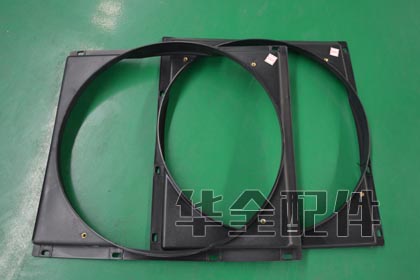
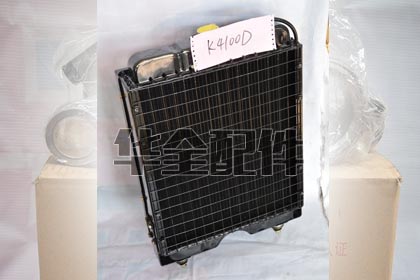
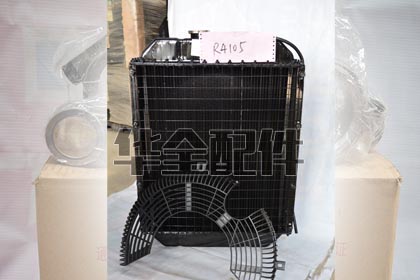
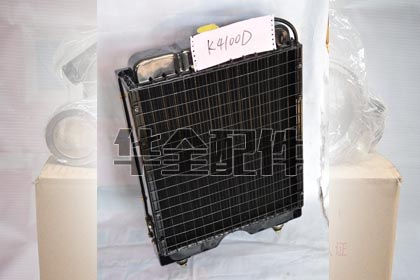
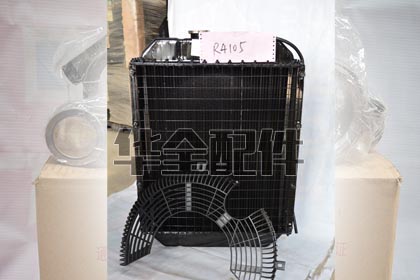
HUAQUAN radiators are manufactured for: Cummins (4BT-QSK95 series), Perkins (1103-4008), Deutz (912-2015), Weichai (WD615/618, WP10/12/13/17, 226B, 6160-6200), Yuchai (YC4-YCK), Shangchai (SC4H-SC33W), Doosan, Volvo Penta, and all Chinese diesel platforms. Available in: push-pull configurations, vertical or horizontal airflow, remote radiator packages (for in-building installations with ducting), and split cooling systems. Core sizes from compact (500x500mm) for 20kW units to industrial (2.5m x 2.5m+) for 2MW units. Each radiator is pressure-tested to 1.5x rated pressure and includes mounting frame, fan guard, and fan drive provisions.
How often should a generator radiator be cleaned and serviced?
Service frequency: (1) External core cleaning — every 500 hours or whenever visible debris accumulation occurs. Dusty environments require monthly cleaning. Use compressed air (< 4 bar) blown from the engine side outward (opposite the normal airflow direction), or low-pressure water with a wide fan nozzle (never a pressure washer — the high pressure folds over the delicate cooling fins, permanently reducing airflow); (2) Internal flush — every 3,000 hours or 2 years, whichever comes first. Drain the coolant, fill with a commercial radiator flush solution, run to temperature, drain, and refill with fresh coolant; (3) Pressure cap test — annually or whenever overheating occurs. A cap that opens at too low a pressure lowers the boiling point, causing localized boiling and cavitation; (4) Fan belt tension/inspection — at every oil change; (5) Fin inspection — annually, look for corrosion, bent fins, or debris embedded in the core. Bent fins reduce airflow by 5-15% per 10% of the core area damaged. Use a fin comb to straighten bent fins.
What causes a radiator to leak?
Common leak causes: (1) Vibration fatigue — the radiator is typically rigid-mounted while the engine vibrates. The connection between the radiator and the engine (hoses) and internal tube-to-header joints experience cyclic stress; (2) Electrolysis (stray current corrosion) — electrical current flowing through the coolant creates electrolytic corrosion at aluminum tube-to-header joints. This is caused by poor engine grounding (the starter motor ground current finds a path through the radiator) and is a leading killer of modern aluminum radiators; (3) External corrosion — road salt, chemical plant atmosphere, coastal salt spray attacking aluminum fins and tube surfaces; (4) Over-pressurization — a failed pressure cap or head gasket leak forces coolant out through the weakest point; (5) Impact damage — a stone or debris thrown by the fan or from outside striking the core. A leaking radiator should not be repaired with stop-leak products — they temporarily plug the visible leak while also coating the internal heat transfer surfaces, reducing cooling capacity. Replace or have professionally re-cored.
What is the correct coolant mixture for generator radiators?
Use a 50:50 mixture of ethylene glycol (EG) or propylene glycol (PG) antifreeze and distilled/deionized water. This mixture provides: freeze protection to -37 degrees C, boil-over protection to 129 degrees C (at 15 PSI cap pressure), and adequate heat transfer (pure water transfers heat better but offers no freeze/corrosion protection). Never use: pure water (no corrosion inhibitors — aluminum components will corrode within months), automotive 'all makes' coolant (may contain silicates that are incompatible with diesel engine wet cylinder liners and promote cavitation), or mixing different coolant types (IAT and OAT mixing can cause gel formation). For generator engines with wet cylinder liners, use a heavy-duty diesel coolant meeting ASTM D6210 with SCAs (Supplemental Coolant Additives) or an OAT coolant meeting ASTM D3306. Test coolant SCA levels every 500 hours with test strips and recharge as needed.
What is the difference between a cross-flow and a down-flow radiator?
Cross-flow: the tanks are on the left and right sides, coolant flows horizontally across the core. Advantages: (1) Lower overall height — fits under low enclosures; (2) The pressure cap is on the low-pressure (suction) side of the system, reducing coolant loss; (3) Better de-aeration — air separates in the large side tank. Down-flow: tanks on top and bottom, coolant flows vertically down the core. Advantages: (1) Traditional design with gravity assisting flow — slightly more tolerant of low coolant level; (2) The top tank acts as a coolant reservoir, providing visual fill-level indication through the cap. Cross-flow radiators are standard on most modern generator sets because they package better into acoustic enclosures. Performance is similar for the same core area. HUAQUAN supplies both configurations.
What is the function of the radiator pressure cap?
The pressure cap is far more than a filler cover — it performs two critical functions: (1) Pressure seal — the cap valve is spring-loaded to open at a specified pressure (typically 7, 10, or 15 PSI above atmospheric). Pressurizing the cooling system raises the coolant's boiling point — at 15 PSI, a 50:50 glycol-water mix boils at 129 degrees C versus 106 degrees C at atmospheric pressure. This margin prevents localized boiling at hot spots (cylinder head exhaust ports) that causes cavitation erosion; (2) Vacuum relief — when the engine cools, the coolant contracts, creating a vacuum. The cap's vacuum valve opens to allow coolant to be drawn back from the expansion/recovery tank into the radiator, preventing hose collapse and air ingestion. A cap that fails in the pressure direction causes overheating (boiling at a lower temperature). A cap that fails in vacuum direction allows air to enter the system, causing oxidation and cavitation. Replace the cap every 2-3 years — it is an inexpensive component that protects a $5,000-50,000 radiator and engine.
How do I protect a radiator from freezing in cold weather?
Cold weather protection: (1) Maintain correct antifreeze concentration — a 50:50 EG-water mix protects to -37 degrees C. A 60:40 mix protects to -52 degrees C but reduces heat transfer by approximately 8%, which may be unacceptable at full load in hot weather — switch back to 50:50 in summer; (2) If the generator is not operating in freezing weather: the entire engine block, radiator, and hoses must be protected. Some radiator bottom tanks can freeze solid even while the engine block is protected because the antifreeze is not uniformly distributed in a non-running engine; (3) Install an electric coolant heater (block heater) to maintain the engine and coolant at 30-40 degrees C; (4) For outdoor generators with radiators: radiator louvers or shutters that close when the fan is not running reduce the wind-chill effect that can freeze the radiator core; (5) Never start a frozen engine — if the water pump impeller is frozen in ice, starting the engine will shear the pump shaft or strip the drive. Thaw the entire system before attempting to start.