
Generator Fuel Tanks and Storage Systems — Complete Guide
The fuel tank is more than just a container — it is a critical component that determines how long your generator can run without refueling and must be designed with safety, fuel quality preservation, and accessibility in mind. For standby generators, the fuel tank size should provide minimum 24-72 hours of runtime; for prime power generators in remote locations, tanks may need weeks of fuel storage. This guide covers tank types, sizing, installation, and maintenance.
Fuel Tank Types for Generators
| Tank Type | Capacity Range | Mounting | Material | Best Application |
|---|---|---|---|---|
| Base / Sub-Base Tank | 100-4000 liters (25-1000 gallons) | Integrated into generator skid; double-wall construction | Steel (carbon or stainless) | Most common; compact footprint; generator sits on top of tank |
| Day Tank | 20-200 liters (5-50 gallons) | Adjacent to or above engine; gravity or pump-fed from bulk tank | Steel or polyethylene | Used with remote bulk tanks; provides immediate fuel supply; automatic refill from bulk tank |
| Underground Storage Tank (UST) | 2000-50,000+ liters (500-13,000+ gallons) | Buried below ground; double-wall with leak detection | FRP (fiberglass) or cathodic-protected steel | Large fuel storage; space-saving; temperature-stable; requires leak monitoring per EPA regulations |
| Above-Ground Storage Tank (AST) | 500-50,000+ liters (130-13,000+ gallons) | Above ground on concrete pad; single or double-wall | Steel with containment dike/secondary containment | Accessible for inspection; requires secondary containment per code; common for larger installations |
| Portable / Skid Tank | 200-1000 liters (50-260 gallons) | Skid-mounted; forklift or crane movable | Steel or polyethylene | Temporary or rental generator installations; construction sites |
Fuel Tank Sizing Guidelines
| Generator Size | Approx. Consumption (at 75% load) | 24-Hour Fuel Need | 72-Hour Fuel Need | Recommended Minimum Tank |
|---|---|---|---|---|
| 20 kW Diesel | ~5 L/hr (1.3 gal/hr) | 120 L (32 gal) | 360 L (95 gal) | 400-500 L sub-base |
| 50 kW Diesel | ~12 L/hr (3.2 gal/hr) | 288 L (77 gal) | 864 L (230 gal) | 1000 L sub-base or day tank + AST |
| 100 kW Diesel | ~23 L/hr (6.1 gal/hr) | 552 L (146 gal) | 1656 L (438 gal) | Day tank + 2000 L AST |
| 250 kW Diesel | ~55 L/hr (14.5 gal/hr) | 1320 L (348 gal) | 3960 L (1045 gal) | Day tank + 5000 L AST |
| 500 kW Diesel | ~105 L/hr (27.8 gal/hr) | 2520 L (667 gal) | 7560 L (2000 gal) | Day tank + 10000 L AST/UST |
| 1000 kW Diesel | ~200 L/hr (53 gal/hr) | 4800 L (1272 gal) | 14400 L (3815 gal) | Day tank + bulk UST |
Note: Exact consumption varies by engine model, load factor, and ambient conditions. Consult your engine datasheet for precise fuel consumption curves.
Frequently Asked Questions
1. How long can diesel fuel be stored in a generator tank?
Properly treated and stored diesel fuel lasts 6-12 months without significant degradation. With fuel stabilizers and biocides, storage can extend to 18-24 months. Key degradation factors: (1) oxidation — fuel reacts with oxygen, forming gums and varnishes, (2) microbial growth — water in fuel supports bacteria and fungi (diesel bug) that clog filters, (3) water accumulation — condensation in partially filled tanks, and (4) temperature cycling — accelerates all degradation. Rotate fuel annually and test quarterly for generators critical to operations.
2. Do I need a double-wall fuel tank?
Regulations vary by jurisdiction and tank size, but double-wall tanks (or single-wall with secondary containment) are required by most codes for commercial and industrial installations. Double-wall tanks provide: leak detection (interstitial monitoring between walls), secondary containment if the primary wall fails, and insurance premium reduction. Even where not legally required, double-wall is strongly recommended — the cost of a fuel spill cleanup far exceeds the premium for a double-wall tank.
3. How do I prevent water accumulation in my generator fuel tank?
Water enters fuel tanks through: (1) condensation — warm, humid air enters through the tank vent, cools at night, and water condenses on tank walls, (2) poor-quality fuel delivery, and (3) leaky fill caps or gaskets. Prevention: keep the tank as full as practical (less air space = less condensation), install a desiccant breather on the tank vent, use a fuel-water separator in the supply line, drain water from the tank sump monthly, and test fuel for water content with water-finding paste or electronic detector quarterly.
4. Can I connect my generator to the building’s natural gas line and skip the fuel tank?
Yes — gaseous-fueled generators (natural gas, LPG) eliminate on-site fuel storage entirely. Advantages: unlimited runtime (as long as gas supply is available), no fuel degradation, and no tank maintenance. Disadvantages: natural gas supply may be interrupted during disasters (earthquakes, hurricanes), gas generators produce ~10-20% less power than equivalent diesel engines, and gas line capacity must be verified for the generator’s full-load consumption plus other gas appliances.
5. How far from the generator should the fuel tank be located?
Sub-base tanks are integrated under the generator — no separation needed. For remote tanks: minimum 1.5-3 meters (5-10 feet) from the generator per NFPA 37 (varies by jurisdiction). The tank should be located: outside the generator room (fuel vapors are heavier than air and accumulate in low spots — ignition hazard), accessible for delivery truck, on a protected pad (vehicle impact protection with bollards), and within the lift pump’s suction capability. Maximum suction lift for a diesel lift pump is typically 1-1.5 meters vertically from tank bottom to pump inlet.
6. What maintenance does a generator fuel tank need?
Routine maintenance: (1) drain water from tank bottom monthly, (2) inspect tank exterior for rust, dents, and coating damage quarterly, (3) verify tank vent is clear (insect nests common), (4) test fuel quality (send sample for lab analysis) annually, (5) inspect all piping, hoses, and fittings for leaks during generator exercise, (6) clean or replace tank breather annually, and (7) have the tank interior inspected (boroscope) every 5 years for corrosion or sediment buildup.
Related Articles
- Generator Fuel System Parts Overview
- Generator Fuel Pumps Guide
- Diesel Engine Spare Parts for Generators
- Generator Troubleshooting Guide
- Complete Generator Maintenance Guide
- Generator Engine Parts — Systems Overview
- Generator Coolant and Engine Oil Guide
Product Gallery
Cummins
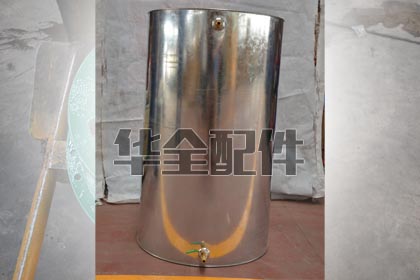
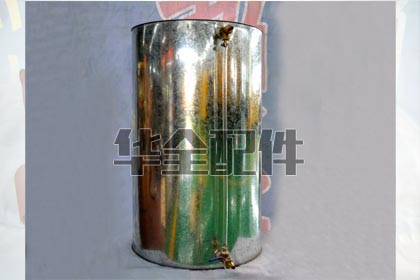
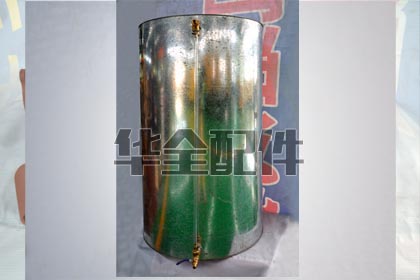
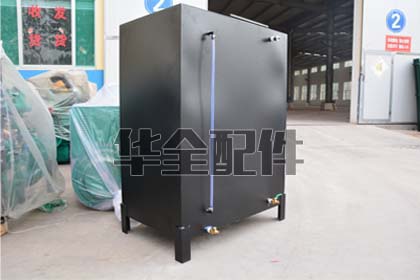
Various
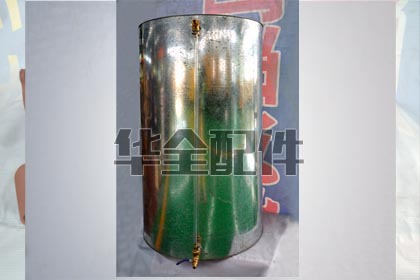
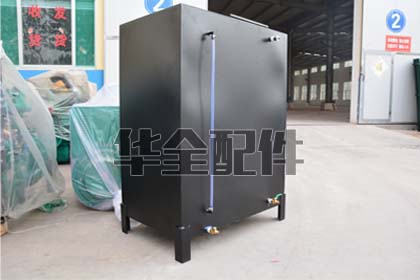
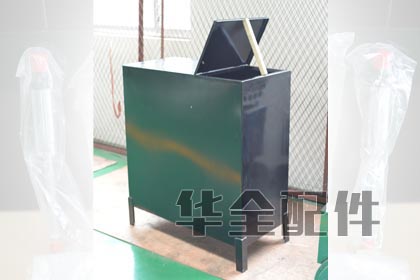
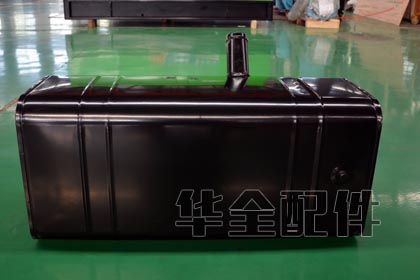
Frequently Asked Questions
Fuel tank sizing depends on three factors: (1) Engine fuel consumption — expressed in liters per hour (L/h) at the rated load. A typical diesel generator consumes 0.25-0.35 L/kWh. A 100kW generator at full load consumes approximately 25-35 L/h; (2) Desired runtime — how many hours of continuous operation without refueling? For standby generators, 8-24 hours is common. For prime power, 24-72+ hours may be required. A 100kW standby generator running 24 hours needs approximately 600-840 liters; (3) Physical constraints — the tank must fit the available space, meet local fire codes (minimum distances from buildings, proper secondary containment), and not exceed ground loading limits. Sizing formula: Tank Volume (L) = Engine Consumption (L/h) x Desired Runtime (h) x 1.10 (10% for unusable volume at the tank bottom and thermal expansion). For a 200kW generator (70 L/h consumption) with a 24-hour runtime target: 70 x 24 x 1.10 = 1,848 liters — a 2,000L tank would be specified. HUAQUAN supplies tanks from 100L (small portable) to 10,000L+ (large stationary installations).
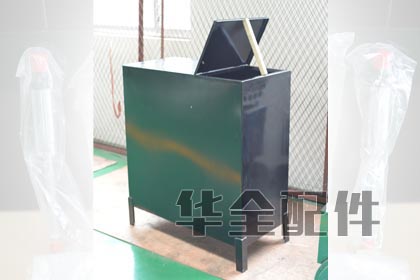
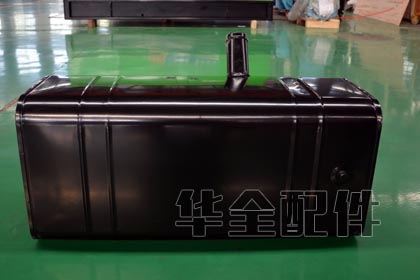
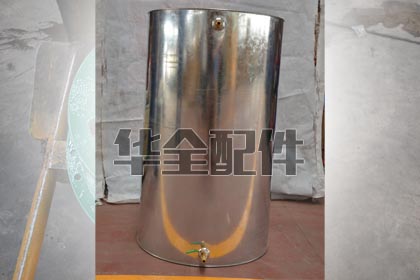
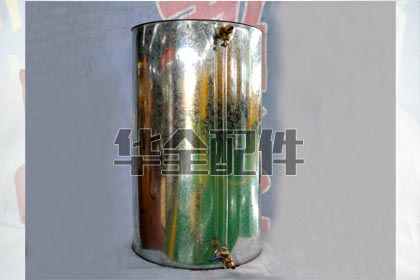
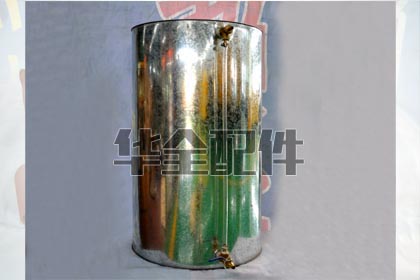
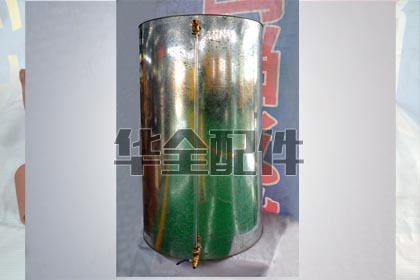
HUAQUAN’s fuel tank range covers: (1) Integrated base tanks (sub-base): steel tanks that form the generator’s mounting base — the generator sits directly on top. Advantages: compact footprint, pre-plumbed with fuel lines, level sender, vent, and fill connections. Sizes: 200L to 2,000L, typically matched to the generator’s enclosure size and 8-24 hour runtime; (2) Remote bulk storage tanks: large standalone tanks positioned separately from the generator, connected by underground or above-ground fuel lines. Advantages: much larger capacity (2,000L-10,000L+), can serve multiple generators, easier refueling access for tanker trucks. Construction: double-wall steel (with leak detection in the interstitial space) or single-wall with a concrete secondary containment dike; (3) Day tanks: small tanks (50-200L) mounted near the engine that provide a gravity or pump-fed fuel supply to the engine. The day tank is automatically refilled from the bulk tank by a transfer pump. This configuration ensures the engine’s injection pump always has a positive head of fuel; (4) Portable fuel tanks/caddies: wheeled tanks for small generators (under 20kW), easy to transport for refueling. All tanks include: fill cap with strainer, vent with flame arrestor, fuel level gauge (mechanical or electronic), supply and return connections, drain plug, and lifting eyes for installation.
Installation requirements: (1) Foundation: the tank must sit on a level, stable foundation — a reinforced concrete pad sized to support the full tank weight (fuel weighs approximately 0.85 kg/L, so a 2,000L tank weighs 1,700 kg plus the tank weight). The foundation must extend beyond the tank footprint and include secondary containment (a spill berm or dike) if required by local codes; (2) Location: minimum distances from buildings, property lines, ignition sources, and public ways as specified by NFPA 30 (USA), local fire codes, and environmental regulations. Typically: 3-15 meters from buildings depending on tank size and construction type; (3) Fuel lines: use schedule 40 black iron pipe for above-ground fuel lines (not galvanized — diesel fuel reacts with zinc). Underground lines: double-wall flexible piping with leak detection. Line size: at least the same diameter as the engine’s fuel supply connection, typically 3/8-1/2 inch for smaller engines, 3/4-1 inch for larger engines; (4) Vent: the tank vent must be sized to handle the fuel displacement during filling (air escaping) and thermal expansion/contraction. A 2-inch minimum vent line with a flame arrestor screen is standard. The vent outlet must be located away from building openings and ignition sources; (5) Grounding and bonding: the tank and all metallic fuel system components must be grounded and bonded to prevent static electricity buildup. A static discharge during refueling can ignite fuel vapors; (6) Testing: after installation, pressure-test the tank and fuel lines to 1.5x the maximum operating pressure. Check all connections for leaks with the system filled and under pressure.
Fuel contamination prevention: (1) Water contamination (the most common problem): water enters through condensation (air in the tank expands and contracts with temperature, drawing in moist air that condenses on the tank walls), leaky fill caps, or contaminated delivery. Prevention: keep the tank as full as possible (minimizes air volume for condensation), use desiccant breathers on vents, install a water-separating fuel filter on the generator supply line, and drain water from the tank bottom monthly (use the tank’s bottom drain valve or a hand pump with a tube to the tank bottom); (2) Microbial growth (diesel bug): bacteria and fungi grow at the fuel-water interface, producing sludge that clogs filters and injectors. Prevention: remove water (microbes need water to grow), treat fuel with a biocide additive, and avoid fuel storage beyond 6-12 months; (3) Particulate contamination: rust, dirt, and debris from tank corrosion or during refueling. Prevention: use a strainer on the fill opening, keep the fill cap sealed when not in use, and install a tank outlet filter/strainer; (4) Fuel degradation: diesel oxidizes over time, forming gums and varnishes. Prevention: rotate fuel stock (first-in-first-out), treat stored fuel with oxidation stabilizers, and test fuel quality annually for backup generators; (5) Fuel polishing: for large critical tanks, install a fuel polishing system — a pump and filter loop that continuously circulates and cleans the fuel, removing water and particulates. Essential for generators serving hospitals, data centers, and mission-critical facilities.
Inspection schedule: (1) Weekly (visual): check the fuel level gauge, look for any visible leaks (wet spots, stains, odor) around the tank, fittings, and fuel lines. Check that the vent is clear (no insect nests or debris blocking the flame arrestor). Verify the fill cap is securely closed; (2) Monthly (operational): drain a sample from the tank bottom and inspect for water and sediment. If water is present, drain until clear fuel appears. Check the tank’s structural integrity — look for rust, dents, or corrosion, especially at welded seams and pipe connections. Inspect the secondary containment for cracks, debris, or accumulated water; (3) Quarterly: test the fuel level sender and gauge for accuracy. Check the tank vent’s flame arrestor for corrosion and blockage. Inspect flexible fuel hoses for cracking, hardening, or swelling; (4) Annually: perform a full tank integrity test (pressure test or ultrasonic thickness measurement for steel tanks). Clean the tank interior if sediment has accumulated (this requires pumping out the fuel, entering the tank under confined-space entry procedures, and manual cleaning — best done by a specialized contractor). Test the fuel quality (cetane number, water content, microbial contamination, oxidation stability); (5) After any severe weather event, seismic activity, or impact: inspect the tank, foundation, piping, and containment for damage before restarting the generator.