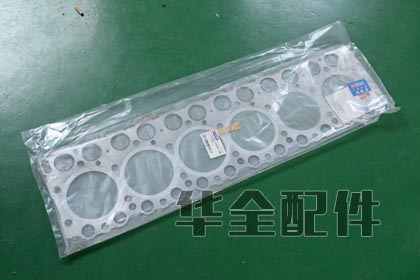
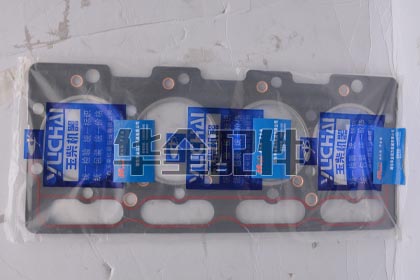
What is a cylinder head gasket and what does it do?
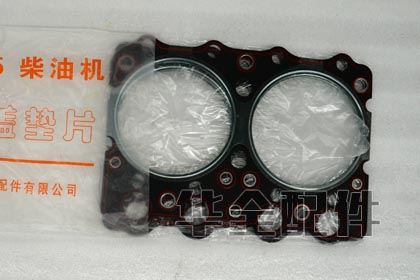
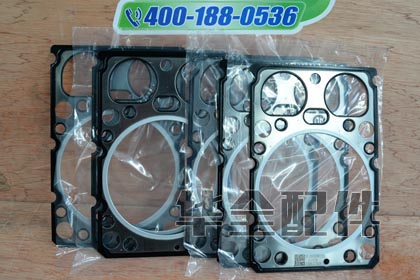
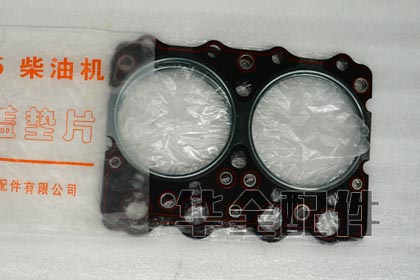
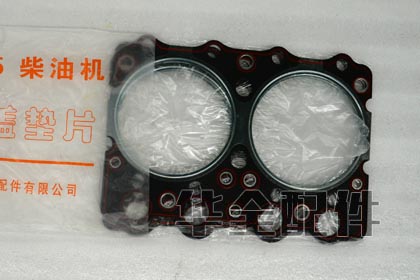
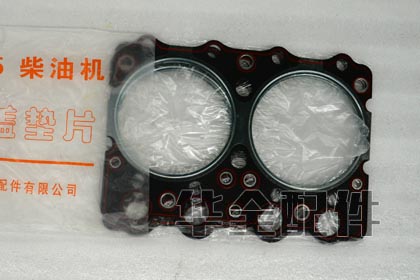
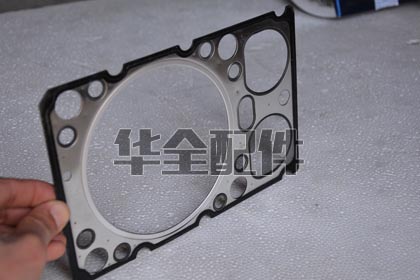
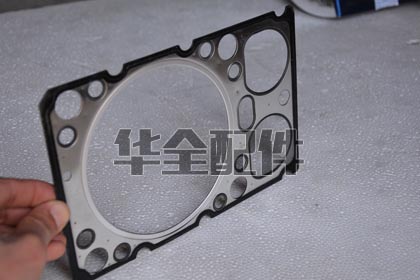
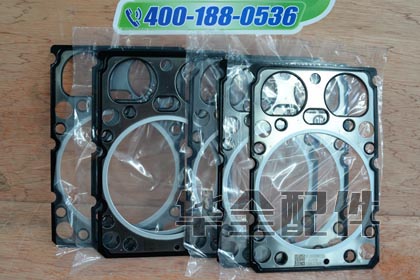
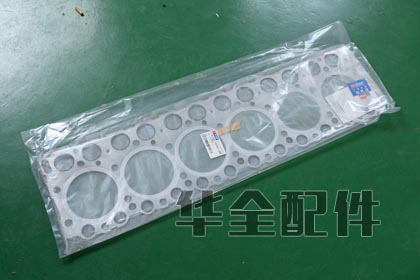
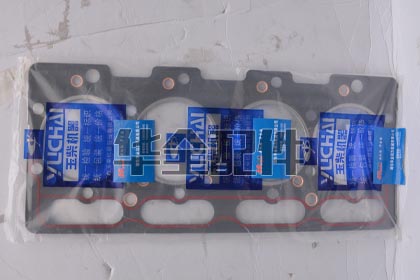
A cylinder head gasket is a critical sealing component installed between the engine block and cylinder head. It simultaneously seals three distinct zones: (1) Combustion chamber — must withstand peak pressures of 180-220 bar and temperatures exceeding 2,000 degrees C at full load; (2) High-pressure oil passages delivering oil to the valve train (5-8 bar); (3) Coolant passages (1-2 bar) between the block and head. A single gasket failure in any zone can cause catastrophic engine damage — combustion gas entering the cooling system, coolant contaminating engine oil, or oil leaking externally. The head gasket is the single most critical seal in a diesel engine.
What materials are diesel generator head gaskets made from?
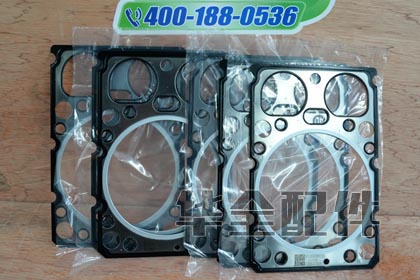
Diesel generator head gaskets use Multi-Layer Steel (MLS) construction, the industry standard since 2000: 3-5 layers of spring-grade stainless steel (SUS301/SUS304), each 0.2-0.25mm thick, with elastomeric sealing beads (fluorocarbon/FKM rubber) precisely screen-printed at 0.015-0.030mm thickness around all critical openings. Older legacy engines may use composite gaskets with a graphite-coated steel core and metal fire rings. MLS construction provides: better micro-sealing under surface roughness conditions, consistent clamp load retention over 10,000+ hours, and superior heat cycling endurance. For engines above 15:1 compression ratio, MLS is non-negotiable.
What are the symptoms of a blown head gasket on a diesel generator?
Diesel-specific blown head gasket symptoms: (1) White/grey exhaust smoke with a sweet coolant smell — coolant entering the combustion chamber; (2) Bubbles in the radiator or coolant overflow tank with the engine running — combustion gas pressurizing the cooling system (a combustion gas test kit will confirm CO2 in coolant); (3) Milky brown residue under the oil filler cap and on the dipstick — coolant-oil emulsion (DO NOT continue running); (4) Unexplained coolant loss without visible external leaks; (5) Overheating with normal thermostat/water pump function; (6) Misfire or rough running on one cylinder (compression loss); (7) External coolant or oil seepage at the block-head junction. Any two symptoms together make head gasket failure the prime suspect.
Which engine brands are HUAQUAN head gaskets compatible with?
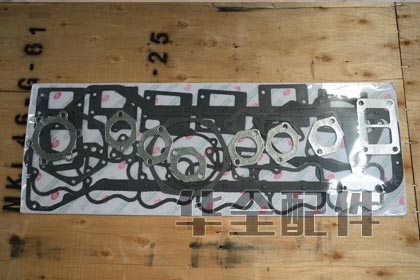
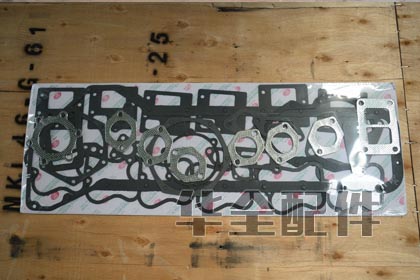
HUAQUAN cylinder head gaskets are manufactured for: Cummins (4BT, 6BT, 6CT, ISB, ISC, ISL, NT855, KTA19/38/50, QSK series), Perkins (1103-4008 series), Deutz (912-2015 series), Weichai (WD615, WD618, WP10/12/13/17, 226B, 6160-6200), Yuchai (YC4, YC6, YCK), Shangchai (SC4H-SC33W), Doosan, MTU Detroit Diesel, and all Chinese diesel platforms. Complete overhaul gasket sets include head gasket, intake/exhaust manifold gaskets, valve cover gasket, thermostat housing gasket, and all required O-rings and seals for a complete top-end rebuild. Each gasket is individually laser-inspected for bead height and dimensional conformity.
What is the proper head gasket installation torque procedure?
Proper installation is critical — 90% of 'defective' head gasket failures are actually installation errors. Procedure: (1) Verify both block deck and cylinder head surface flatness — maximum 0.05mm across length, 0.03mm across width; (2) Clean all bolt holes with a thread chaser — oil or debris in blind holes causes hydraulic lock and false torque readings; (3) Verify all head bolts are within stretch specification — replace TTY bolts or any bolt stretched beyond 0.025mm; (4) Lightly lubricate bolt threads and under-head surfaces with engine oil; (5) Follow the exact torque sequence in the service manual — typically spiral-out from center; (6) Tighten in 3-4 incremental steps (e.g., 50 Nm, 100 Nm, 150 Nm, then the specified angle rotation of 90 degrees + 90 degrees for TTY bolts); (7) After 50 hours run, re-torque if specified by the manufacturer (many modern MLS designs eliminate this step).
When should cylinder head bolts be replaced?
Replace head bolts whenever: (1) They are designated Torque-to-Yield (TTY) — these are single-use by design as they are tightened into their plastic deformation range; (2) Any bolt shows necking, pitting, or thread damage (replace entire set, not individually); (3) Bolt free length exceeds the manufacturer's stretch limit (typically 0.025mm); (4) During any head gasket replacement on turbocharged engines — the minimal cost ($50-150 per set) vs. the labor of redoing a failed job makes replacement mandatory. HUAQUAN supplies complete head bolt kits matched to engine specifications.
What causes repeated head gasket failures?
If a generator repeatedly blows head gaskets, investigate root causes beyond the gasket itself: (1) Warped cylinder head or block deck — measure with a precision straightedge and feeler gauge; (2) Cracked cylinder head — especially between valve seats on worn castings, detectable by pressure testing; (3) Liner protrusion incorrect — diesel liners must protrude 0.02-0.08mm above the block deck; too low fails to preload the fire ring; too high causes the fire ring to crush beyond design limits; (4) Overheating causing permanent head distortion; (5) Detonation/pre-ignition from bad fuel or advanced timing creating pressure spikes; (6) Reusing stretched head bolts. All six must be systematically checked before installing the new gasket.
What is a fire ring and how does it protect the head gasket?
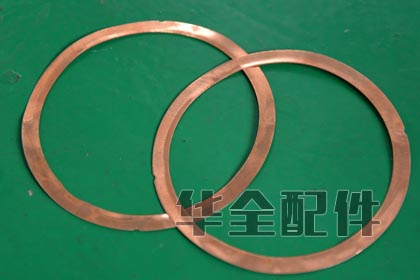
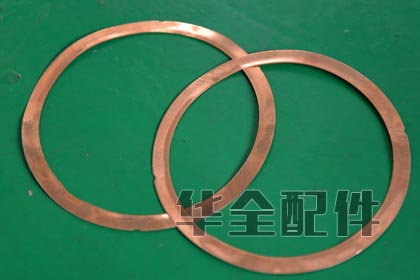
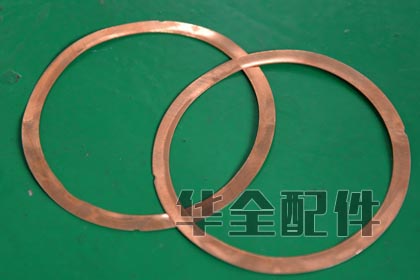
A fire ring is a stainless steel or inconel wire ring embedded around each combustion chamber opening in the head gasket. It concentrates clamp load at the critical cylinder sealing zone, creating localized pressure of 5-10x the average head bolt clamping pressure. The fire ring compresses by 0.05-0.08mm during torque, forming a micro-groove seal against the head and block. When the cylinder fires, combustion pressure pushes outward against the fire ring — the ring's stored elastic energy resists this pressure cycle. This is why liner protrusion is so critical: the liner rim must preload the fire ring before combustion loads arrive.
How do I verify the head gasket is sealing properly after installation?
Post-installation verification: (1) Pressurize the cooling system to 1.5x cap rating with a pressure tester — should hold for 15+ minutes with no drop; (2) Run the engine to operating temperature with the radiator cap off — watch for continuous bubbling indicating combustion gas; (3) Use a combustion gas test kit (chemical reaction fluid) on the radiator neck — fluid turns yellow/green if CO2 is present; (4) After cooldown, recheck torque if the manufacturer specifies; (5) At 50-hour service, send an oil sample for analysis — coolant indicators (sodium, potassium, boron) should be near zero; (6) Perform a compression test across all cylinders — variation should be within 10%. Any indication of cross-cylinder or cylinder-to-coolant leakage requires immediate re-investigation.
What is the difference between a head gasket set and a full overhaul gasket set?
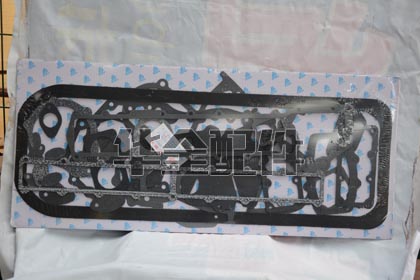
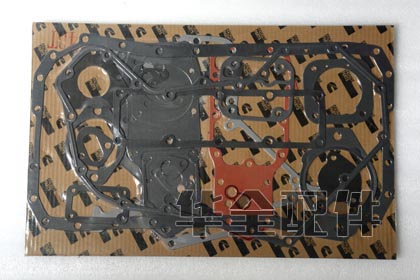
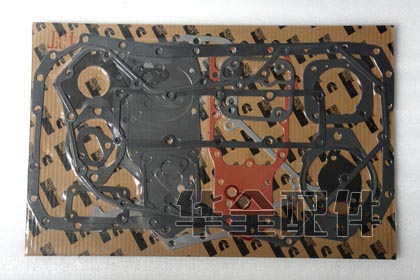
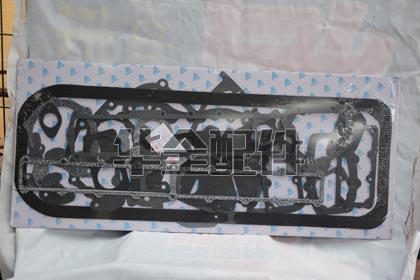
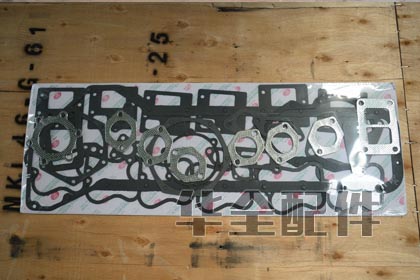
A head gasket set (top-end set) includes all gaskets and seals above the head gasket: head gasket, valve cover gasket, intake/exhaust manifold gaskets, thermostat gasket, valve stem seals, injector O-rings, turbocharger mounting gaskets, and various O-rings. A full overhaul (inframe/comprehensive) gasket set additionally includes everything below the head gasket: oil pan gasket, front cover gasket, rear main seal, water pump gasket, all oil cooler O-rings, lifter cover gaskets, and timing cover seal — typically 150-300 individual components. If you are only doing a head gasket job, order the top-end set. If you are doing a full engine rebuild, order the comprehensive set.
Can I reuse a cylinder head gasket that was recently installed?
Never reuse a cylinder head gasket — even one with zero operating hours. During the first torque-down, the gasket's sealing beads undergo permanent plastic deformation to conform to the specific micro-surface profile of the head and block. Upon removal, the beads partially recover but never return to the original profile — a reused gasket will have uneven compression, creating invisible leak paths. Additionally, the fire ring's initial crush cannot be repeated. The cost of a new genuine-quality head gasket ($50-300) is negligible compared to the labor and risk of premature failure.
How does turbocharging affect head gasket requirements?
Turbocharging increases head gasket demands by approximately 60%: peak cylinder pressure rises from 120-140 bar (N/A) to 180-220 bar (turbocharged), and sustained combustion temperature increases. Turbocharged engines universally require MLS gaskets — composite gaskets that may be adequate for naturally aspirated versions cannot survive boosted applications. The fire ring thickness may increase from 0.20mm to 0.25mm, and the number of steel layers from 3 to 5. HUAQUAN specifically differentiates between naturally aspirated and turbocharged gasket sets — installing a non-turbo gasket on a turbo engine guarantees failure within the first 100 hours under load.
What surface finish is required on the block deck and cylinder head?
MLS head gaskets require a specific surface finish (roughness) for proper sealing bead adhesion: Ra 0.2-0.5 micrometers (8-20 microinches) for the viton sealing beads, measured with a profilometer. This is smoother than the older composite gasket requirement (Ra 0.8-1.2). The surface must also be flat — maximum deviation 0.05mm across the entire deck length, 0.03mm across the width. Any scratch deeper than 0.03mm that crosses a sealing bead path requires re-surfacing. Machine shops must use a PCD (polycrystalline diamond) cutter — conventional carbide leaves micro-tears that initiate gasket failure.
What are the consequences of coolant entering engine oil through a failed head gasket?
Coolant-in-oil contamination is catastrophic: ethylene glycol in engine oil as low as 0.4% triggers formation of abrasive sludge that scores every bearing surface in the engine — crankshaft main and rod bearings, camshaft bearings, turbocharger bearings, and piston pin bushings — all within 50-100 operating hours. The glycol chemically attacks the bearing overlay material. Even after the head gasket is replaced, if the contaminated oil was not immediately drained and flushed (including the oil cooler and turbo feed line), residual glycol continues destroying the new bearings. Any coolant-in-oil event requires: immediate shutdown, complete oil drain, flushing oil fill/run/drain cycle, new oil filter installation, and oil analysis at 50 hours post-repair to confirm zero glycol residue.
How should I store spare cylinder head gaskets?
Proper storage: (1) Keep in original sealed packaging until installation — the package contains a vapor corrosion inhibitor; (2) Store flat — never on edge or hanging, as MLS gaskets can develop permanent set distortion; (3) Climate controlled: 15-30 degrees C, below 50% relative humidity — high humidity corrodes the steel layers; (4) Do not stack more than 5 gaskets — weight can compress and deform sealing beads; (5) Handle only by edges with clean, dry gloves — skin oils can react with the viton coating. Shelf life: 5+ years when stored correctly. Before installing older stock, inspect under 10x magnification for any corrosion, bead delamination, or packaging damage.