What type of engine oil should I use in a diesel generator?
Use heavy-duty diesel engine oil meeting API service classification CJ-4 or CK-4 for modern engines with emissions aftertreatment (DPF/DOC/SCR). For older engines (pre-2007), API CI-4 or CH-4 may be specified. The SAE viscosity grade depends on ambient temperature — 15W-40 is the global standard for temperate climates, 10W-30 for cooler regions, 5W-40 full synthetic for arctic conditions and cold starts below -25 degrees C, and SAE 40 monograde for consistent tropical climates above 35 degrees C. Always cross-reference with the engine manufacturer's oil specification (e.g., Cummins CES 20081, Perkins 1206E, MTU Category 2, Deutz DQC III) — meeting the OEM spec is mandatory, not optional.
How often should generator engine oil be changed?
Standard drain interval: every 250-500 operating hours for most diesel generators, or every 6-12 months for standby generators with low hours. The exact interval depends on: (1) Oil quality — full synthetic (CK-4) can extend to 500-750 hours; (2) Fuel quality — high-sulfur fuel dramatically shortens oil life; (3) Operating conditions — dusty sites require shorter intervals; (4) Load factor — continuous full-load operation oxidizes oil faster than light load; (5) Oil analysis results — the ONLY scientific basis for extending intervals beyond manufacturer recommendation. With monthly oil analysis and synthetic CK-4 oil, some modern engines safely reach 750-1,000 hour intervals. Never extend the interval on the calendar alone — additive depletion occurs even with the engine idle.
What is the correct oil capacity for my generator engine?
Oil capacity varies significantly by engine size: small 4-cylinder engines (20-50kW): 8-12 liters including filter; mid-size 6-cylinder engines (50-200kW): 15-28 liters; V8-V12 engines (200-800kW): 35-80 liters; V16 and above (800kW+): 100-250+ liters. The exact capacity is in the engine specification sheet. Note the distinction between the pan capacity and total system capacity — the difference is oil cooler, lines, and filter housing volume (typically 2-5 liters additional). When refilling, add 80% of rated capacity, start the engine for 2 minutes to circulate oil and fill the filter, shut down, wait 15 minutes for oil to drain back, then top up to the full mark on the dipstick.
What are the symptoms of degraded or contaminated engine oil?
Visual and operational indicators: (1) Thick, black, opaque appearance — normal diesel soot loading eventually overwhelms the oil's dispersant additive package (soot above 3.0% by weight - time to change); (2) Milky or greyish color — coolant contamination, IMMEDIATELY shut down and investigate; (3) Strong fuel smell and reduced viscosity — fuel dilution from leaking injectors or excessive idling, thinning the oil below safe levels; (4) Sludge on the dipstick or under the oil cap — oxidation deposits indicating overdue change; (5) Low or fluctuating oil pressure — can indicate low viscosity from fuel dilution, excessive soot loading, or additive breakdown. Oil analysis provides definitive data: Total Base Number (TBN) below 3.0 (initial typically 8-12), wear metals exceeding limits, or viscosity change greater than +-20% mandates oil change.
What is the difference between mineral, semi-synthetic, and full synthetic diesel engine oil?
Mineral oil (Group I/II base oils): refined from crude petroleum, adequate for older naturally aspirated diesels, lower cost but shorter life (250-hour typical drain). Semi-synthetic (Group II/III blend): better thermal stability, improved cold-flow, suitable for most modern turbocharged generators at 250-500-hour drains. Full synthetic (Group IV PAO or Group V ester base stocks): superior oxidative stability, exceptional cold-flow to -40 degrees C, maintains viscosity under extreme heat, extends drain intervals to 500-1,000 hours with analysis, and reduces cold-start wear — the moment when 70-80% of engine wear occurs. For standby generators starting infrequently but needing immediate full-load capability, full synthetic provides the best cold-cranking protection. For continuous prime power generators, the economics favor mineral or semi-synthetic with shorter, frequent changes.
How do I take a proper engine oil sample for analysis?
Proper sampling is critical — a contaminated sample is worse than no sample because it triggers false investigations. Procedure: (1) Sample when the oil is hot and well-mixed — run the engine to operating temperature for at least 30 minutes; (2) Use a vacuum pump sampler with clean tubing inserted through the dipstick tube to the exact midpoint of the oil level — this provides a representative mid-stream sample; (3) Never sample from the drain plug — the first oil out carries settled contaminants; (4) Use only laboratory-supplied clean sample bottles — never reuse containers; (5) Fill to the marked level, cap immediately; (6) Label clearly: engine ID, date, hours on oil, hours on engine, oil brand/grade; (7) Ship within 24 hours. Consistent sampling method over time is key — changing methods creates artificial trends that obscure real problems.
Can I use automotive diesel oil in an industrial generator engine?
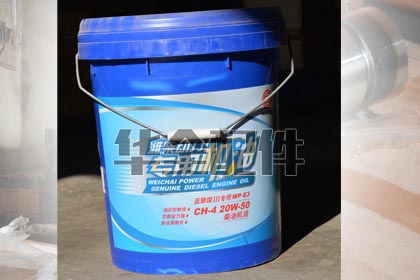
For most industrial generator diesels under 200kW, high-quality automotive diesel oil meeting the same API classification (CK-4, CJ-4) is acceptable since the base oil and additive chemistry are identical. However, for large industrial engines above 200kW, especially those with wet cylinder liners (Cummins, Weichai, Yuchai, etc.), use only oil meeting the engine manufacturer's specific approval — these formulations include proprietary anti-wear and detergent packages validated for the specific metallurgy and operating conditions. The cost difference between generic CK-4 and manufacturer-approved oil is typically 10-20% — negligible compared to the cost of premature liner or bearing replacement.
What causes high oil consumption in a diesel generator?
High oil consumption — typically defined as more than 0.2-0.5% of fuel consumption (e.g., 1 liter of oil per 500 liters of fuel) — is caused by: (1) Worn piston rings, cylinder liners, or both — combustion gas blows by the rings, pressurizing the crankcase and forcing oil mist out the breather; (2) Worn valve guides and failed valve stem seals — oil leaks into the intake/exhaust ports, especially visible as blue smoke on startup and deceleration; (3) Turbocharger oil seal leakage — oil enters the intake or exhaust; (4) External leaks — check oil pan gasket, front/rear main seals, valve cover gasket, turbo oil feed/drain; (5) Wrong oil viscosity — oil too thin for operating temperature. Systematically diagnose: compression test (rings/liners), borescope inspection (cylinder walls), turbo inspection (shaft play, oil in compressor housing), and dye test for external leaks.
What oil analysis parameters are most critical for generator health monitoring?
Key parameters in order of diagnostic importance: (1) Wear metals — Iron (Fe, liners/camshaft, above 50-100 ppm rising trend), Copper (Cu, bearings, above 20 ppm), Lead (Pb, bearing overlay, above 10 ppm), Aluminum (Al, pistons, above 15 ppm), Chromium (Cr, rings, above 5 ppm), Tin (Sn, bearing overlay, above 5 ppm); (2) Contaminants — Soot (above 3.0% weight = abrasive wear, change oil), Silicon (Si, dirt ingress, above 15-20 ppm = check air filtration), Sodium/Potassium (Na/K, coolant leak, above 100 ppm = IMMEDIATE investigation); (3) Oil condition — Total Base Number (TBN, below 3.0 = acid neutralization exhausted), Viscosity at 100 degrees C (outside +-20% of fresh oil = fuel dilution or oxidation), Oxidation/Nitration (above 30 Abs/cm = oil degradation). The trend velocity matters more than a single data point — a suddenly doubling wear metal rate demands immediate investigation.
Should I use a break-in oil after a generator engine overhaul?
Yes — use a dedicated non-detergent or low-detergent break-in oil formulated with high zinc (ZDDP at 1,500-2,000 ppm vs. 800-1,200 ppm in standard oil) for the first 50-100 operating hours. The high-ZDDP formulation accelerates proper ring seating by allowing controlled metal-to-metal contact at the ring-liner interface during the critical initial hours when asperity peaks wear down to the plateau. After break-in, drain thoroughly, replace the filter, and fill with standard oil. Some modern engines with plateau-honed liners and pre-lapped rings may not require dedicated break-in oil — follow the overhaul kit manufacturer's specific recommendation. Never extend break-in oil beyond 100 hours — the high ZDDP levels can eventually poison emissions catalysts and form abrasive ash deposits.
How should I store spare generator engine oil?
Proper storage: (1) Keep drums and containers sealed until use — an open 55-gallon drum breathes moisture daily through temperature cycling; (2) Store indoors in a temperature-stable environment at 10-30 degrees C — below freezing, some additives may precipitate out; above 40 degrees C, oxidation accelerates; (3) Drums horizontal (bungs at 3 and 9 o'clock positions) — vertical storage allows water to pool on the drum head and be drawn in through thermal breathing; (4) FIFO inventory management — use oldest stock first; (5) Shelf life: 3-5 years for unopened mineral oil, 5-7 years for synthetic in sealed containers. Before using oil stored more than 2 years, sample and test for water content (must be under 500 ppm), viscosity, and TBN — discard if any parameter is out of specification.
What is the role of ZDDP (zinc) in diesel engine oil?
ZDDP (Zinc DialkylDithioPhosphate) is the primary anti-wear and antioxidant additive in diesel engine oil. The zinc-phosphorus compound thermally decomposes under high-pressure asperity contacts (cam lobes, valve train, ring-liner interface at the reversal point) to form a sacrificial tribofilm that prevents metal-to-metal welding and controls wear. Typical ZDDP concentration in diesel oil: 800-1,200 ppm phosphorus / 900-1,400 ppm zinc. The pH of ZDDP also contributes to acid neutralization. Modern CK-4 oil uses slightly lower ZDDP to protect emissions aftertreatment — this is why CK-4 must not be used in older flat-tappet cam engines without manufacturer approval.
What happens if I overfill the generator engine oil?
Overfilling is more dangerous than underfilling: excess oil in the crankcase is churned by the rotating crankshaft counterweights — this aerates the oil (micro-bubbles), drastically reducing its load-carrying capacity and causing bearing cavitation. The aerated oil also increases crankcase pressure, forcing oil mist past seals and through the breather. In severe cases, the crankshaft can whip the oil into a foam that the oil pump cannot pick up, causing a sudden pressure drop. If the oil level is above the max line on the dipstick, drain to the correct level before running. Check only after the engine has been off for 15+ minutes to allow full drain-back.
How does fuel quality affect diesel engine oil life?
Fuel quality directly and significantly impacts oil life: (1) High-sulfur diesel (above 15 ppm) — sulfur combustion produces sulfuric acid that rapidly depletes the oil's TBN, potentially halving the safe drain interval; (2) Biodiesel blends above B5 — biodiesel's higher boiling range can cause cylinder wall wetting and fuel dilution, thinning the oil; (3) Contaminated fuel with water or sediment — injects abrasive particles and water directly into the combustion zone, washing oil from cylinder walls; (4) Low-cetane fuel — incomplete combustion increases soot loading in the oil by 2-3x. For generators running on non-standard fuels (biodiesel, heavy fuel oil, natural gas), oil analysis frequency should increase to bi-weekly and drain intervals shortened by 30-50%.