What is a generator thermostat and how does it work?
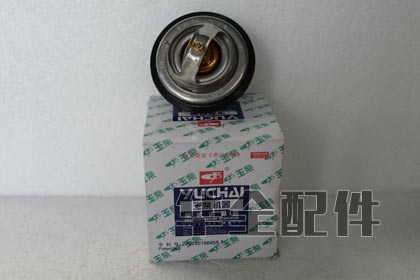
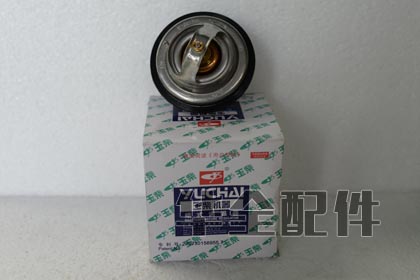
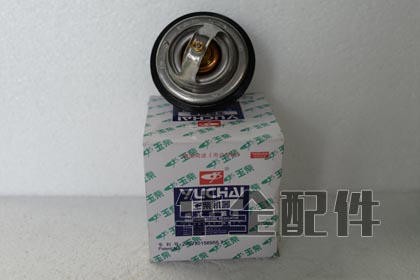
A thermostat is a temperature-actuated flow-control valve installed in the engine's coolant outlet (between the cylinder head and the radiator) that regulates the engine operating temperature. It uses a wax-filled copper element (the 'power element' or 'pellet') as the thermal actuator. As the coolant temperature rises to the thermostat's opening setpoint (typically 71-88 degrees C), the wax inside the pellet melts and expands, pushing a piston that forces the valve open against spring pressure. The valve begins to open at the rated temperature and is fully open at approximately 12-15 degrees C above that temperature. The thermostat continuously modulates between open and closed to maintain the engine at the design operating temperature — typically 85-95 degrees C for modern diesel generators. This temperature is not arbitrary: it is the temperature at which the engine achieves optimal combustion efficiency, minimal wear (cold engines experience 3-5x more cylinder wear), and correct clearances between moving parts.
What are the symptoms of a stuck-open thermostat?
A thermostat stuck open (fail-safe mode): (1) Engine runs too cold — the temperature gauge reads well below normal, especially at light loads; (2) Long warm-up time — the engine takes 15-30 minutes to reach operating temperature when it normally takes 5-10; (3) Poor fuel economy at light loads — the engine never reaches the temperature at which the fuel injection timing and quantity are optimized; (4) Increased engine wear — cold, thick oil provides inadequate lubrication, and cold cylinder walls cause fuel condensation (washing the oil film off); (5) White smoke at light loads — combustion temperatures are too low for complete fuel combustion; (6) Cabin heater (if equipped) produces lukewarm air. While a stuck-open thermostat does not cause immediate catastrophic damage, it accelerates engine wear and reduces efficiency. A generator that cycles on/off frequently (load management) may never reach operating temperature with a stuck-open thermostat, suffering continuous cold-engine wear. Replace a stuck-open thermostat — do not leave it 'as is' because the engine 'still runs.'
What are the symptoms of a stuck-closed thermostat?
A thermostat stuck closed (fail-dangerous mode): (1) Engine overheats rapidly — within 5-10 minutes of starting, the temperature gauge climbs into the red zone because no coolant circulates to the radiator; (2) Coolant boiling — after shutdown, you hear gurgling and see steam from the overflow; (3) The upper radiator hose is cold while the engine is overheating — a clear diagnostic sign: hot coolant is trapped in the engine, not reaching the radiator; (4) Temperature gauge rises but radiator fan air feels cold — the radiator is cold because hot coolant is not flowing through it; (5) Coolant loss through the pressure cap relief — the boiling coolant forces its way past the cap. This is an emergency — shut the engine down immediately. Continued operation with a stuck-closed thermostat will cause: cylinder head warping (aluminum heads warp at 120+ degrees C), head gasket failure, piston scuffing, and turbocharger bearing coking. Replace the thermostat before the next start — do not attempt to run without a thermostat (unrestricted flow can cause overcooling and uneven cooling).
Which engine brands are HUAQUAN thermostats compatible with?
HUAQUAN thermostats are manufactured for: Cummins (4BT-6CT, ISB-ISL, QSB-QSL, NT855, KTA19/38/50, QSK), Perkins (1103-4008), Deutz (912-2015), Weichai (WD615/618, WP10/12/13/17, 226B, 6160-6200), Yuchai (YC4-YCK), Shangchai (SC4H-SC33W), and all Chinese diesel platforms. Opening temperatures: 71 degrees C, 77 degrees C, 82 degrees C, 88 degrees C (engine-specific — verify against service manual). Available individually (for single-thermostat engines) or as matched sets (for dual-thermostat engines — common on large engines, both must be replaced together). Each thermostat is supplied with the correct housing gasket or O-ring.
How do I test a thermostat?
Test procedure: (1) Remove the thermostat from the engine; (2) Inspect visually — look for corrosion, debris, or the valve stuck in position; (3) Suspend the thermostat in a pot of water using a piece of wire — the thermostat must be completely submerged and not touching the pot sides or bottom; (4) Place a cooking thermometer in the water — ensure it does not touch the pot; (5) Heat the water slowly while observing the thermostat and thermometer; (6) Record the temperature at which the thermostat begins to open (the valve moves ~0.1-0.2mm). This should match the stamped temperature +-2 degrees C; (7) Continue heating — the thermostat should be fully open (8-10mm valve lift) by approximately 12-15 degrees C above the opening temperature; (8) Remove from the hot water and observe that the thermostat closes fully as it cools. A thermostat that does not open at the rated temperature, does not open fully, or does not close fully should be replaced.
What is the correct thermostat temperature rating for a diesel generator?
The thermostat opening temperature is specified by the engine manufacturer, typically stamped on the thermostat flange. Common ratings: 71 degrees C (1,600 degrees F) for older engines, 77-82 degrees C for most modern mechanically governed diesels, and 85-88 degrees C for electronically controlled common-rail engines. The thermostat rating is a minimum operating temperature — the actual stabilized operating temperature will be approximately 5-10 degrees C above the opening temperature. Do not install a lower-temperature thermostat to 'fix overheating' — overheating is caused by a failed cooling system component (radiator, fan, water pump, or thermostat itself), not by the thermostat rating. Installing a lower-rated thermostat: does not fix the root cause, may prevent the engine from reaching design temperature, and can actually increase engine wear and fuel consumption. Replace with the OEM-specified temperature rating.
How should I replace a thermostat?
Replacement procedure: (1) Allow the engine to cool completely — opening a hot cooling system sprays boiling coolant; (2) Drain the coolant to a level below the thermostat housing; (3) Remove the thermostat housing bolts evenly (sticking bolts can break the housing ears); (4) Remove the old thermostat and gasket — scrape the mating surfaces clean with a gasket scraper (not a screwdriver, which gouges the soft aluminum); (5) Verify the thermostat bypass passage in the housing is clear — a blocked bypass causes overheating at cold start; (6) Install the new thermostat with the sensing element (the spring/wax pellet end) facing the ENGINE (toward the hot coolant), NOT facing the radiator. Installing backward is a common mistake that prevents the thermostat from opening; (7) Install a new gasket (dry or with a thin film of gasket sealant as specified); (8) Tighten housing bolts evenly to specification (typically 20-30 Nm — overtightening cracks the housing); (9) Refill with coolant, run the engine to operating temperature, and check for leaks.