What are crankshaft bearings and what is their function?
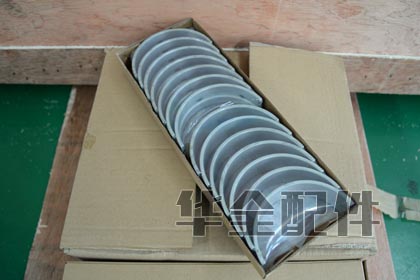
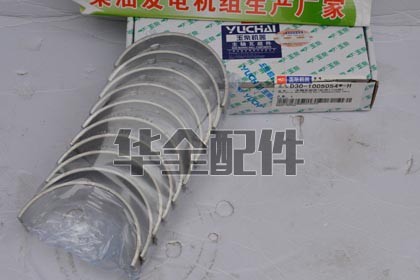
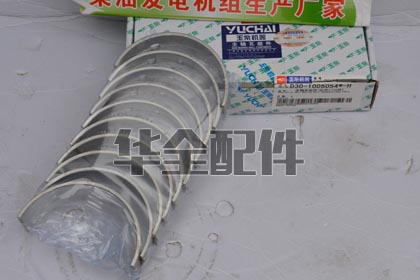
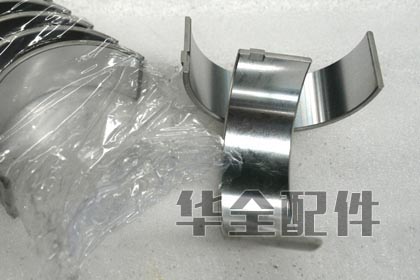
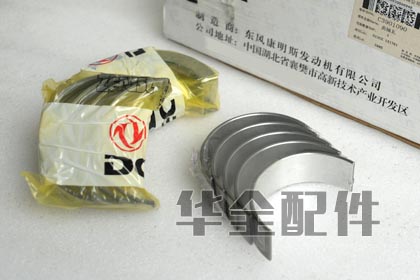
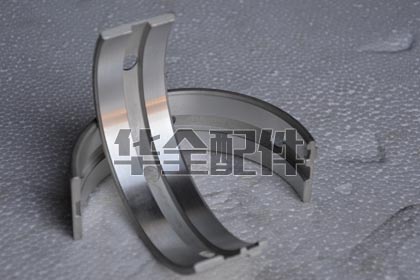
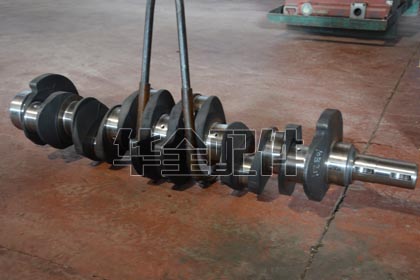
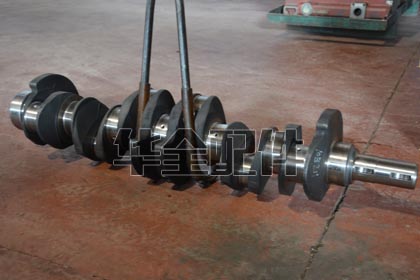
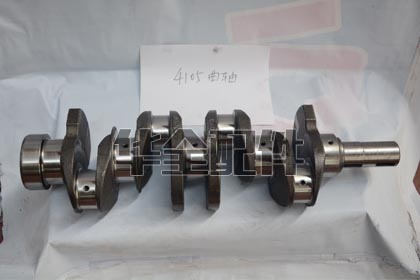
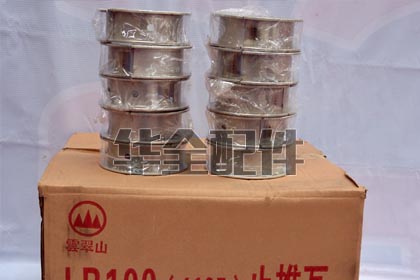
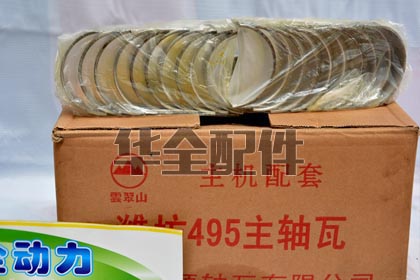
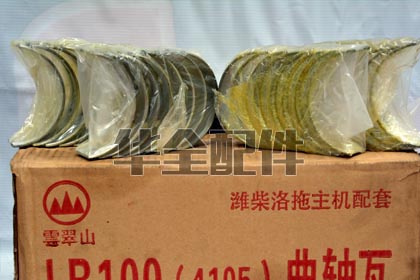
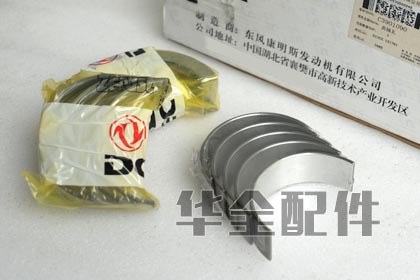
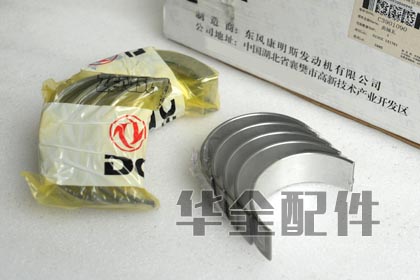
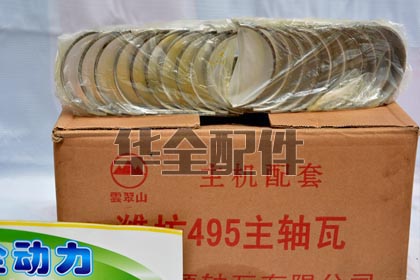
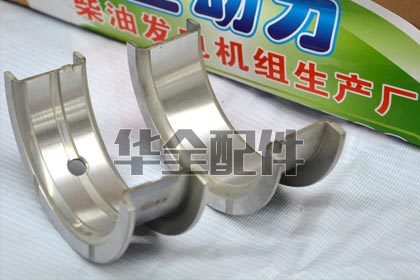
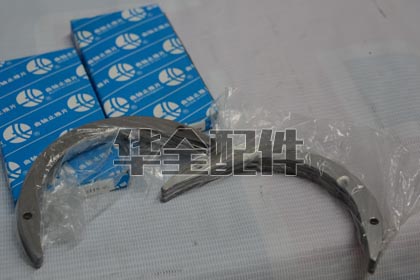
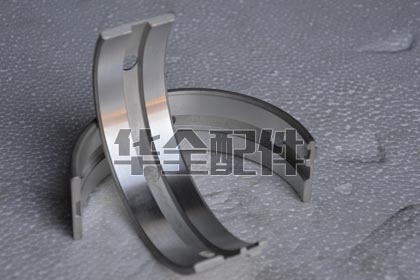
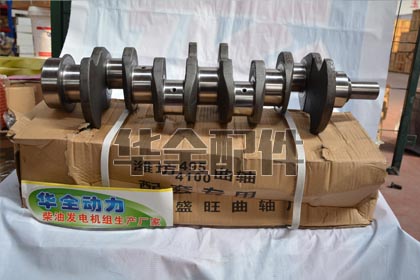
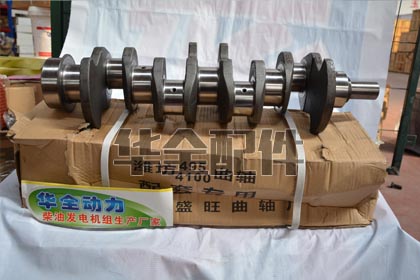
Crankshaft bearings — including main bearings and connecting rod (big-end) bearings — are precision-engineered plain bearings that support the crankshaft and connecting rods, allowing them to rotate at 1,500-1,800 RPM with minimal friction while carrying immense combustion loads. They operate on hydrodynamic lubrication: the rotating journal drags oil into a converging wedge, creating a pressurized oil film that completely separates the bearing surface from the journal — there is zero metal-to-metal contact during normal operation. Main bearings support the crankshaft in the engine block at 5-9 positions. Connecting rod bearings carry combustion and inertial loads between each rod and its journal.
What are crankshaft bearings made of?
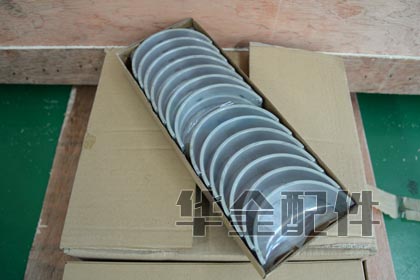
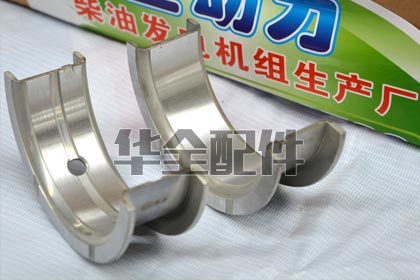
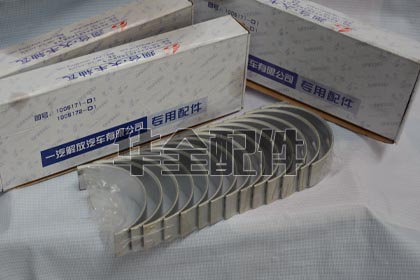
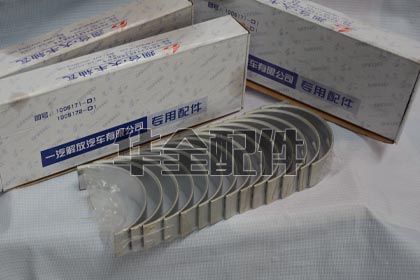
Modern diesel crankshaft bearings use tri-metal construction: (1) Steel backing (1.5-5mm) — structural strength and dimensional stability; (2) Copper-lead alloy intermediate layer (0.3-0.5mm) — high fatigue strength and load capacity; (3) Lead-tin-copper overlay (0.015-0.025mm) — provides embeddability (traps dirt particles to prevent journal scoring) and conformability (adapts to minor misalignment). A nickel barrier layer may prevent tin migration. The overlay is sacrificial — when it wears through to copper, the bearing must be replaced immediately.
What are the early warning signs of crankshaft bearing wear?
Early bearing wear indicators: (1) Gradual oil pressure decline — as clearance increases from wear, oil flows out faster, reducing pressure 5-15 PSI from baseline; (2) Low-frequency metallic rumbling during cold start; (3) Shiny metal particles in drained oil — gold-colored flakes indicate bearing overlay; (4) Oil analysis showing rising wear metals: copper above 20 ppm, lead above 15 ppm, aluminum above 10 ppm, tin above 5 ppm — a rising trend matters more than a single reading; (5) Vibration analysis showing increased amplitude at crankshaft rotational frequency. Any combination warrants removing the oil pan for direct inspection.
Which engine brands are HUAQUAN crankshaft bearings compatible with?
HUAQUAN crankshaft bearings (main and rod sets) are manufactured for: Cummins (4BT, 6BT, 6CT, ISB, ISC, ISL, QSB, QSL, NT855, KTA19/38/50, QSK series), Perkins (1103-4008 series), Deutz (912-2015 series), Weichai (WD615, WD618, WP10/12/13/17, 226B, 6160-6200 series), Yuchai (YC4, YC6, YCK series), Shangchai (SC4H-SC33W series), and all Chinese diesel platforms. Available in standard and undersizes: 0.25mm, 0.50mm, 0.75mm, 1.00mm for reground crankshafts.
What is bearing crush and why is it critical?
Bearing crush is the intentional slight excess height of the bearing shell compared to its housing bore — typically 0.025-0.075mm per shell half. When the cap is torqued, this excess is compressed, creating radial pressure that: (1) Locks the bearing in place — prevents spinning which blocks oil supply; (2) Ensures full contact for heat transfer — up to 30% of bearing heat flows through the housing into the block; (3) Prevents bearing fretting. Insufficient crush causes the bearing to spin — immediate failure. Excessive crush distorts the bore — uneven clearance and accelerated wear.
How do I measure crankshaft bearing clearance?
Use Plastigage (plastic deformation gauge): (1) Clean the journal and bearing with solvent; (2) Place a Plastigage strip across the journal width; (3) Install the cap and torque to specification — do NOT rotate the crankshaft; (4) Remove cap — the Plastigage will be flattened; (5) Compare against the printed scale. Typical clearances: main bearings 0.05-0.12mm, rod bearings 0.04-0.10mm. If clearance exceeds the service limit, the crankshaft must be reground and undersize bearings installed. Plastigage accuracy is +-0.005mm when used correctly.
What causes a crankshaft bearing to spin?
A spun bearing occurs when the shell loses its press-fit and rotates with the crankshaft, blocking the oil supply hole. Causes: (1) Insufficient bearing crush — worn housing bore or contamination behind the bearing; (2) Oil starvation — friction heat momentarily welds the bearing to the journal, adhesion force exceeds crush retention; (3) Excessive clearance causing bearing hammering at each combustion pulse; (4) Assembly errors — backwards bearing, mixed bearing caps, or incorrect torque. A spun bearing destroys both the housing bore (requires line boring) and the journal — an extremely expensive repair.
When should I use standard size vs. undersize bearings?
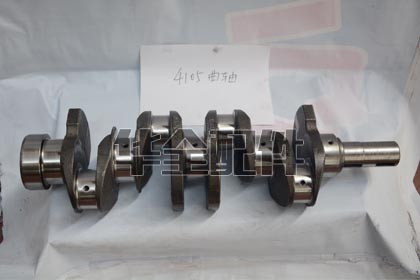
Use STD bearings when the crankshaft journal is within specification for diameter, roundness (within 0.005mm), taper, and surface finish with no scoring or heat damage. Use undersize bearings when the crankshaft has been professionally reground to a smaller diameter to remove surface damage. Common undersizes: 0.25mm, 0.50mm, 0.75mm, 1.00mm. The crankshaft MUST be ground to exact undersize by a machine shop — never mix STD bearings with an undersize journal (dangerously loose) or undersize bearings with an STD journal (seizure at startup).
What is the proper break-in procedure for new crankshaft bearings?
Proper break-in: (1) Pre-lubricate all bearing surfaces and journals with clean oil or assembly lube; (2) Prime the oil system — disable fuel and crank in 15-second bursts until oil pressure registers; (3) Initial start at 1,000-1,200 RPM — NOT idle which provides insufficient pressure; (4) First 30 minutes — vary speed with zero load, listen for abnormal noise; (5) First hour under load — gradually increase to 50% load while monitoring pressure and temperature; (6) First 50 hours — avoid both prolonged idle and full load; (7) At 50 hours — drain oil, replace filter, inspect filter element for metal particles. If analysis is normal, return to full-load service.
How does oil viscosity affect crankshaft bearing life?
Oil viscosity is directly proportional to oil film thickness. Too thin: the film may not separate surfaces under peak loads, causing boundary lubrication and accelerated wear. Too thick: increased fluid friction wastes power and delays critical bearing oil delivery during cold starts — when most wear occurs. For most diesel generators, 15W-40 is standard. For arctic conditions: 5W-40 or 0W-40 synthetic. For extreme heat: SAE 40 or 20W-50. Always follow the engine manufacturer's viscosity chart — it is based on measured bearing temperatures and clearances for that specific engine design.
What is the difference between main bearings and thrust bearings?
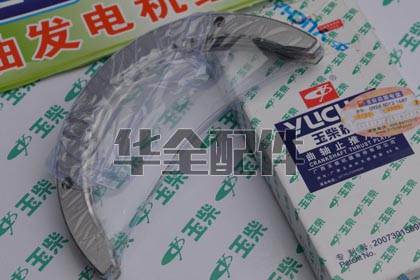
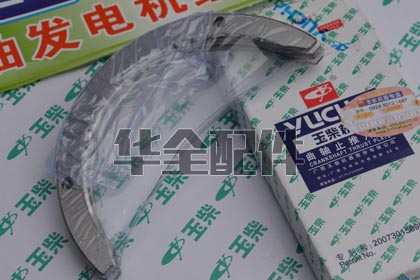
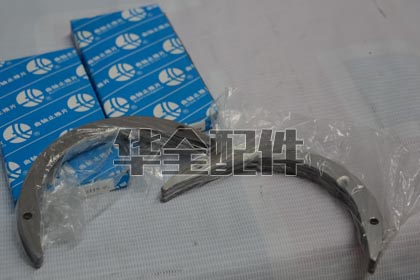
Main (radial) bearings support vertical and horizontal loads from combustion and rotating mass. The thrust bearing (typically integrated into one main position — usually center or rear main) controls axial crankshaft movement with flanged thrust faces. Acceptable end play is 0.05-0.30mm. Excessive end play (above 0.40mm) indicates worn thrust faces and can cause alternator rotor-stator rubbing, inconsistent sensor readings on electronic engines, and abnormal coupling wear. Thrust bearing failure is often caused by excessive belt tension or misaligned driveline components.
Can I replace only one set of crankshaft bearings?
During any engine overhaul, replace ALL main bearings and ALL connecting rod bearings as complete sets — never replace a single failed bearing in isolation. All bearings share identical operating hours and conditions — the next failure is statistically imminent. Replacing one bearing creates inconsistent clearances disrupting oil pressure distribution. The labor cost of accessing bearings far exceeds the bearing cost — a full set ($200-800) vs. one pair ($30-60) is negligible compared to repeating days of labor. The only possible exception: a single bearing fails within first 100 hours from a manufacturing defect, confirmed by borescope showing all other bearings are perfect.
What is the relationship between oil filter quality and bearing life?
Oil filter quality directly determines bearing life. Bearing clearances are 0.04-0.12mm (40-120 microns). A high-quality filter (Fleetguard LF9009, Donaldson, Baldwin) captures particles down to 15-25 microns at 98%+ efficiency. Low-quality filters may only capture 40-50 micron particles at 70-80% efficiency — a continuous stream of damaging particles passes to the bearings. Studies show upgrading filtration can extend bearing life 3-5x. For dusty environments, consider a bypass filtration system that polishes oil to sub-micron cleanliness — doubling or tripling bearing service life.
How should I store spare crankshaft bearings?
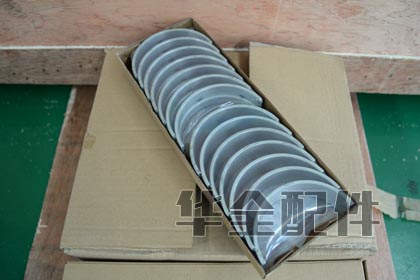
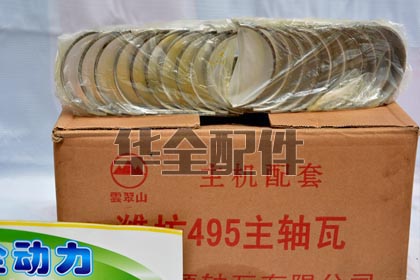
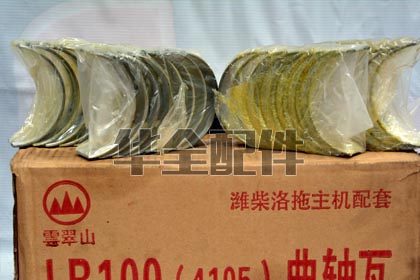
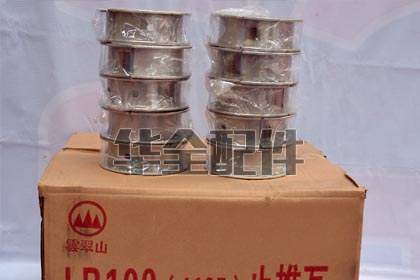
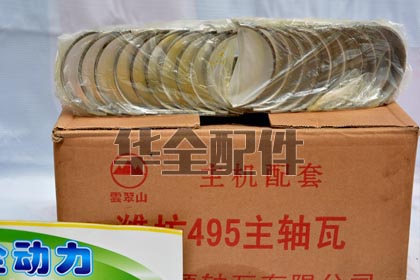
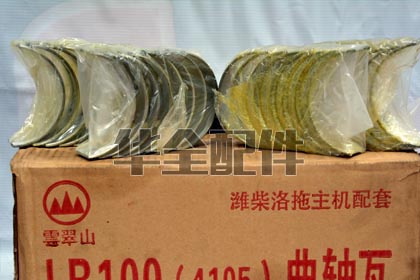
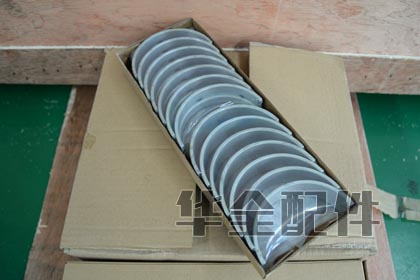
Proper storage: (1) Keep in original wax paper or VCI packaging — the protective coating prevents corrosion; (2) Store horizontally on a flat surface — never on edge as they can distort; (3) Climate-controlled: 15-30 degrees C, below 60% relative humidity; (4) Never remove from packaging for inspection and return to storage — skin oils initiate corrosion; (5) Label clearly with engine model, position, journal size, and purchase date. Shelf life: properly stored tri-metal bearings maintain serviceability for 5+ years. Before installing older stock, inspect under magnification for overlay oxidation, packaging damage, or corrosion.
What is the difference between bi-metal and tri-metal crankshaft bearings?
Bi-metal bearings have steel backing with aluminum-tin lining directly bonded — no separate overlay. Advantages: excellent fatigue resistance, good corrosion resistance, lower cost. Limitation: limited embeddability — dirt particles tend to score the crankshaft rather than embed. Tri-metal bearings add a soft lead-tin-copper overlay over a copper-lead intermediate layer — superior embeddability and conformability. Trade-off: the overlay is sacrificial and eventually wears through, giving tri-metal bearings a finite life even under ideal conditions. HUAQUAN supplies both types — always match the bearing type originally specified for your engine.

配套占用曲轴.jpg)
配套占用曲轴-1.jpg)