What are piston rings and what is their function?
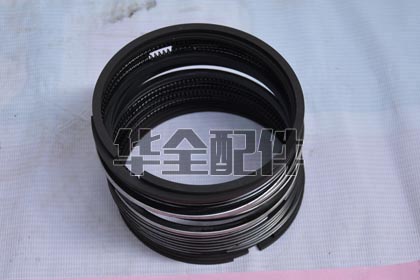
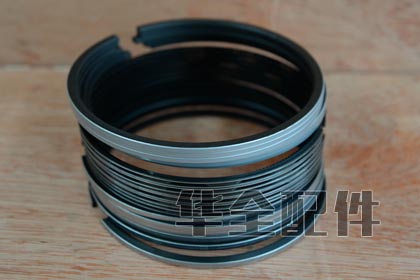
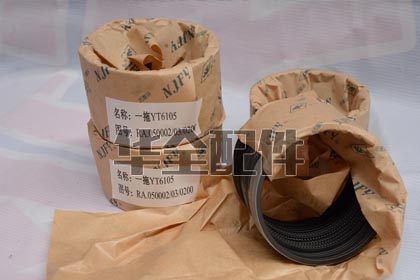
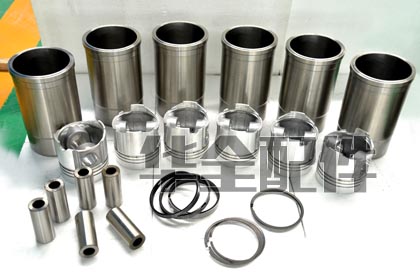
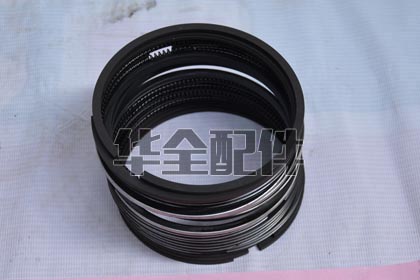
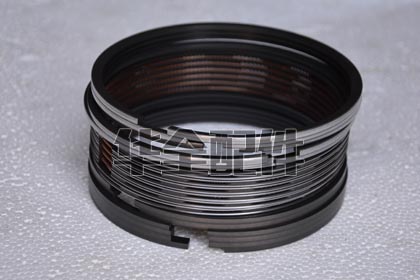
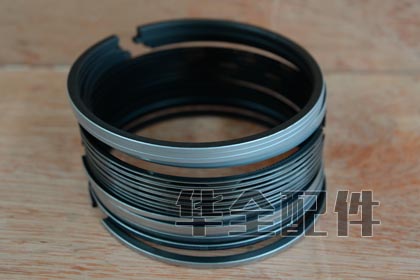
Piston rings are split metal rings installed in grooves on the piston that provide three essential functions: (1) Compression sealing — the top compression ring(s) seal the high-pressure combustion gases (up to 200 bar peak cylinder pressure in turbocharged diesels) from leaking past the piston into the crankcase. This seal must be maintained despite the piston moving at up to 15-20 m/s mean piston speed; (2) Oil control — the oil control ring (the bottom ring) scrapes excess oil off the cylinder wall, returning it to the crankcase through drain holes in the piston. It leaves a controlled oil film thickness of 0.5-2 microns — enough for lubrication, not enough to burn; (3) Heat transfer — the piston rings conduct approximately 50-70% of the piston's absorbed combustion heat from the piston crown to the cooled cylinder wall. Without this heat path, the piston would overheat and seize within minutes. Rings are the most dynamically stressed component — operating at 250+ degrees C, cycling from 0 to 200 bar at 12-25 Hz, with only a micron-scale oil film for lubrication.
What materials are diesel engine piston rings made from?
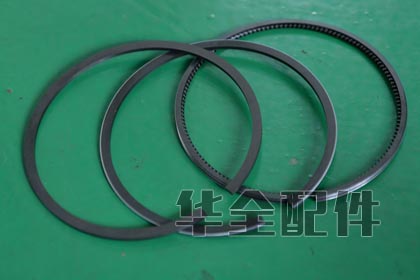
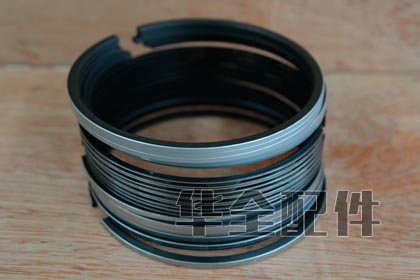
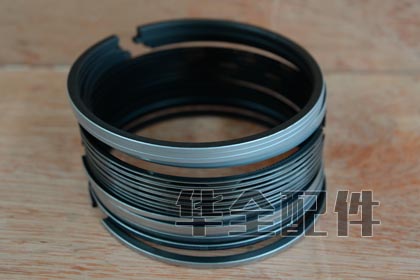
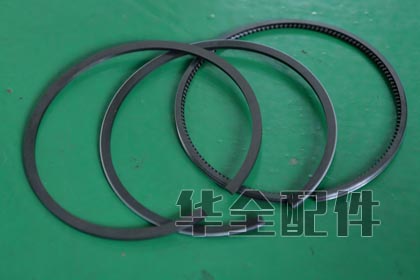
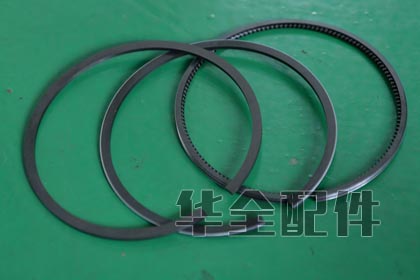
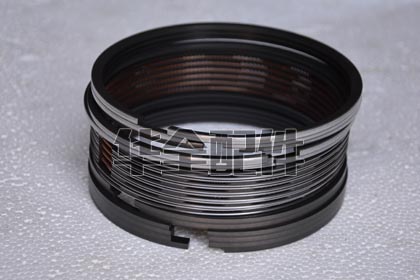
Ring materials: (1) Top compression ring: nodular cast iron (ductile iron) or alloy steel. The running face is plasma-sprayed with molybdenum coating or chromium-plated — these coatings provide scuff resistance during the boundary lubrication conditions at TDC (where the piston momentarily stops, squeezing out the oil film); (2) Second compression ring: grey cast iron or alloy cast iron with a tapered or Napier (undercut) face that helps scrape oil downward; (3) Oil control ring: grey cast iron or steel, with a spring expander (stainless steel coil spring) behind the ring to maintain consistent radial tension against the cylinder wall. The expander provides the radial force throughout the ring's life as the outer face wears. Modern heavy-duty diesel rings increasingly use steel for all three rings for higher fatigue strength and lower weight. HUAQUAN ring sets are manufactured to the engine OEM's exact material, coating, and geometry specifications.
What are the symptoms of worn piston rings?
Worn ring symptoms: (1) Blue/grey exhaust smoke — oil being burned in the combustion chamber. Most noticeable at start-up (when oil has drained into the cylinder overnight) and under load; (2) High oil consumption — exceeding 0.25-0.5% of fuel consumption (e.g., burning 1+ liter of oil per 200 liters of fuel); (3) Low compression — measured by compression test or leak-down test. Low compression in all cylinders suggests uniform ring/cylinder wear; low in one cylinder suggests a broken ring; (4) Excessive crankcase blow-by — combustion gases bypassing the rings pressurize the crankcase. Remove the oil filler cap while running: wisps of vapor are normal; a steady stream of smoke indicates significant blow-by; (5) Oil in the intake system — blow-by oil mist from the crankcase ventilation system coating the turbocharger compressor inlet and intercooler; (6) Hard starting when hot — low compression combined with hot thin oil reduces sealing, making starting difficult.
Which engine brands are HUAQUAN piston ring sets compatible with?
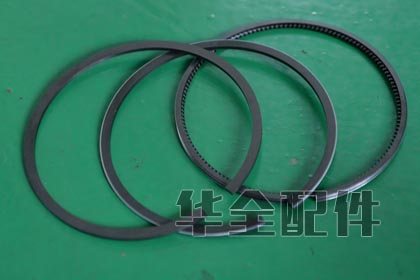
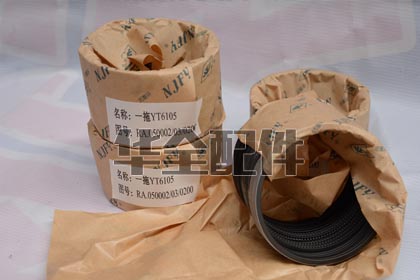
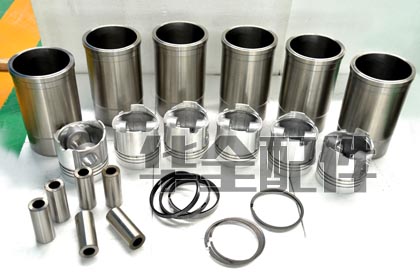
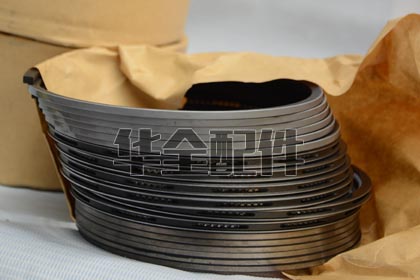
HUAQUAN piston rings are manufactured for: Cummins (4BT, 6BT, 6CT, ISB, ISC, ISL, NT855, KTA19/38/50), Perkins (1103-4008), Deutz (912-2015), Weichai (WD615, WD618, WP10/12/13/17, 226B, 6160-6200), Yuchai (YC4, YC6, YCK), Shangchai (SC4H-SC33W), and all Chinese diesel platforms. Available in standard bore size and oversize (+0.25mm, +0.50mm, +0.75mm, +1.00mm) for re-bored cylinders. Each set includes: top compression ring, second compression ring, and oil control ring with expander. When ordering oversize rings, verify the cylinder bore has been machined to the corresponding oversize and honed to the correct surface finish (Ra 0.2-0.4 microns for plateau-honed diesel cylinders).
What is the correct procedure for gapping piston rings?
Ring end gap — the clearance between the ring ends when the ring is installed in the cylinder — must be set correctly. Too tight: the ring ends butt together when hot, the ring expands and seizes in the bore, causing catastrophic piston and cylinder damage. Too loose: excessive blow-by gas leakage past the ring, reducing compression and power. Procedure: (1) Insert the ring square into the cylinder bore — use the piston upside-down to push the ring to a position approximately 20-30mm below the top of the bore (where the ring operates in the worn area, not the unworn ridge at the top); (2) Measure the end gap with a feeler gauge; (3) Typical specifications: top ring 0.30-0.50mm (0.012-0.020 inch), second ring 0.35-0.55mm, oil ring 0.25-0.50mm. Rule of thumb: 0.004 inch per inch of bore diameter. (4) If the gap is too tight, carefully file one ring end square using a ring gap filing tool — always file from the outside toward the inside, preserving the square end profile. Never use pliers to twist or bend the ring — it will snap.
How should piston rings be installed on the piston?
Installation procedure: (1) Verify the ring orientation — most rings have a marking (dot, letter, or the word 'TOP') on one side — this side faces UP (toward the piston crown). Installing a ring upside down (where the ring has a tapered or barrel face) will pump oil into the combustion chamber instead of scraping it downward; (2) Install the oil control ring expander first — the ends must butt together, NOT overlap. Then install the two thin oil ring rails above and below the expander — their gaps must be 20-30mm from the expander gap; (3) For the compression rings, use ring pliers to expand the ring just enough to slide over the piston — excessive expansion permanently deforms the ring; (4) Stagger ring gaps around the piston: the general practice is to space the gaps 120-180 degrees apart, avoiding alignment with the piston pin axis and the thrust faces; (5) After installation, verify each ring rotates freely in its groove — a ring that binds in the groove cannot seal and will cause localized cylinder wear.
What is the difference between standard and oversize piston rings?
Standard rings are manufactured for the engine's original bore diameter. Oversize rings (typically +0.25mm, +0.50mm, +0.75mm, +1.00mm on diameter) are for cylinders that have been re-bored (machined) to a larger diameter during engine overhaul to remove wear, scoring, or out-of-round. Critical: oversize rings can ONLY be used with oversize pistons that match the same oversize. Installing an oversize ring on a standard piston or vice versa will result in a ring that either cannot be compressed into the cylinder (too large) or has an excessive end gap (too small). The cylinder bore must be precision-honed to the oversize dimension with the correct cross-hatch angle (typically 30-45 degrees). When ordering, verify the bore has been machined to the exact oversize — for example, +0.50mm rings require a bore that is exactly +0.50mm over the standard diameter, within 0.01mm tolerance.
What causes piston ring breakage?
Causes: (1) Incorrect installation — the ring was over-expanded during installation, creating a micro-crack that propagated in service; (2) Ring gap too small — the ring ends butted together when hot, seized, and fractured; (3) Detonation (diesel knock) — severe pressure spikes from uncontrolled combustion fracture the thin ring lands on the piston, which then break the rings; (4) Carbon packing behind the ring — carbon buildup in the piston groove pushes the ring outward excessively, causing it to rub hard against the cylinder wall and fracture; (5) Cylinder bore ridge — a pronounced wear ridge at the top of the cylinder (where the top ring stops) can strike the new ring if the ridge was not removed before installing new rings in a used cylinder; (6) Foreign object ingestion — a broken valve, turbocharger fragment, or other debris entering the combustion chamber breaks the ring on impact. A single broken ring fragment circulating in a running engine will destroy the piston, cylinder head, and possibly the turbocharger turbine wheel.
What is the break-in procedure for new piston rings?
Ring break-in (seating) is critical — the rings must wear-microscopically to conform to the cylinder wall's unique surface profile. Procedure: (1) Use break-in oil (mineral-based, high-ZDDP, without friction modifiers) — synthetic oils and friction modifiers can prevent proper ring seating; (2) Start the engine and immediately bring to fast idle (1,000-1,200 RPM) — do NOT idle for extended periods, as low-speed operation provides insufficient combustion pressure to push the rings against the cylinder wall; (3) Vary the load between 25% and 75% for the first 1-2 hours — constant-speed constant-load operation does not effectively seat rings because the ring travel path in the cylinder becomes grooved; (4) After the initial break-in period (typically 2-4 hours), change the oil and filter to remove break-in wear particles; (5) The rings continue to fully seat over the first 20-50 operating hours. Monitor oil consumption — it should steadily decrease as rings seat. If oil consumption remains high after 50 hours, the rings have failed to seat, and re-honing of the cylinder may be necessary.