
Generator Engine Parts — Comprehensive Overview
The engine is the heart of any generator set. Whether you are maintaining a diesel standby generator, repairing a gas-powered portable unit, or sourcing replacement components for a large industrial genset, understanding each engine part’s function is essential for reliable operation and efficient maintenance. This guide covers all major generator engine components, their roles, common failure modes, and replacement considerations.
Major Engine Components by System
Engine Block and Core Components
| Component | Function | Common Material | Typical Service Life |
|---|---|---|---|
| Cylinder Block | Main structural housing containing cylinders, coolant passages, and oil galleries | Cast iron or aluminum alloy | 15,000–30,000 hours |
| Cylinder Head | Seals the top of cylinders; houses valves, injectors, and glow plugs | Cast iron or aluminum | 10,000–20,000 hours |
| Crankshaft | Converts reciprocating piston motion into rotational force | Forged alloy steel | 20,000–40,000 hours |
| Connecting Rods | Transfers force from pistons to crankshaft | Forged steel or aluminum | 15,000–25,000 hours |
| Pistons | Compress air-fuel mixture and transmit combustion force | Aluminum alloy | 8,000–15,000 hours |
| Piston Rings | Seal combustion chamber, control oil consumption, transfer heat | Cast iron or steel with coatings | 5,000–8,000 hours |
| Cylinder Liners | Replaceable inner cylinder surface for wear protection | Cast iron with chrome/ceramic coating | 8,000–15,000 hours |
Valve Train Components
| Component | Function | Signs of Wear | Replacement Interval |
|---|---|---|---|
| Intake Valves | Allow air/fuel mixture into combustion chamber | Power loss, backfiring | 4,000–8,000 hours |
| Exhaust Valves | Release combustion gases after power stroke | Burnt valve face, compression loss | 3,000–6,000 hours |
| Valve Seats | Provide sealing surface for valves in cylinder head | Recession, pitting | Match valve replacement |
| Valve Guides | Align valve stem movement | Excessive oil consumption | Match valve replacement |
| Valve Springs | Return valves to closed position | Weak spring, valve float at high RPM | 4,000–8,000 hours |
| Pushrods / Rocker Arms | Transmit camshaft motion to valves | Excessive valve clearance, ticking noise | 10,000–15,000 hours |
Fuel System Engine Components
| Component | Function | Type | Symptoms of Failure |
|---|---|---|---|
| Fuel Injection Pump | Pressurizes and meters fuel delivery to injectors | Inline, rotary, or common-rail | Hard starting, misfiring, power loss |
| Fuel Injectors | Atomize fuel into combustion chamber at precise timing | Mechanical or electronic (solenoid/piezo) | Black smoke, knocking, uneven running |
| Fuel Lift Pump | Delivers fuel from tank to injection pump | Mechanical diaphragm or electric | Engine cranks but won’t start |
| Fuel Lines & Hoses | Transport fuel between tank, filters, pump, and injectors | Steel, nylon, or rubber | Leaks, air ingress, fuel starvation |
Lubrication System Components
| Component | Function | Considerations |
|---|---|---|
| Oil Pump | Circulates oil under pressure to bearings, pistons, and valve train | Gear-type most common; failure causes catastrophic engine damage within minutes |
| Oil Filter | Removes contaminants from circulating oil | Replace with every oil change; bypass valve ensures oil flow if clogged |
| Oil Pan / Sump | Reservoir for engine oil at bottom of block | Gasket leaks common; inspect during every service |
| Oil Cooler | Heat exchanger to maintain optimal oil temperature | Critical in turbocharged engines; internal leaks can contaminate coolant |
Diesel vs. Gas Generator Engine Parts — Key Differences
- Compression Ratio: Diesel engines operate at 14:1 to 25:1 compression vs. 8:1 to 12:1 for gas. This means diesel pistons, rings, and cylinder heads must withstand significantly higher pressure.
- Ignition System: Gasoline engines require spark plugs, ignition coils, and distributors — all absent in diesel engines. Diesel engines use glow plugs for cold starts instead.
- Fuel Delivery: Diesel uses high-pressure direct injection (500–2500 bar); gas uses port or direct injection at much lower pressures. Diesel injection components are more robust and expensive.
- Engine Block: Diesel blocks are typically heavier with thicker cylinder walls and reinforced main bearing webs to handle higher combustion pressures.
- Turbocharging: Nearly all modern diesel generators are turbocharged; only a subset of gas generators use forced induction. Turbocharger maintenance is therefore a much larger consideration for diesel units.
Common Generator Engine Parts Wear and Failure Patterns
| Failure Mode | Affected Parts | Root Cause | Prevention |
|---|---|---|---|
| Oil Starvation | Bearings, crankshaft, pistons, turbocharger | Low oil level, clogged pickup, pump failure | Daily oil level checks, regular oil changes per manufacturer schedule |
| Overheating | Cylinder head gasket, pistons, valves | Coolant loss, thermostat failure, clogged radiator | Coolant level checks, thermostat testing, radiator cleaning |
| Contaminated Fuel | Injectors, injection pump, piston rings | Water or debris in fuel, algae growth in diesel | Fuel-water separator maintenance, fuel polishing, biocide treatment |
| Dust Ingestion | Piston rings, cylinder liners, valves | Failed or improperly sealed air filter | Air filter inspection and replacement per schedule; check housing seals |
| Wet Stacking (Diesel) | Cylinder liners, exhaust system | Extended light-load or no-load operation | Apply load bank testing periodically; ensure >30% rated load |
| Cold Start Wear | Pistons, rings, cylinder liners | Starting without preheating in cold environments | Use block heater below 10°C; allow warm-up before loading |
Engine Parts Maintenance Schedule
| Interval | Task | Parts Involved |
|---|---|---|
| Daily / Every 8 Hours | Check oil level, coolant level, visual inspection for leaks | Oil pan, coolant reservoir, hoses, gaskets |
| Every 250 Hours | Oil and filter change, air filter inspection, fuel filter replacement | Oil filter, air filter, fuel filter |
| Every 500 Hours | Valve clearance check/adjustment, injector inspection | Valves, rocker arms, injectors |
| Every 1000 Hours | Coolant change, belt replacement, turbocharger inspection | Coolant, belts, turbocharger, hoses |
| Every 5000 Hours | Major engine overhaul: piston rings, bearings, cylinder head inspection | Pistons, rings, bearings, gaskets, seals |
| Every 15000 Hours | Complete engine rebuild or replacement | All major engine components |
How to Identify Your Generator Engine Parts
When ordering replacement parts, you will need the following information:
- Engine Model and Serial Number: Located on the engine data plate, typically on the valve cover or block side
- Generator Model Number: Found on the generator nameplate
- Part Number: From the original part, parts manual, or engine dealer lookup by serial number
- Engine Manufacturer: Common generator engine brands include Cummins, Perkins, Volvo Penta, MTU, John Deere, Doosan, and Yuchai
OEM vs. Aftermarket Engine Parts
When replacing engine components, you face a choice between OEM (Original Equipment Manufacturer) parts and aftermarket alternatives. OEM parts guarantee exact fitment and factory specifications but come at a premium. Aftermarket parts can offer significant cost savings (30-50%) but quality varies widely by manufacturer. For critical rotating assembly components (pistons, rings, bearings, crankshafts), we strongly recommend OEM or premium aftermarket brands with verifiable specifications. For external accessories (belts, hoses, gaskets), quality aftermarket options are generally reliable. See our dedicated guide: OEM vs Aftermarket Generator Parts — Complete Comparison.
Frequently Asked Questions
1. How do I know which engine is in my generator?
Locate the engine data plate on the valve cover or engine block. The engine model, serial number, and specification number are stamped there. If the data plate is missing, consult the generator manufacturer’s documentation or contact your dealer with the generator model number.
2. How often should I rebuild a generator engine?
Diesel generator engines typically require a major overhaul between 10,000 and 30,000 hours, depending on engine model, operating conditions, and maintenance quality. Standby generators that run infrequently may need overhaul based on age (15-20 years) rather than hours due to gasket and seal deterioration.
3. Can I use automotive engine parts in my generator engine?
Generally no. While some generator engines share a base block with automotive variants (e.g., certain Cummins and Perkins models), the governor system, cooling system components, and fuel system are typically calibrated differently for constant-speed generator operation. Always use parts specified for industrial/generator applications.
4. What are the signs of worn piston rings?
Key indicators include blue exhaust smoke (oil burning), increased oil consumption, loss of compression, hard starting, and reduced power output. A compression test can confirm: if compression is low on all cylinders or significantly lower on some, ring wear is likely.
5. Why does my diesel generator produce black smoke?
Black smoke indicates incomplete combustion, typically caused by over-fueling. Common causes include clogged air filters, faulty injectors (dripping or poor atomization), incorrect injection timing, or a turbocharger not delivering sufficient boost. White smoke suggests unburned fuel or coolant entering the combustion chamber.
6. What’s included in a generator engine overhaul kit?
A typical overhaul kit includes piston rings, cylinder liners (sleeves), main and connecting rod bearings, gaskets and seals (including head gasket), valve stem seals, and O-rings. Some kits also include pistons, valves, and oil pump. Always verify the kit contents match your engine serial number.
7. How do I prevent wet stacking in my diesel generator?
Wet stacking occurs when a diesel engine runs for extended periods at less than 30% of rated load, causing unburned fuel to accumulate in the exhaust. Prevent by: running the generator at >30-40% load during exercise cycles, performing periodic load bank testing, or specifying a right-sized generator for the actual load profile.
8. What causes a generator engine to overheat?
Common causes include low coolant level, clogged radiator fins (external debris), failed thermostat, worn water pump, collapsing radiator hoses, belt slippage reducing fan speed, and internal coolant passage blockage from scale buildup. Start with the simplest checks (coolant level, radiator cleanliness) before investigating internal components.
Related Articles
- Complete Generator Maintenance Guide — All Systems
- Generator Troubleshooting Guide — Common Problems & Solutions
- OEM vs Aftermarket Generator Parts
- Generator Parts Buying Guide — What You Need to Know
- Generator Fuel System Parts Overview
- Generator Lubrication System Components
- Generator Cooling System Parts
- Generator Engine Belts — Types and Replacement Guide
- Diesel Engine Spare Parts for Generators
- Gasoline Generator Engine Parts
Product Gallery
Boling
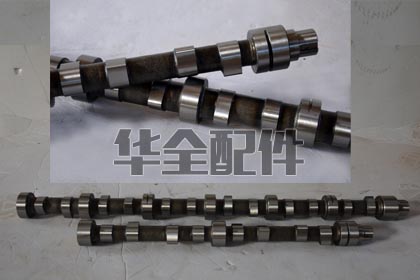
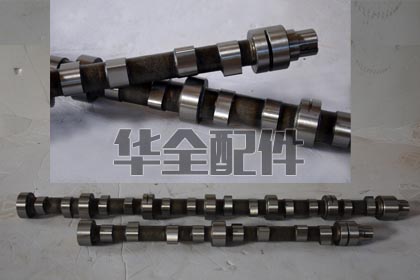
Weichai
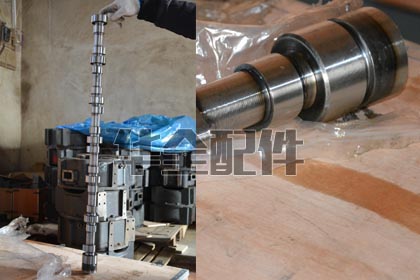
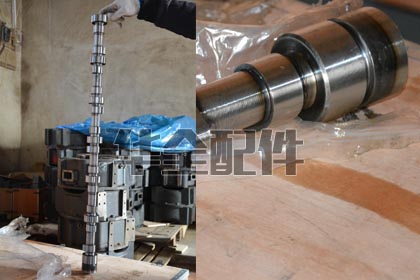
FAQ
Q: What are the main engine components that commonly need replacement on generators?
A: The most frequently replaced engine parts on generator sets, in order of replacement frequency: (1) Filters — oil, fuel, air, and coolant filters replaced every 250-500 hours; (2) Belts — fan/alternator belts replaced every 1,000-2,000 hours; (3) Hoses — coolant and fuel hoses every 3-5 years regardless of hours; (4) Injectors — diesel injectors reconditioned every 6,000-10,000 hours; (5) Water pump — replaced at 8,000-12,000 hours as preventive maintenance; (6) Turbocharger — reconditioned or replaced at 12,000-20,000 hours; (7) Cylinder head gasket — replaced during top-end overhaul at 15,000-25,000 hours; (8) Pistons, rings, and liners — replaced during major overhaul at 25,000-40,000 hours depending on engine size and duty cycle. Prime power engines running continuously clock hours 6x faster than standby units and follow the shorter end of every interval. HUAQUAN stocks all these components for major engine brands.
Q: What is a generator top-end overhaul vs. a major overhaul?
A: A top-end overhaul (15,000-25,000 hours): cylinder head removal, valve grind/replacement, valve seat reconditioning, cylinder head gasket replacement, injector service, turbocharger inspection/rebuild, and cooling system service. Pistons, rings, and liners are inspected but typically not replaced. Takes 2-5 days. A major overhaul (25,000-40,000 hours): complete engine disassembly including piston/liner/ring replacement, crankshaft inspection and bearing replacement, camshaft and follower inspection, oil pump rebuild, fuel injection pump calibration, complete gasket and seal replacement. Takes 1-3 weeks depending on engine size. The interval between these varies dramatically based on: fuel quality, oil change discipline, load factor (continuous 75%+ load is ideal for diesel engines), air filter maintenance, and operating environment (desert dust accelerates wear 2-3x). Oil analysis trending (spectrographic metal content and TBN) is the most reliable indicator for scheduling overhauls.
Q: Which engine brands does HUAQUAN supply replacement parts for?
A: HUAQUAN supplies diesel and gas engine parts for: Cummins (4BT through QSK95, including B/C/ISB/QSB, ISC/QSC, ISL/QSL, ISM/QSM, ISX/QSX, KTA19/38/50, QSK23/45/60/78/95), Perkins (400, 1100, 1200, 1300, 2300, 4000 series), Deutz (912, 913, 1012, 1013, 2012, 2013, 2015, 1015 series), Volvo Penta (D5 through D16 and TAD series), MTU/Detroit Diesel (Series 60, 2000, 4000), Weichai (WP4/6/10/12/13, WD615, WD618, 12M26, 12M33, 12M55), Yuchai (YC4/6, YCK08/11/13/15), Shangchai (SC4/7/8/9/12/13/25/27), Weifang (4100/4102/4105/6105/6113/6126 series), SDEC (SC8D/9D/12E/13E), Lovol, and SDEC. Parts coverage includes engine block components, cylinder head assemblies, crankshafts, connecting rods, pistons and rings, liners, camshafts, valve train, timing gear, oil pumps, water pumps, gasket kits, and fuel system components.
Q: How can I identify which engine model is on my generator?
A: Engine identification steps: (1) Locate the engine data plate — typically on the rocker cover, timing case, or block side. It contains the engine model, serial number, and specification/CPL number; (2) For Cummins: the CPL (Control Parts List) number is critical — the same 6BT engine can have 20+ different CPL numbers with different pistons, injectors, and timing; (3) For Perkins: the engine family code (e.g., PK, RE, RG, NJ) and build list number determine exact configuration; (4) For Chinese engines: the model plate usually shows engine series, cylinder bore, and rated power (e.g., R6105AZLD — R=Weifang series, 6=cylinders, 105=bore mm); (5) If the data plate is missing, measure bore and stroke (accessible through injector hole with a caliper), count flywheel bolts, note the injection pump model, and photograph the engine from multiple angles. HUAQUAN’s technical team can identify engines from photographs and casting numbers.
Q: What is the difference between OEM, genuine, and aftermarket engine parts?
A: OEM (Original Equipment Manufacturer): parts produced by the company that manufactured the original component — e.g., Bosch injectors, Mahle pistons, Kolbenschmidt bearings. The engine brand (Cummins, Perkins) packages these in their own boxes. Genuine: parts sold through the engine manufacturer’s dealer network in branded packaging — same part, 100-300% markup. Aftermarket: parts made by independent manufacturers to the same specifications, often by the same factories that supply the OEM. HUAQUAN sources directly from ISO 9001/TS 16949 certified factories — many of which are tier-1 suppliers to the major engine brands. Quality aftermarket parts use identical materials and processes at 30-60% lower cost by eliminating the brand markup and dealer network markup. Critical distinction: not all aftermarket parts are equal — insist on ISO-certified suppliers with traceable material certificates.
Q: How do I know when to replace piston rings vs. a complete piston/liner set?
A: Decision criteria for ring-only vs. complete replacement: (1) Measure cylinder liner bore wear at top ring reversal point — less than 0.15mm (0.006 inch) wear from original specification: ring replacement may be sufficient. Over 0.15mm: replace liners; (2) Inspect piston ring groove clearance — if the top ring groove has worn more than 0.10mm wider than specification, the piston must be replaced (the ring will rock and break); (3) Check piston skirt for scoring — any aluminum transfer to the liner surface requires piston replacement; (4) Measure piston-to-liner clearance — if at or above the wear limit, replace both; (5) Consider engine hours and cause of failure — if rings are worn due to dust ingestion (scored liners), replace the complete set. If rings are stuck from carbon (infrequent oil changes), the liners may be reusable after honing. Oil consumption exceeding 0.5% of fuel consumption indicates ring/liner replacement is needed.
Q: What causes diesel generator engine parts to fail prematurely?
A: Premature failure root causes: (1) Dust ingestion — accounts for 50%+ of premature wear. A missing or poorly maintained air filter allows silica particles into the cylinders, wearing rings and liners 10-50x faster than normal; (2) Fuel contamination — water in diesel causes injector tip erosion and injection pump corrosion; (3) Oil degradation — extended oil change intervals lead to soot buildup, oil thickening, and bearing corrosion from acid formation (TBN depletion); (4) Overheating — a single overheating event can warp the cylinder head, requiring a $5,000-$15,000 replacement; (5) Low-load operation (wet stacking) — running below 30% load for extended periods causes unburned fuel to wash cylinder walls and dilute oil; (6) Coolant neglect — old coolant loses corrosion inhibitors, causing liner pitting (cavitation erosion) that can penetrate into the combustion chamber within 3,000-5,000 hours; (7) Improper torque during assembly — over-torqued connecting rod bolts are the #1 cause of catastrophic rod failure.
Q: How do I select the correct piston and liner kit for my engine?
A: Piston/liner selection requires: (1) Engine model and serial number — this narrows to the correct parts group; (2) Piston grade — many engines have A/B/C grade pistons matched to A/B/C grade liners for optimal clearance. Always replace as a matched set; (3) Oversize availability — first oversize is typically +0.25mm, second oversize +0.50mm. Only order oversize if the crankshaft has been ground — standard bearings for standard crankshafts; (4) Compression ratio — different piston bowl designs exist for naturally aspirated vs. turbocharged engines; (5) Ring material — chrome-faced rings for standard applications, plasma-moly for high-output engines, and nitrided steel for extreme duty. HUAQUAN provides complete piston/liner/ring kits with all gaskets as a single part number for each engine variant — eliminating the risk of incompatible components.
Q: What is the proper break-in procedure for new generator engine parts?
A: Break-in procedure after major component replacement: (1) Pre-lube the engine — crank with the fuel solenoid disconnected until oil pressure builds (typically 10-15 seconds). This fills all oil galleries and bearings before the first combustion event; (2) Start and immediately bring to 1,000-1,200 RPM — do NOT idle. Idling generates insufficient oil splash to lubricate cylinder walls and cam lobes; (3) Run at 50-75% load for the first 2-4 hours — the combustion pressure forces rings against the cylinder wall to establish the wear pattern (ring seating); (4) Vary the load between 50-75% — avoid steady-state operation during break-in; (5) After 4 hours, increase to 75-100% load. Rings are typically seated within 2-8 hours; (6) Change oil and filter after the first 50 hours — break-in generates metal particles that must be removed; (7) Avoid prolonged no-load or light-load operation in the first 100 hours — this causes cylinder glazing that prevents proper ring seating.
Q: How do I interpret engine oil analysis results for parts wear prediction?
A: Oil analysis wear metal interpretation: Iron (Fe) — primarily from cylinder liners, also rings, camshaft, and crankshaft. Normal: 10-30 ppm per 1,000 hours. Elevated: >50 ppm — indicates accelerated liner/ring wear, often from dust ingestion; Chromium (Cr) — from piston rings (chrome-faced). Normal: 1-5 ppm; Aluminum (Al) — from pistons, bearings, and sometimes turbocharger compressor housing. Elevated: >15 ppm indicates piston scuffing or turbo contact; Copper (Cu) — from bearings (copper-lead construction) and oil cooler core. Elevated: >20 ppm indicates bearing wear or cooler corrosion; Lead (Pb) — from bearing overlay. Modern engines use little lead, so any reading above 5 ppm is significant; Silicon (Si) — abrasive dirt (silica). Normal: 5-15 ppm. Elevated: >25 ppm indicates air filter bypass or intake leak — the most critical indicator to act on immediately; Sodium (Na) and Potassium (K) — coolant leak into oil (head gasket, oil cooler). Any significant increase requires immediate investigation. Track trends over multiple samples — a sudden spike is more alarming than a gradual increase.
Q: What is the difference between diesel and gas generator engine parts?
A: While the basic engine architecture (block, crankshaft, connecting rods, pistons) is similar, key differences exist: (1) Pistons — gas engines use lower compression pistons (9:1-11:1 for natural gas vs 14:1-19:1 for diesel). Gas pistons have a different bowl design optimized for spark-ignited combustion; (2) Cylinder head — gas engines have spark plug holes and different valve seat materials (hardened for dry fuel, no diesel lubrication); (3) Fuel system — diesel uses high-pressure injection (200-2,700 bar); gas uses low-pressure mixers or port injection (2-10 bar); (4) Ignition system — gas engines have spark plugs, coils, and ignition control modules that diesel engines do not; (5) Valve train — gas engines often use hardened valve seats and rotators due to the absence of diesel’s lubricating effect on valve seats; (6) Turbocharger — gas engine turbos operate at higher exhaust temperatures (650-750 degrees C vs 500-600 degrees C for diesel) and require water-cooled bearing housings. HUAQUAN stocks separate parts catalogs for diesel and gas variants of shared engine platforms (Weichai, Yuchai).
Q: Can I use automotive engine parts on my industrial generator?
A: Many industrial diesel engines share their base design with automotive/truck applications. However, generator-specific parts exist for critical components: (1) Fuel injection pump calibration — generator pumps are calibrated for fixed-speed (1,500/1,800 RPM) governing with Class A1/A2 ISO 8528 frequency regulation, while automotive pumps are calibrated for variable-speed operation; (2) Governor — generator engines need precision electronic or hydraulic governors maintaining 0.5-1% speed droop; automotive governors have 5-10% droop; (3) Flywheel and flywheel housing — generator engines use SAE standard housings for alternator coupling; automotive use proprietary bell housings; (4) Cooling system — generator radiator cores are larger for continuous full-load operation at 50 degrees C ambient; (5) Oil pan — generator engines often have larger capacity pans for extended service intervals. Always verify the engine CPL/spec number before cross-referencing automotive parts.
Q: What documentation should I keep for generator engine parts replacement?
A: Maintain: (1) Engine serial number and CPL/Spec number — foundational for all future parts ordering; (2) Parts replacement log — date, engine hours, part numbers replaced, and reason (scheduled/preventive/failure); (3) Oil analysis reports — keep at least 3 years of trending data; (4) Torque records for critical fasteners — cylinder head bolts, connecting rod bolts, and main bearing bolts. Some manufacturers require torque-turn values to be recorded for warranty; (5) Bearing clearance measurements — plastigauge or micrometer readings at each overhaul; (6) Cylinder bore measurements (6-point check) — baseline at overhaul for future wear comparison; (7) Supplier certificates — ISO certifications and material traceability for major components; (8) Warranty registration — submit to manufacturer within 30 days of installation. Good documentation supports warranty claims and helps predict future maintenance needs.
Q: How do I store replacement engine parts to prevent deterioration?
A: Proper storage preserves parts for years: (1) Pistons, liners, and rings — store in original VCI (Vapor Corrosion Inhibitor) packaging in a climate-controlled environment (15-30 degrees C, <60% humidity). Degraded packaging leads to corrosion on precision-machined surfaces within months; (2) Bearings — store flat, not on edge, in original oiled paper wrapping. Handle only with clean, dry hands — fingerprints etch into bearing surfaces; (3) Gaskets and seals — store flat and away from direct sunlight. Rubber seals have a 3-5 year shelf life; rotate stock; (4) Cylinder heads and blocks — coat machined surfaces with rust preventive oil, wrap in VCI paper, and store in a dry area off concrete floors; (5) Injectors — store in sealed containers with desiccant. Never remove protective caps from nozzle tips until installation; (6) Turbochargers — seal all openings to prevent foreign object entry. Pour a small amount of clean engine oil into the oil inlet and rotate the shaft by hand monthly to prevent bearing brinelling. Maintain a first-in-first-out (FIFO) inventory system.
Q: What is mean time between overhaul (MTBO) and how is it calculated?
A: MTBO is the average running hours between major overhauls for an engine model, based on fleet experience. It is calculated from the manufacturer’s durability testing (accelerated life testing at 110% rated power) combined with field data from thousands of engines. Typical MTBO values: Small diesel engines (2-5L, 20-50kW): 15,000-20,000 hours; medium engines (8-15L, 100-500kW): 20,000-30,000 hours; large high-speed engines (19-50L, 500-2,000kW): 25,000-40,000 hours; medium-speed engines (1,000-10,000kW): 40,000-80,000 hours. MTBO is NOT a guarantee — it is a statistical average. Factors reducing actual life: poor maintenance, high-sulfur fuel, dusty environment, low-load operation, frequent starts, and rapid load cycling. Actual time to overhaul = MTBO x maintenance factor (0.5 for excellent maintenance, 1.0 for good, 0.3 for poor). Load factor also matters — a generator running at continuous 85% load will typically reach MTBO; one cycling between 0-50% load may need overhaul at 60-70% of MTBO.