
Generator Lubrication System — Components, Maintenance, and Troubleshooting
The lubrication system is the lifeblood of any generator engine. Its primary function is to deliver clean, pressurized oil to all moving engine components — bearings, pistons, valve train, turbocharger, and timing gears — to reduce friction, remove heat, clean surfaces, and prevent corrosion. A lubrication system failure can destroy an engine in minutes, making it one of the most critical systems to maintain and monitor.
Lubrication System Components
| Component | Function | Failure Mode | Warning Signs |
|---|---|---|---|
| Oil Pump | Generates oil pressure and circulation; typically gear-type driven by crankshaft or camshaft | Gear wear, relief valve stuck open, drive failure | Low oil pressure light/warning; engine knock within seconds |
| Oil Filter | Removes contaminants (soot, metal particles, dirt) from circulating oil | Clogged media, bypass valve stuck open (unfiltered oil), canister rust-through | High filter differential pressure; dirty oil samples |
| Oil Cooler | Heat exchanger that maintains optimal oil temperature (80-110°C) | Internal leak (oil into coolant or coolant into oil), external clogging | Oil in coolant (milky) or coolant in oil (milky oil); elevated oil temperature |
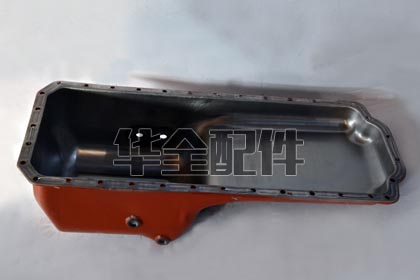
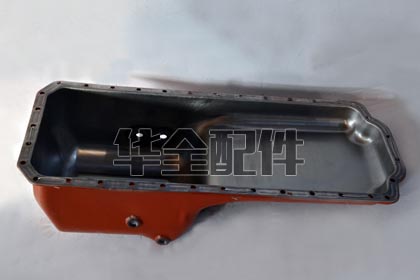
| Oil Pan / Sump | Reservoir holding engine oil; includes oil pickup with screen | Impact damage, gasket leak, pickup screen clogged with sludge | Oil leak under engine; fluctuating oil pressure |
| Pressure Relief Valve | Limits maximum oil pressure by bypassing excess flow to the sump | Spring fatigue (low pressure), stuck open (no pressure), stuck closed (excessive pressure) | Pressure too low or too high; blown oil filter seals at extreme high pressure |
Oil Specifications for Generator Engines
| Engine Type | Recommended Oil | Viscosity by Climate | API Classification |
|---|---|---|---|
| Small diesel (air-cooled) | SAE 30 (above 0°C) or SAE 10W-30 (below 0°C) | Monograde for consistent-load; multigrade for variable ambient | CF-4 minimum; CI-4 or CK-4 preferred |
| Medium diesel (water-cooled, naturally aspirated) | SAE 15W-40 | Universal for -15°C to 40°C; switch to 5W-40 below -15°C | CI-4 minimum; CK-4 preferred |
| Large diesel (water-cooled, turbocharged) | SAE 15W-40 full synthetic or synthetic blend | 15W-40: -15°C to 45°C; 5W-40: -25°C to 40°C | CJ-4 or CK-4 |
| Gasoline / Natural Gas | SAE 10W-30 or 15W-40 | Lower ash oils for natural gas (reduced valve deposits) | API SJ or higher for gas; low-ash for natural gas |
Oil Change Intervals by Duty Cycle
| Duty Cycle | Oil & Filter Change | Oil Analysis |
|---|---|---|
| Standby (≤200 hours/year) | Annually, regardless of hours | At oil change; check for moisture, acids, TBN depletion |
| Prime Power (2000-4000 hours/year) | 250 hours or manufacturer spec | Every 500 hours; track wear metals and TBN |
| Continuous (6000+ hours/year) | 250 hours; extend to 500h with synthetic + analysis confirmation | Every oil change initially; every 2nd change once trend is established |
| Break-in (new or rebuilt engine) | 50 hours (break-in oil), then 250 hours | Sample at 50h to establish baseline wear-in metals |
Common Lubrication System Failures and Root Causes
| Symptom | Likely Cause(s) | Immediate Action |
|---|---|---|
| Low oil pressure (hot idle) | Worn bearings, diluted oil, weak pressure relief spring, worn pump | Verify with mechanical gauge; check oil viscosity; if confirmed, prepare for bearing inspection |
| High oil consumption | Worn piston rings, valve guide seals, turbocharger seals, external leak | Check for external leaks first; blue smoke = internal consumption; measure consumption rate |
| Oil in coolant (milky coolant) | Failed oil cooler, head gasket leak at oil passage, cracked block/head | Stop engine immediately; pressure test oil cooler; do NOT run engine with coolant in oil |
| Coolant in oil (milky oil) | Failed oil cooler, head gasket, cylinder liner O-ring leak, cracked block | Shut down immediately; drain and inspect; bearings destroyed quickly by coolant contamination |
| Oil pressure warning light flickering | Low oil level, intermittent pickup screen blockage, loose wiring to sender | Check oil level first; if level OK, install mechanical test gauge to verify actual pressure |
Frequently Asked Questions
1. Can I extend oil change intervals with synthetic oil?
Possibly, but only with oil analysis confirmation. Synthetic oil resists oxidation and viscosity breakdown longer than conventional oil, potentially allowing 400-500 hour intervals. Requirements for extended intervals: (1) consistent oil analysis showing TBN > 3.0 and wear metals within acceptable limits at the extended interval, (2) high-quality oil and fuel filters, (3) consistent operating conditions (not extreme dust, temperature, or load cycling), and (4) manufacturer approval (some warranties require specified intervals regardless of oil type).
2. What causes black oil immediately after an oil change?
Black oil immediately after a change is normal in diesel engines due to residual oil in the engine (oil cooler, turbocharger, oil galleries) that wasn’t drained. This residual oil (typically 0.5-2 liters depending on engine size) contains soot that darkens the fresh oil within minutes of running. The color is cosmetic — the new oil’s additive package and lubrication properties are intact. This is NOT a reason to change oil more frequently. Oil color is not an indicator of oil condition — only oil analysis can determine if the oil is still serviceable.
3. How much oil consumption is normal for a generator engine?
Acceptable oil consumption: (1) New engines (first 500 hours): up to 0.5% of fuel consumption (e.g., a 150 kW engine burning 32 L/hr of diesel may consume up to 0.16 L/hr of oil during break-in, (2) Mature engines (500-8000 hours): 0.1-0.3% of fuel consumption, and (3) Worn engines (approaching overhaul): >0.5% of fuel consumption. A rough rule of thumb: 1 liter of oil per 250-500 kWh of electrical output is normal. Consumption exceeding 1 liter per 100 kWh indicates a problem needing investigation.
4. Do I need to prime the oil system after an oil change?
For most generators, no — the oil film remaining on bearing surfaces provides sufficient protection for the few seconds of cranking before oil pressure builds. Exceptions where pre-lubrication is recommended: (1) after a major overhaul (new bearings have no residual oil film), (2) engines that have been in storage for >6 months (oil has drained completely from bearings), and (3) large engines (V12/V16) with long oil galleries. Pre-lubrication method: disable the fuel system and crank in 10-15 second bursts until the oil pressure gauge registers, then re-enable fuel and start.
5. What is TBN and why does it matter for generator oil?
Total Base Number (TBN) measures the oil’s reserve alkalinity — its ability to neutralize acidic combustion byproducts (primarily from sulfur in diesel fuel). As oil ages, TBN depletes. When TBN drops to 50% of its new value or below 3.0 mg KOH/g (whichever is higher), the oil should be changed even if it looks clean. Exhausted TBN leads to acidic oil that causes corrosion of bearings and other internal surfaces. In standby generators that run infrequently, TBN depletion from acid formation during cold starts and short runs can occur long before the oil looks dirty.
6. How do I properly take an oil sample for analysis?
Correct sampling technique: (1) Take the sample while the engine is warm and running or immediately after shutdown — oil must be well-mixed and representative, (2) Use a sampling pump through the dipstick tube or a dedicated sample port — do NOT sample from the drain stream (concentrated contaminants at the bottom skew results), (3) Use a clean sample bottle — do not reuse bottles, (4) Fill to the indicated level (typically 3/4 full), (5) Label with engine ID, date, hours on oil, hours on engine, and any top-up oil added, and (6) Send to the lab promptly. Consistent sampling technique is essential for meaningful trend analysis — always sample the same way from the same location.
Related Articles
- Complete Generator Maintenance Guide
- Generator Engine Parts — Systems Overview
- Generator Coolant and Engine Oil Guide
- Generator Fuel System Parts
- Generator Troubleshooting Guide
- Generator Oil Pumps — Types and Selection
- Generator Filters — Complete Guide
Product Gallery
Boling
Cummins
Various
Weichai
Weifang
FAQ
Q: What are the key components of a generator engine lubrication system?
A: The lubrication system consists of: (1) Oil Pump — the heart of the system, typically a gear-type pump driven by the crankshaft or camshaft. Delivers 30-200 L/min at 3-7 bar depending on engine size; (2) Oil Pressure Relief Valve — limits maximum system pressure to prevent filter rupture and seal blowout. Spring-loaded, opens at 5-8 bar; (3) Oil Filter — removes particles above 15-30 microns (full-flow) or 5-10 microns (bypass filtration); (4) Oil Cooler — plate-and-shell or tube-bundle heat exchanger that maintains oil temperature at 90-110 degrees C optimal range; (5) Oil Pressure Sensor/Switch — provides gauge reading and low-pressure alarm/shutdown signals; (6) Oil Temperature Sensor — monitors for overheating indicating bearing distress or cooler failure; (7) Breather/Crankcase Ventilation — removes combustion blow-by gases, preventing pressure buildup; (8) Oil Pickup Tube and Strainer — draws oil from the sump, the strainer prevents large debris from entering the pump. Each component is essential — failure of any one can cause catastrophic engine damage within minutes to hours.
Q: What type and viscosity of oil should I use in my diesel generator?
A: Oil selection depends on: (1) Engine manufacturer specification — always the primary authority. Common specifications: API CJ-4 or CK-4 for modern diesel engines with emissions after-treatment; ACEA E7/E9 for European engines; (2) Viscosity grade — SAE 15W-40 is the global standard for diesel generators operating in ambient temperatures of -10 to +40 degrees C. SAE 10W-30 for cold climates (-20 to +30 degrees C). SAE 5W-40 full synthetic for extreme cold (-30 to +20 degrees C). SAE 40 monograde is sometimes specified for engines in consistently hot tropical environments (above +30 degrees C year-round); (3) TBN (Total Base Number) — a measure of acid-neutralizing capacity. For ultra-low sulfur diesel (ULSD <15ppm): TBN 7-10 is adequate. For high-sulfur diesel (500-5,000 ppm): TBN 10-15 required; (4) Synthetic vs. mineral — full synthetic provides 2-3x the oil life and superior high-temperature stability at 2-3x the cost. For prime power generators running 8,000 hours/year, synthetic is cost-effective despite higher price because it extends drain intervals.
Q: Which oil pump types are used on generator engines?
A: Generator engines use positive-displacement gear-type oil pumps in two configurations: (1) External gear pump — two meshed gears in a housing, one driven by the engine, the other idler. Oil is carried around the housing periphery between gear teeth. Simple, durable, and most common on engines up to 1,000kW; (2) Internal gear (gerotor) pump — an inner rotor with external lobes drives an outer rotor with internal lobes. The expanding and contracting chambers create pumping action. Compact design, used where space is limited; (3) Crankshaft-driven pump — mounted on the front of the crankshaft, eliminating drive gears. Direct drive means pump speed = engine speed; (4) Camshaft-driven pump — runs at half engine speed, requiring larger displacement for equivalent flow; (5) Pre-lube electric pump — auxiliary electric pump that pressurizes the oil system before engine start, eliminating dry-start wear. Standard on large engines above 1MW, optional retrofit on smaller engines for extended bearing life. HUAQUAN supplies complete oil pumps and rebuild kits (gears, bushings, relief valve springs) for all common engine platforms.
Q: How often should I change generator engine oil and filters?
A: Oil change intervals: Standby generators (50-200 hours/year): every 6-12 months regardless of hours — oil degrades over calendar time from oxidation and acid formation. Prime power generators: 250 hours for engines without bypass filtration, 500 hours with high-efficiency bypass filtration and oil analysis trending. Critical factors that may SHORTEN intervals: (1) High-sulfur fuel (sulfur content above 500 ppm) — cut interval by 50%; (2) Frequent cold starts without reaching operating temperature — water condensation contaminates oil; (3) Dusty operating environment — silica from dust accelerates wear; (4) Low-load operation (wet stacking) — unburned fuel dilutes oil; (5) Oil analysis showing TBN dropping below 50% of new value or TAN (Total Acid Number) exceeding new TBN. The oil filter MUST be changed at every oil change — a new filter’s 15-30 micron rating has 10x the dirt-holding capacity of the old, clogged filter, and the old filter’s anti-drainback valve may be compromised.
Q: What causes low oil pressure in a generator engine?
A: Low oil pressure causes, in order of likelihood: (1) Low oil level — check dipstick first. Visible oil does not guarantee adequate level — a generator inclined on uneven ground shifts the oil away from the pickup; (2) Wrong oil viscosity — oil too thin for operating temperature; (3) Fuel dilution — leaking injector, injection pump seal, or extended low-load operation causes diesel to accumulate in the oil, reducing viscosity. Oil that smells like diesel is a telltale sign; (4) Worn main and connecting rod bearings — increased clearance allows oil to flow out faster than the pump can supply; (5) Stuck-open oil pressure relief valve — a piece of debris preventing the valve from seating fully; (6) Clogged oil pickup strainer — sludge or debris restricting pump suction. This is especially common on engines with infrequent oil changes; (7) Worn oil pump — gear teeth and housing wear reduce volumetric efficiency; (8) Cracked or loose oil pickup tube — allows the pump to suck air instead of oil (aeration causes pressure pulsation and bearing damage). Always verify with a mechanical gauge before replacing components — electrical sender failure is common and mimics low pressure.
Q: What is an oil bypass filter and is it worth installing?
A: A bypass filter is a secondary filtration system that takes 5-10% of the oil flow (diverted from the main gallery) and filters it to 1-5 microns — much finer than the 15-30 micron full-flow filter. The clean oil returns to the sump, not the engine galleries (hence ‘bypass’). Benefits: (1) Reduces wear particle concentration by 50-90%, extending engine life; (2) Extends oil drain intervals 2-4x — the oil stays analytically clean longer; (3) Removes soot particles below 5 microns that full-flow filters pass through — soot is abrasive and contributes to ring/liner wear; (4) Reduces oil consumption by maintaining oil quality longer. For prime power generators running 5,000+ hours/year, bypass filtration typically pays for itself in 12-18 months through extended drain intervals and reduced labor. HUAQUAN offers complete bolt-on bypass filtration kits with all hoses, fittings, and mounting brackets for common generator engines.
Q: What is the function of the oil cooler and how do I maintain it?
A: The oil cooler transfers heat from the engine oil (which reaches 100-130 degrees C) to the engine coolant (80-95 degrees C) or, in some designs, directly to ambient air. It serves two critical functions: (1) Prevents oil from exceeding its thermal stability limit (above 130 degrees C, mineral oil oxidizes rapidly); (2) Brings oil to operating temperature quickly during warmup — the coolant warms faster than oil, heating the oil through the cooler. Maintenance: (1) Clean the external fins (air-cooled) or flush the coolant side with the cooling system service; (2) Pressure test every 5,000 hours — a leaking oil cooler allows coolant into the oil (milky oil) or oil into the coolant (oily coolant); (3) Replace the oil cooler O-rings/seals whenever the cooler is removed; (4) If a bearing failure has occurred, the oil cooler MUST be replaced or professionally cleaned — metal debris lodged in the cooler passages will circulate into the new engine on startup. The oil cooler is considered non-cleanable after a major bearing failure.
Q: How does the crankcase ventilation (breather) system work?
A: The crankcase breather system manages blow-by gases — combustion gases that leak past the piston rings into the crankcase. In a healthy engine, blow-by is 0.5-1.5% of intake air volume. The breather does three things: (1) Separates oil mist from blow-by gases using a wire mesh, labyrinth, or centrifugal separator; (2) Returns separated oil to the sump through a drain tube; (3) Vents the remaining gases — in older engines, to atmosphere through a draft tube; in modern engines, back to the intake (closed crankcase ventilation or CCV) for combustion. Symptoms of breather problems: (1) Excessive oil consumption — the oil separator is clogged and oil mist is being drawn into the intake; (2) Oil leaks at seals — breather clog creates positive crankcase pressure, forcing oil past seals; (3) High crankcase pressure alarm on the controller; (4) Sludge in breather tube — indicates infrequent oil changes or excessive low-load running. Breather filter elements should be cleaned or replaced at every oil change.
Q: What is the proper oil pressure for a diesel generator engine?
A: Oil pressure specifications vary by engine, but typical ranges: At rated speed (1,500/1,800 RPM) with oil at operating temperature (90-110 degrees C): 3.0-5.0 bar (45-70 PSI). At low idle (600-800 RPM): minimum 1.0-2.0 bar (15-30 PSI) for engines above 5L displacement; smaller engines may idle as low as 0.7 bar (10 PSI). During cold start: pressure may spike to 6-8 bar (85-115 PSI) until the oil warms and the relief valve opens. Critical thresholds: Alarm setpoint — typically 1.5-2.0 bar at rated speed. Shutdown setpoint — 0.8-1.2 bar. The controller should have a time delay (3-5 seconds) on the low-pressure shutdown to prevent nuisance trips from momentary pressure dips during transient load changes. Oil pressure naturally decreases as bearings wear — trending the pressure at rated speed over months shows gradual decline. A sudden 0.5-1.0 bar drop indicates a problem requiring immediate investigation.
Q: Can I mix different brands or viscosities of generator oil?
A: In an emergency, mixing oils is acceptable (any oil is better than no oil). However: (1) Mixing synthetic and mineral oils is safe — they are compatible. But the mixture’s performance defaults to the lower-grade oil’s characteristics; (2) Mixing different viscosities produces an intermediate viscosity that cannot be accurately predicted. A 50-50 mix of 15W-40 and 10W-30 might be close to 12W-35 — acceptable temporarily; (3) Mixing different API classifications is generally safe, but the mixture’s additive package may have conflicting chemistries; (4) The correct oil is always preferred. If you must top up several liters of a different oil, schedule a full oil change at the earliest opportunity. The risk is not immediate engine damage — it’s reduced protection during the extended interval until the next scheduled change. Always record any oil mixing in the maintenance log for oil analysis interpretation.
Q: How do I interpret used oil analysis results?
A: Key oil analysis parameters: Viscosity at 100 degrees C — should be within 15% of new oil. Below 15%: fuel dilution. Above 15%: oil oxidation (overheating) or soot thickening. TBN (Total Base Number) — acid-neutralizing capacity. Replace oil when TBN drops to 50% of new (e.g., from 10 to 5). Below this, acidic byproducts accelerate bearing corrosion. TAN (Total Acid Number) — increases as oil oxidizes. When TAN exceeds TBN, the oil is corrosive and must be changed. Soot — below 3% is normal. Above 5% indicates ring wear, extended oil change interval, or low-load operation. Fuel Dilution — below 2% is acceptable. Above 5% causes significant viscosity loss — investigate injectors and injection pump. Water — below 0.1% is normal (condensation). Above 0.2%: check for coolant leak or breather malfunction. Wear metals — see separate FAQ. Particle Count (ISO 4406) — cleanliness code. Target 18/16/13 or cleaner. A spike in the first number (>4 micron particles) indicates active wear. HUAQUAN provides oil analysis kits compatible with major laboratories worldwide.
Q: What are the signs of oil pump failure?
A: Oil pump failure is rare compared to other lubrication issues, but when it occurs: (1) Complete, sudden loss of oil pressure at all engine speeds — the pump drive has failed (broken shaft, sheared key, stripped drive gear). The engine must be stopped IMMEDIATELY — within 10-20 seconds of zero pressure, bearings begin to fail; (2) Gradually declining oil pressure over weeks/months — more commonly bearing wear than pump wear. However, if the relief valve spring weakens, pressure will decline gradually; (3) Pressure fluctuation/pulsation — worn pump gears create a pulsing flow visible as a flickering pressure gauge needle; (4) Noise — a failing pump may produce a whining or grinding sound, varying with engine RPM; (5) Metal particles in the oil filter — aluminum or steel fragments from the pump housing or gears indicate pump disintegration. If the pump is suspected, replace it immediately rather than attempting rebuild — the consequences of pump failure (complete engine seizure) far outweigh the cost of preventive replacement.
Q: How do I prime the oil system after an overhaul or oil change?
A: Priming procedure prevents catastrophic dry-start damage: (1) Fill the new oil filter with clean oil before installation — a large filter holds 1-3 liters; (2) After assembly, fill the engine with oil through the normal fill point; (3) For engines with a pre-lube pump: run the electric pump for 30-60 seconds while monitoring the mechanical gauge until pressure builds and stabilizes — the gauge needle should stop flickering; (4) For engines without pre-lube: disable the fuel system (disconnect the fuel solenoid or injection pump shutoff), then crank the engine in 10-15 second bursts with 30-second rest periods. Monitor oil pressure — it should begin to register within the first crank cycle. Continue until pressure reaches at least 1.0 bar; (5) Re-enable fuel and start normally. If pressure does not build during cranking, the pump may have lost prime — back-fill the pump through the pressure port or suction side with clean oil. Never start a freshly assembled engine without confirming oil pressure during cranking.
Q: What are the requirements for generator oil in cold climates?
A: Cold weather oil considerations: (1) Viscosity — SAE 5W-40 or 0W-40 full synthetic for temperatures below -20 degrees C. The ‘W’ number indicates cold cranking viscosity — 0W oil pumps at -40 degrees C, 5W at -35 degrees C, 10W at -30 degrees C, 15W at -25 degrees C; (2) Synthetic base stock — flows 2-3x faster than mineral oil at -30 degrees C, reducing starter current draw and achieving pressure faster; (3) Oil pan/block heater — essential for cold starts. A 1,500W block heater maintains the coolant and oil at 30-40 degrees C above ambient, eliminating cold start wear entirely. Plug in 2-4 hours before expected start; (4) Battery capacity — battery CCA rating drops 30-50% at -18 degrees C while cranking torque demand increases 100-200% due to thick oil. Ensure batteries are fully charged and consider battery heaters; (5) Oil analysis — cold-start engines accumulate water condensation that doesn’t boil off during short runs. Check for elevated water content in analysis.
Q: What is the role of the oil pressure relief valve and how do I test it?
A: The oil pressure relief valve is a spring-loaded valve that limits maximum system pressure by bypassing excess oil directly back to the sump when pressure exceeds the spring setting (typically 5-8 bar or 70-115 PSI). It prevents cold-start pressure spikes from rupturing the oil filter canister or blowing out seals. Testing: (1) Install a calibrated pressure gauge at the main oil gallery; (2) Start the engine and observe cold pressure — if it rises above the valve’s rated setting and doesn’t stabilize, the valve is stuck closed. This is dangerous — it can burst the filter; (3) If pressure never reaches specification even with cold thick oil, the valve may be stuck open or the spring is broken; (4) Remove the valve, inspect the plunger/piston for scoring and the seat for debris. Polish with fine crocus cloth if lightly scored — any deep scoring requires replacement; (5) Check spring free length against specification — a spring that has taken a set (shortened) opens at lower pressure; (6) Never shim the spring to ‘fix’ low pressure — low pressure is almost never caused by a weak relief valve spring. Shimming only masks the real problem (usually worn bearings) until catastrophic failure occurs.