What is a fuel water separator and how does it work?
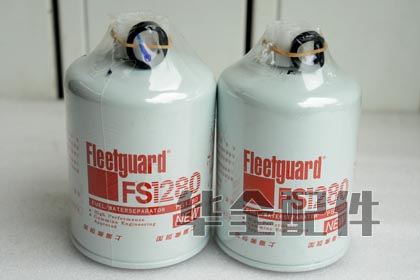
A fuel water separator is a primary-stage filtration device installed between the fuel tank and the engine lift pump. It uses coalescing filtration to remove both free and emulsified water from diesel fuel before it can reach the injection system. Working principle: fuel enters the separator and passes through a specially treated coalescing media (typically cellulose or synthetic fiber with a hydrophobic coating). The media causes tiny water droplets (10-30 microns) to coalesce into larger droplets (200-500 microns) that are heavy enough to settle by gravity into the transparent collection bowl at the bottom. The separator typically removes 95%+ of free water and 70-80% of emulsified water in a single pass. Water is more destructive to injection systems than particulate contamination — water has zero lubricity, causes corrosion, and supports microbial growth. The fuel water separator is the injection system's first and most important line of defense.
How often should I drain the fuel water separator?
Drain frequency depends on conditions: daily in humid climates with bulk fuel storage, weekly in moderate climates, and at every fuel filter service (250-500 hours) in all conditions. Check the transparent bowl visually at every walk-around inspection. Draining procedure: (1) Place a clean container under the drain valve; (2) Open the drain valve slowly — water (heavier than fuel) will exit first as a clear stream; (3) When diesel fuel begins to exit (visible as a color change), close the valve immediately; (4) If the valve is left open too long, fuel drains and air enters the fuel system, requiring re-priming; (5) Properly dispose of the drained water-fuel mixture — it cannot be poured down drains or onto the ground. For generators with an automatic water-in-fuel (WIF) sensor, never ignore the dashboard warning light — drain immediately.
What is a WIF (Water-In-Fuel) sensor?
A WIF sensor is an electronic water detection probe mounted in the bottom of the fuel water separator bowl or fuel filter housing. It uses conductivity measurement — water conducts electricity; diesel fuel is an insulator. When the water level in the bowl reaches the sensor probe tips, the circuit closes and triggers a warning light on the generator control panel (typically amber-colored). Most modern generators also log the event in the ECU for dealer diagnostics. Do not ignore the WIF light — continued operation with water in the fuel causes: injector nozzle tip erosion (water droplets flash to steam at the nozzle tip, creating micro-erosion), injection pump plunger corrosion, and microbial growth. Replace WIF sensors that fail — a sensor that never triggers is worse than no sensor because it provides false confidence.
Which engine brands are HUAQUAN fuel water separators compatible with?
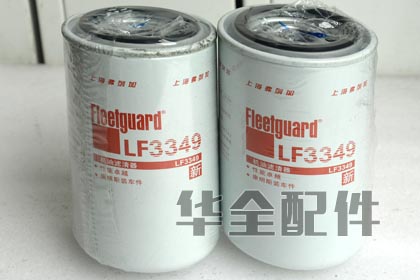
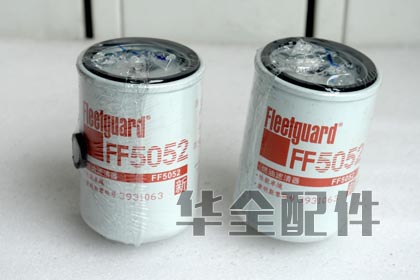
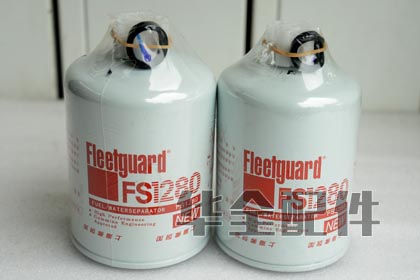
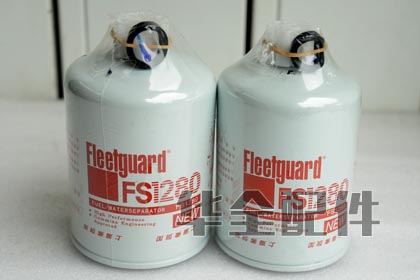
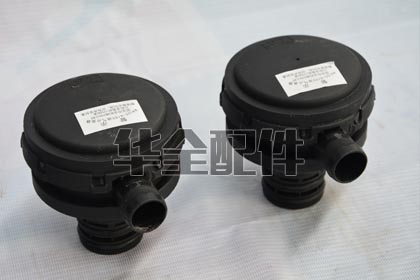
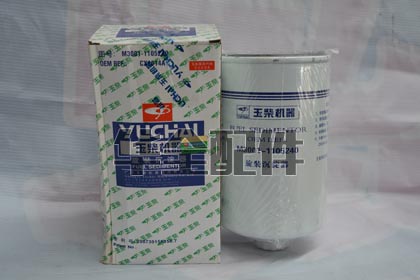
HUAQUAN fuel water separators are manufactured for: Cummins, Perkins, Deutz, Weichai, Yuchai, Shangchai, Doosan, and all major diesel generator platforms. Types: spin-on filter with integrated transparent bowl and drain valve (most common), standalone separator assemblies with replaceable cartridge element, and heavy-duty industrial units with heated bowls for cold climates. Filtration ratings: typically 10-30 micron with 95%+ water separation efficiency. Standard thread sizes: M16x1.5, 1-14 UNS, 3/4-16 UNF. Cross-reference compatible with Fleetguard (FS series), Donaldson, Baldwin, Racor (R series), and Separ filter assemblies.
What happens if water passes through to the injection system?
Water reaching the injection system causes cascade damage: (1) Injector nozzle tip erosion — water droplets entrained in fuel flash to steam when passing through the nozzle orifice at 250 degrees C, creating micro-explosions that erode the precision orifice geometry within 100-200 operating hours; (2) Injection pump plunger and barrel scoring — water displaces the fuel film in the 2-4 micron clearance between the plunger and barrel, causing metal-to-metal contact and galling; (3) Injector needle seizure — water promotes corrosion between the precisely fitted needle and nozzle body, causing the needle to stick — either closed (that cylinder goes dead) or open (uncontrolled fuel flow); (4) Microbial growth — water supports bacteria and fungi that produce acidic metabolites corroding internal surfaces; (5) Common-rail pressure sensor failure — water in the rail damages the sensitive piezo-resistive sensor element. Any confirmed water contamination event requires: drain and flush the entire fuel system, replace all filters, and borescope inspection of injector tips.
What is the correct micron rating for a fuel water separator?
The separator's primary function is water removal, not fine filtration — for this reason, separators typically use 10-30 micron media. Using too fine a media (below 10 micron) in the separator increases restriction and reduces water coalescing efficiency because the media pores are smaller than the water droplets being formed. The proper filtration architecture is: separator (10-30 micron, water removal) → lift pump → secondary fuel filter (2-4 micron, final particulate removal) → injection pump. The separator handles the bulk of water and larger particles, protecting the lift pump and extending the secondary filter's service life. Some modern 'all-in-one' filters combine water separation and 4-micron filtration in a single canister — these are acceptable with proper service intervals but sacrifice some water-holding capacity compared to a dedicated separator.
How do I select the right fuel water separator for my generator?
Selection criteria: (1) Engine fuel consumption at full load — the separator must flow at least 1.5x maximum engine fuel consumption (engines circulate 3-5x more fuel through the return line than they burn); (2) Water-holding capacity — larger bowls (200-500ml) for high-humidity or bulk storage applications, standard bowls (100-150ml) for day-tank installations; (3) Filtration rating — 10-30 micron nominal; (4) Port size — match the fuel line diameter (typically 3/8 or 1/2 inch NPT/BSP); (5) Drain mechanism — easy-access drain valve with a hose barb for directed draining; (6) Heating — for sub-zero operation, choose a model with a 12V/24V DC integrated heater; (7) WIF sensor — essential for unattended generators. Contact HUAQUAN with your engine model or current separator part number for a direct replacement recommendation.
What causes a fuel water separator to crack or leak?
Causes: (1) Over-tightening the bowl during reassembly after draining — the transparent polyamide bowl has a torque specification (hand-tight plus 1/8 turn is typical); (2) Thermal cycling — daily temperature swings cause differential expansion between the plastic bowl and the metal filter head, stressing the O-ring seal and eventually the bowl threads; (3) Chemical attack — using solvents, aggressive cleaners, or non-diesel fuel additives that are incompatible with the bowl material (polyamide/polycarbonate); (4) Impact damage — a tool strike or debris impact on the transparent bowl; (5) UV degradation — outdoor installation without a protective cover causes polycarbonate embrittlement. Inspect the bowl for stress cracks, crazing, or chips at every service. A cracked bowl can fail catastrophically, dumping the entire separator contents — a major fire hazard.
What maintenance does a fuel water separator require beyond draining?
Maintenance tasks: (1) Drain water per schedule — this is the #1 task; (2) Replace the filter element at the same interval as the secondary fuel filter — typically 500 hours; (3) Clean the transparent bowl during element replacement — use clean diesel and a lint-free cloth, never solvents that attack the plastic; (4) Inspect the bowl O-ring or gasket — replace if flattened, cracked, or hardened (annually in hot climates); (5) Check the WIF sensor electrical connector for corrosion — apply dielectric grease; (6) Verify the drain valve seals properly after each use — a slow drip from a worn valve O-ring can drain the entire fuel prime overnight; (7) For heated separators: verify the heater element operates at the specified temperature (typically 15-25 degrees C thermostatic control) during cold-season service. Document all maintenance for warranty and troubleshooting purposes.
Can I use a fuel water separator with biodiesel?
Yes, but with considerations: (1) Biodiesel is hygroscopic — it absorbs atmospheric moisture, meaning separators will accumulate water faster when biodiesel blends are used. Drain frequency should double; (2) Biodiesel's higher solvency can dissolve accumulated tank sediment, suddenly overwhelming the separator — a common issue when switching to biodiesel blends in older generators; (3) Biodiesel above B20 may attack standard NBR seals in older separators — verify the separator is rated for the biodiesel blend being used (Viton/FKM seals are biodiesel-compatible); (4) Microbial growth is more aggressive in biodiesel due to its biological origin and affinity for water — use a biocide additive; (5) Cold-flow properties — biodiesel clouds at higher temperatures than petroleum diesel, increasing filter loading. HUAQUAN separators are compatible with biodiesel blends up to B20 using standard seals; above B20, confirm seal compatibility.