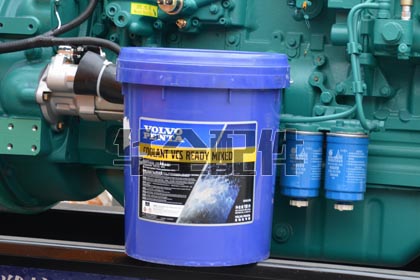
What is generator antifreeze/coolant and why is it necessary?
Generator antifreeze/coolant is a specially formulated heat transfer fluid serving four critical functions: (1) Heat transfer — absorbs approximately 30% of fuel combustion energy and carries it to the radiator; (2) Freeze protection — prevents coolant from freezing and expanding, which can crack the engine block ($5,000-$30,000+ repairs); (3) Corrosion protection — multi-metal inhibitor packages form a protective film on all cooling system surfaces (cast iron, steel, aluminum, copper, brass, solder); (4) Cavitation protection — Supplemental Coolant Additives (SCAs) prevent cavitation erosion of wet cylinder liners. Running a generator with plain water causes severe corrosion and liner pitting within months.
What type of coolant should I use in my diesel generator?
Diesel generators require Heavy-Duty Extended Life Coolant (HD ELC) meeting ASTM D6210 or CAT EC-1 specifications — fundamentally different from automotive coolant. Key requirements: (1) Ethylene glycol base at 40-60% concentration; (2) Nitrite-based SCA package for liner cavitation protection — minimum 1,200 ppm nitrite; (3) Low-silicate formulation to prevent gel dropout; (4) Compatible with all cooling system metals. Recommended products: Fleetguard ES Compleat OAT, Shell Rotella ELC, Mobil Delvac ELC. Never use automotive All Makes All Models coolant — it lacks the critical nitrite SCA package required for diesel engine liner protection.
How often should generator coolant be replaced?
Conventional IAT (green) coolant: drain and replace every 2 years or 4,000 operating hours with quarterly SCA testing and top-up. Extended Life Coolant (ELC, red/orange): replace every 6 years or 12,000 operating hours — no SCA top-up between changes. For standby generators with low annual hours, replace based on calendar time because corrosion inhibitors chemically deplete even when the engine is idle. Test coolant quarterly using test strips, checking nitrite (1,200-3,200 ppm), pH (8.0-11.0), and freeze point. Replace when any parameter falls below specification.
What is the correct coolant-to-water mixture ratio?
The optimal ratio is 50:50 (ethylene glycol to distilled/deionized water), providing freeze protection to -37 degrees C and boil-over protection to 129 degrees C with a 15 PSI radiator cap. A 60:40 ratio extends freeze protection to -52 degrees C for arctic conditions but slightly reduces heat transfer. Never exceed 70% glycol — heat transfer drops significantly and coolant becomes too viscous. Never use tap water — dissolved minerals form scale deposits that insulate cylinder walls. Use only distilled, deionized, or reverse-osmosis water meeting ASTM D1193 Type IV.
What is cavitation and why is SCA important?
Cavitation is the formation and violent collapse of vapor bubbles on wet cylinder liner surfaces, caused by high-frequency piston slap vibration. Collapsing bubbles create micro-jets that physically erode cast iron — imagine a microscopic water jet cutter operating continuously. SCA containing nitrite forms a sacrificial protective oxide film that absorbs cavitation energy. Without proper SCA levels (minimum 1,200 ppm nitrite), a heavily loaded diesel generator can experience complete liner perforation in as little as 2,000-3,000 operating hours — an engine-destroying failure.
Which engine brands is HUAQUAN generator coolant compatible with?
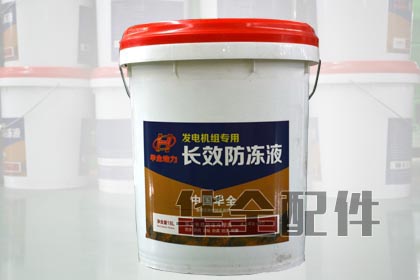
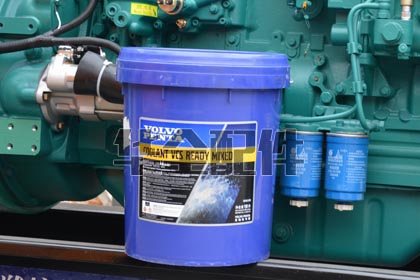
HUAQUAN generator coolant is compatible with all major diesel and gas generator engines: Cummins (ISB, ISC, ISL, QSK, KTA series), Perkins (1100-4000 series), Deutz (912-2015 series), MTU Detroit Diesel (Series 60, 2000, 4000), Volvo Penta, Weichai, Yuchai, Shangchai, Doosan, MAN, and all Chinese diesel platforms. Our coolant meets ASTM D6210, CAT EC-1, and Cummins CES 14603 specifications. For engines requiring nitrite-free OAT coolant, we also supply compatible formulations.
How do I test generator coolant condition?
Test coolant using three methods: (1) Coolant test strips — dip for 2 seconds, read after 45 seconds for nitrite, pH, and freeze point; (2) Refractometer — more accurate freeze point measurement; (3) Annual laboratory analysis providing complete spectrochemical breakdown. Key warning thresholds: nitrite below 1,200 ppm (cavitation risk), pH below 7.5 (acidic — severe corrosion), iron above 100 ppm (active corrosion), visible rust or sediment. A rising contaminant trend is more important than a single reading.
What are the signs of coolant system problems?
Warning signs: (1) Engine overheating — temperature consistently above 95 degrees C; (2) Unexplained coolant loss requiring frequent top-ups; (3) Oil in coolant — milky brown residue in the radiator indicating oil cooler failure or head gasket leak; (4) Coolant in oil — milky grey engine oil on dipstick indicating severe head gasket failure or liner O-ring leak — DO NOT run the engine; (5) White exhaust smoke with sweet smell — coolant entering combustion chamber. Any of these symptoms requires immediate diagnostic investigation.
Can I use automotive coolant in my diesel generator?
NO — automotive coolant must never be used in diesel generators. Three critical differences: (1) Automotive coolants lack nitrite-based SCAs needed for liner cavitation protection; (2) Automotive high-silicate formulations can form gel deposits in hotter diesel engines, clogging radiators; (3) Modern automotive OAT coolants optimized for aluminum engines may aggressively corrode copper-brass components in industrial cooling systems. Always use HD diesel coolant meeting ASTM D6210 or the engine manufacturer's specification.
How do I properly flush and refill the generator cooling system?
Proper flush procedure: (1) Warm engine to operating temperature, then shut down and cool; (2) Open all drains — radiator, engine block, heater core; (3) Fill with commercial cooling system cleaner mixed with distilled water; (4) Run engine at operating temperature for 30-60 minutes; (5) Drain cleaner while warm; (6) Fill with clean distilled water, run 10 minutes, drain — repeat until drain water runs clear (2-3 cycles); (7) Refill with pre-mixed 50:50 HD ELC coolant-distilled water; (8) Run with cap off until thermostat opens and topping up; (9) Install cap, run under load, check for leaks, recheck level after cooldown.
What is the difference between red/orange ELC and green conventional coolant?
Green conventional (IAT) coolant uses inorganic inhibitors that deplete relatively quickly — requires quarterly SCA testing and replacement every 2 years or 4,000 hours. Red/orange Extended Life Coolant (ELC) uses Organic Acid Technology (OAT) with carboxylate-based inhibitors — lasts 6 years or 12,000 hours without SCA supplementation. ELC also provides better heat transfer and superior aluminum protection. Critical: ELC and green coolant must NEVER be mixed — the chemical reaction creates sludge and negates both coolants' protective properties. When converting, thoroughly flush the system first.
What causes generator coolant to turn brown or rusty?
Brown/rusty coolant indicates: (1) Depleted corrosion inhibitors — iron components are actively rusting; (2) Combustion gas leakage into cooling system — exhaust soot and acids contaminate coolant, typically from a head gasket leak; (3) Mixing incompatible coolant types; (4) Overheated coolant accelerating inhibitor breakdown. Immediate action: drain, perform complete system flush, inspect for liner pitting, and refill with fresh HD ELC coolant. Brown coolant means protective additives are gone — continued operation risks liner perforation and water pump seal failure.
How do I calculate the coolant capacity of my generator engine?
Coolant capacity varies by engine: 4-cylinder small generators (20-50kW): 8-15 liters; 6-cylinder mid-size (50-200kW): 15-30 liters; V8-V12 engines (200-500kW): 30-60 liters; V16+ large engines (500kW+): 60-150+ liters. Exact capacity is in the engine service manual. For remote radiators, add radiator core volume and connecting pipe volume. When filling a dry system, you will use 80-90% of rated capacity initially — the remainder is added after the thermostat opens during the first warm-up cycle.
What is the proper way to dispose of used generator coolant?
Used coolant is hazardous waste — it contains toxic ethylene glycol (lethal dose approximately 100mL for humans, sweet taste attracts children and animals), dissolved heavy metals, and spent chemicals. Proper disposal: drain into a sealed container, label clearly, contact a licensed hazardous waste hauler or recycler. Many automotive centers and municipal hazardous waste facilities accept used coolant. One gallon of improperly disposed coolant can contaminate thousands of gallons of groundwater and is lethal to wildlife.
How does coolant condition affect generator fuel efficiency?
Coolant condition directly affects fuel efficiency: (1) Degraded coolant allows scale and rust deposits to form on cylinder walls and radiators — these insulate, reducing heat transfer by up to 40%, forcing the engine to run hotter. Hotter intake air is less dense, reducing volumetric efficiency and requiring more fuel. (2) Cavitation pitting creates rough cylinder surfaces that disrupt piston ring sealing — blow-by gases reduce compression and combustion efficiency. Fleet studies show maintaining coolant in specification improves fuel economy by 1-3% compared to degraded coolant.