
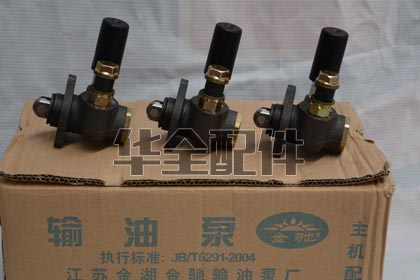
Generator Primer Pumps – Manual Fuel Lift Pumps
Product Overview
Professional quality Generator Hand Primer Pump | Manual Fuel Lift Device for generator maintenance and repair. Huaquan Power provides both OEM and compatible options with strict quality control.
Key Features
- High-quality materials manufacturing
- Strict quality inspection
- Compatible with major domestic and international brands
- Long-term parts supply
- Fast shipping
- ISO 9001 certified
Product Series
Technical Specifications
| Parameter | Specification |
|---|---|
| Material | Premium alloy/cast iron |
| Application | Multi-brand generators |
| Packaging | Standard export packaging |
| Certification | ISO 9001 |
Compatible Brands & Models
- Compatible with mainstream domestic generator brands
- Compatible with select imported brand models
Applications
Widely used for maintenance and repair of diesel/natural gas generator sets.
Selection Guide
- Confirm your generator brand and model
- Compare original part specifications
- Contact us for professional selection advice
- Fast shipping after order confirmation
FAQ
Q: Are these original parts?
A: We provide both OEM and compatible options, all strictly quality tested.
Q: What is the warranty period?
A: Standard 12-month warranty.
Q: Shipping time?
A: Regular items ship within 24-48 hours.
Need Help with Selection or Quote?
Contact Shandong Huaquan Power Co., Ltd
WhatsApp: +86 15905360672 | Email: huaquan@huaquanpower.com
Frequently Asked Questions
What is a generator primer pump and what does it do?
A primer pump (manual fuel lift pump) is a hand-operated diaphragm or piston pump that manually moves fuel from the tank, through the fuel filters, and into the injection pump gallery to purge air from the system. It is used after fuel filter changes, running out of fuel, or any maintenance that opens the fuel system to atmosphere. The primer pump creates suction to lift fuel from the tank (overcoming up to 1-2 meters of lift height) and pushes it through the filters to fill the system. The pump typically delivers 20-50ml per stroke — filling a dry fuel system requires 20-100 strokes. The pump is mounted on the fuel lift pump body, filter head, or injection pump, and includes a built-in check valve to prevent fuel from flowing backward. This simple manual device is the most used service tool on diesel engine fuel systems.
How do I properly use a primer pump?
Proper technique: (1) Locate the primer pump — typically a small plunger (piston-type) or lever (diaphragm-type) on the fuel lift pump, filter head assembly, or injection pump; (2) For plunger-type: unscrew (if the plunger has a threaded collar — some pumps require unlocking by unscrewing counterclockwise before pumping); (3) Pump steadily — 1 stroke per second, full travel. Fast pumping does not increase flow — the pump needs time for the check valves to close between strokes; (4) Continue pumping until firm resistance is felt — this indicates the system is full of fuel (liquid is incompressible). The number of strokes varies: 20-50 for a filter change (the filter element is dry), 50-100+ for a dry-injection pump; (5) Do not force the pump past firm resistance — the internal diaphragm or piston seal can be damaged; (6) For plunger-type: screw the plunger back down (clockwise) after use to lock it and prevent dirt entry. If the pump never achieves firm resistance: there is an air leak in the suction side of the fuel system.
What are the symptoms of a faulty primer pump?
Faulty primer pump indicators: (1) Never achieves firm resistance — the pump strokes feel soft and spongy indefinitely, indicating: internal check valve stuck open (fuel flows backward on each stroke), torn diaphragm leaking internally, or the pump plunger seal is worn and bypassing; (2) Air continuously enters the fuel system — after priming, the engine starts but stalls within minutes, and repriming is required. This indicates the pump's check valve is not sealing and allows the fuel to drain back to the tank overnight; (3) Fuel leak from the pump — a split diaphragm or failed plunger seal allows fuel to leak externally, typically visible around the pump body; (4) Pump plunger stuck (cannot move) — corrosion or debris jamming the plunger; (5) Hard starting despite successful priming — the pump may be introducing air into the system due to a cracked housing. A faulty primer pump should be replaced immediately — it is not field-repairable.
Which engine brands are HUAQUAN primer pumps compatible with?
HUAQUAN primer pumps are manufactured for: Cummins (4BT, 6BT, 6CT, ISB, ISC, ISL — the classic Cummins-style primer pump on the PT pump and the lift pump-mounted primer), Perkins (1103-4008), Deutz (912-2015), Weichai (WD615, WD618, WP10/12/13/17, 226B, 6160-6200), Yuchai (YC4, YC6, YCK), Shangchai (SC4H-SC33W), and all Chinese diesel platforms. Types: plunger-type primer (screw-to-unlock, pump, screw-to-lock — most common), lever-type diaphragm pump (operated by a small lever — common on older Perkins and Deutz engines), and integrated filter-head primers (the primer pump is integrated into the fuel filter head assembly). Each pump is pressure-tested to verify check valve seal and flow output.
What is the difference between a primer pump and an electric lift pump?
A primer pump is purely manual, used only for system priming after service — it does not operate while the engine runs. An electric lift pump is a continuously operating 12V/24V DC pump that supplies fuel from the tank to the injection pump during engine operation, automatically maintaining fuel supply pressure (typically 0.3-0.5 bar for low-pressure systems, up to 5 bar for some common-rail systems). An electric lift pump may incorporate an automatic priming function ('run prime') — energizing the pump (key-on, engine not running) for 30-60 seconds to prime the system. However, a manual primer pump remains essential for servicing in the field if the battery is dead or the electric pump fails. HUAQUAN supplies both manual primer pumps and electric lift pumps.
Why does my primer pump leak fuel?
Causes of primer pump leaks: (1) Worn plunger O-ring/seal — the most common cause. The rubber seal degrades from heat and diesel exposure, shrinking and allowing fuel to bypass; (2) Cracked pump body — from over-tightening during installation or impact damage; (3) Failed diaphragm (diaphragm-type pumps) — the rubber diaphragm develops a tear or pinhole from age and flexing; (4) Loose mounting — vibration has loosened the bolts, compressing the gasket unevenly and creating a leak path; (5) Chemical attack — using solvents or aggressive fuel additives that are incompatible with the pump's rubber components. A leaking primer pump: (1) Is a fire hazard — diesel leaking onto hot engine components; (2) Introduces air into the fuel system — the pump can suck air in when the leak is on the suction side; (3) Creates environmental contamination. Replace, do not attempt to reseal — the cost of a new pump ($30-80) versus the risk makes repair uneconomical.
How do I bleed air from a diesel fuel system without a primer pump?
If the primer pump is non-functional: (1) Fill the fuel tank to maximum — the fuel head pressure helps push fuel through the system; (2) Fill the new fuel filter with clean diesel before installation; (3) Loosen the bleed screw on the secondary filter head; (4) Apply low-pressure compressed air (regulated to 1-2 PSI maximum — higher pressure can rupture tank seams) to the fuel tank filler neck using a rag to create a partial seal — this pressurizes the tank and pushes fuel through the system (this is an emergency field technique — use extreme caution with pressure); (5) When air-free fuel flows from the bleed screw, close it; (6) For the injection pump: crack open 2-3 injector line nuts at the injectors, crank the engine in 10-15 second bursts, and tighten when fuel pulses out. Alternative: use a hand-held vacuum pump to draw fuel through the system from the return line at the injection pump. Replace the primer pump at the earliest opportunity.
Frequently Asked Questions
What is a generator primer pump and what does it do?
A primer pump (manual fuel lift pump) is a hand-operated diaphragm or piston pump that manually moves fuel from the tank, through the fuel filters, and into the injection pump gallery to purge air from the system. It is used after fuel filter changes, running out of fuel, or any maintenance that opens the fuel system to atmosphere. The primer pump creates suction to lift fuel from the tank (overcoming up to 1-2 meters of lift height) and pushes it through the filters to fill the system. The pump typically delivers 20-50ml per stroke — filling a dry fuel system requires 20-100 strokes. The pump is mounted on the fuel lift pump body, filter head, or injection pump, and includes a built-in check valve to prevent fuel from flowing backward. This simple manual device is the most used service tool on diesel engine fuel systems.
How do I properly use a primer pump?
Proper technique: (1) Locate the primer pump — typically a small plunger (piston-type) or lever (diaphragm-type) on the fuel lift pump, filter head assembly, or injection pump; (2) For plunger-type: unscrew (if the plunger has a threaded collar — some pumps require unlocking by unscrewing counterclockwise before pumping); (3) Pump steadily — 1 stroke per second, full travel. Fast pumping does not increase flow — the pump needs time for the check valves to close between strokes; (4) Continue pumping until firm resistance is felt — this indicates the system is full of fuel (liquid is incompressible). The number of strokes varies: 20-50 for a filter change (the filter element is dry), 50-100+ for a dry-injection pump; (5) Do not force the pump past firm resistance — the internal diaphragm or piston seal can be damaged; (6) For plunger-type: screw the plunger back down (clockwise) after use to lock it and prevent dirt entry. If the pump never achieves firm resistance: there is an air leak in the suction side of the fuel system.
What are the symptoms of a faulty primer pump?
Faulty primer pump indicators: (1) Never achieves firm resistance — the pump strokes feel soft and spongy indefinitely, indicating: internal check valve stuck open (fuel flows backward on each stroke), torn diaphragm leaking internally, or the pump plunger seal is worn and bypassing; (2) Air continuously enters the fuel system — after priming, the engine starts but stalls within minutes, and repriming is required. This indicates the pump's check valve is not sealing and allows the fuel to drain back to the tank overnight; (3) Fuel leak from the pump — a split diaphragm or failed plunger seal allows fuel to leak externally, typically visible around the pump body; (4) Pump plunger stuck (cannot move) — corrosion or debris jamming the plunger; (5) Hard starting despite successful priming — the pump may be introducing air into the system due to a cracked housing. A faulty primer pump should be replaced immediately — it is not field-repairable.
Which engine brands are HUAQUAN primer pumps compatible with?
HUAQUAN primer pumps are manufactured for: Cummins (4BT, 6BT, 6CT, ISB, ISC, ISL — the classic Cummins-style primer pump on the PT pump and the lift pump-mounted primer), Perkins (1103-4008), Deutz (912-2015), Weichai (WD615, WD618, WP10/12/13/17, 226B, 6160-6200), Yuchai (YC4, YC6, YCK), Shangchai (SC4H-SC33W), and all Chinese diesel platforms. Types: plunger-type primer (screw-to-unlock, pump, screw-to-lock — most common), lever-type diaphragm pump (operated by a small lever — common on older Perkins and Deutz engines), and integrated filter-head primers (the primer pump is integrated into the fuel filter head assembly). Each pump is pressure-tested to verify check valve seal and flow output.
What is the difference between a primer pump and an electric lift pump?
A primer pump is purely manual, used only for system priming after service — it does not operate while the engine runs. An electric lift pump is a continuously operating 12V/24V DC pump that supplies fuel from the tank to the injection pump during engine operation, automatically maintaining fuel supply pressure (typically 0.3-0.5 bar for low-pressure systems, up to 5 bar for some common-rail systems). An electric lift pump may incorporate an automatic priming function ('run prime') — energizing the pump (key-on, engine not running) for 30-60 seconds to prime the system. However, a manual primer pump remains essential for servicing in the field if the battery is dead or the electric pump fails. HUAQUAN supplies both manual primer pumps and electric lift pumps.
Why does my primer pump leak fuel?
Causes of primer pump leaks: (1) Worn plunger O-ring/seal — the most common cause. The rubber seal degrades from heat and diesel exposure, shrinking and allowing fuel to bypass; (2) Cracked pump body — from over-tightening during installation or impact damage; (3) Failed diaphragm (diaphragm-type pumps) — the rubber diaphragm develops a tear or pinhole from age and flexing; (4) Loose mounting — vibration has loosened the bolts, compressing the gasket unevenly and creating a leak path; (5) Chemical attack — using solvents or aggressive fuel additives that are incompatible with the pump's rubber components. A leaking primer pump: (1) Is a fire hazard — diesel leaking onto hot engine components; (2) Introduces air into the fuel system — the pump can suck air in when the leak is on the suction side; (3) Creates environmental contamination. Replace, do not attempt to reseal — the cost of a new pump ($30-80) versus the risk makes repair uneconomical.
How do I bleed air from a diesel fuel system without a primer pump?
If the primer pump is non-functional: (1) Fill the fuel tank to maximum — the fuel head pressure helps push fuel through the system; (2) Fill the new fuel filter with clean diesel before installation; (3) Loosen the bleed screw on the secondary filter head; (4) Apply low-pressure compressed air (regulated to 1-2 PSI maximum — higher pressure can rupture tank seams) to the fuel tank filler neck using a rag to create a partial seal — this pressurizes the tank and pushes fuel through the system (this is an emergency field technique — use extreme caution with pressure); (5) When air-free fuel flows from the bleed screw, close it; (6) For the injection pump: crack open 2-3 injector line nuts at the injectors, crank the engine in 10-15 second bursts, and tighten when fuel pulses out. Alternative: use a hand-held vacuum pump to draw fuel through the system from the return line at the injection pump. Replace the primer pump at the earliest opportunity.