
Generator Fuel Filters – Diesel Filter Elements & Assemblies
Product Overview
Generator fuel filters are critical safety components ensuring stable diesel generator set operation—effectively capturing water, gums, and particulate contaminants (≥5 μm filtration efficiency: 99.5%) to prevent wear and clogging of fuel injection pumps and injectors. All diesel fuel filter assemblies in this category are certified to ISO 4020 performance standards and feature imported glass-fiber filter media, stainless-steel support cages, and oil-resistant elastomeric sealing rings—compatible with medium-to-high-power generator sets from multiple brands including Weichai, Shangchai, Cummins, Volvo, Yuchai, and Boling.
Key features
- Filtration precision ≤5 μm; water separation efficiency ≥95% (per ISO 16889).
- Pressure rating ≥3.0 bar; long-term operating temperature: −30 °C to 110 °C.
- Standard O-ring seals made of fluorocarbon rubber (FKM), compatible with B5/B10 biodiesel-blended fuels
- Dust-holding capacity ≥ 35 g; service interval extended to 500 operating hours per replacement
- Modular quick-install structure enabling complete assembly replacement within 3 minutes
- 100% air-tightness testing per batch prior to shipment (0.5 bar hold pressure for 5 minutes, zero leakage).
Product Gallery
Boling
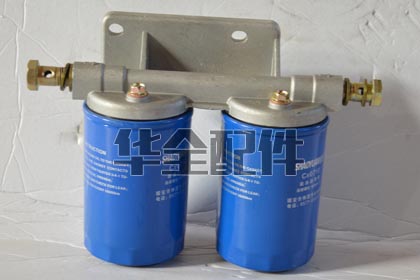
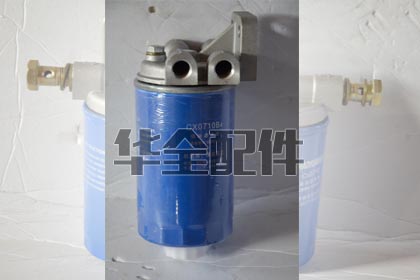
Cummins
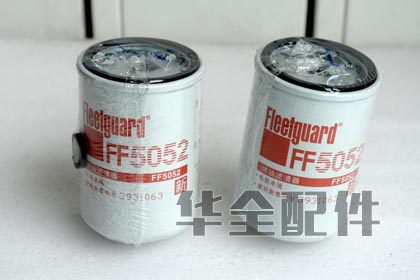
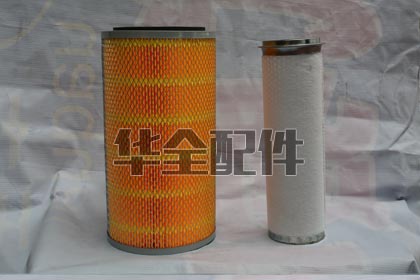
Universal
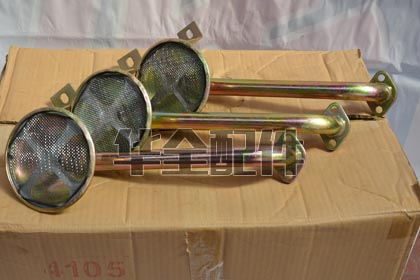
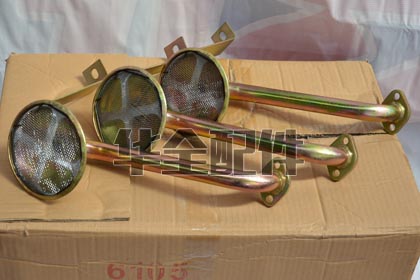
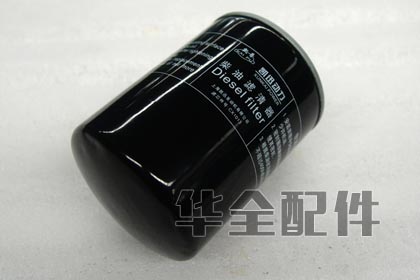
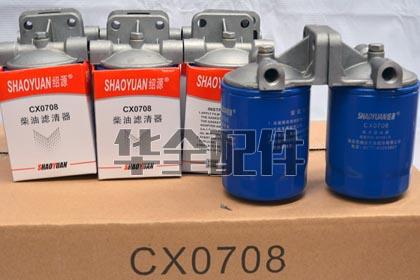
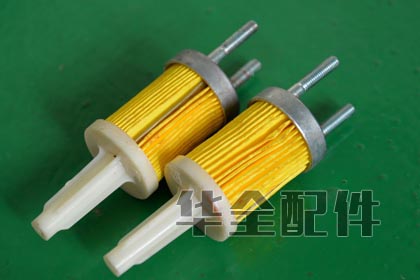
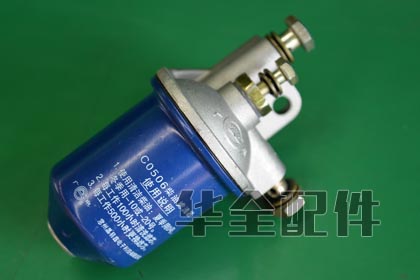
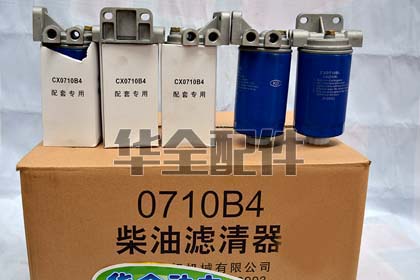
Volvo
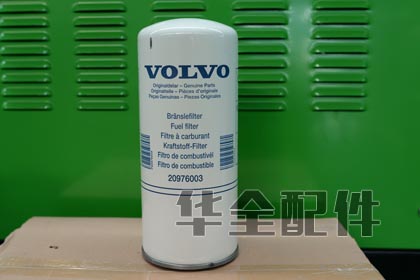
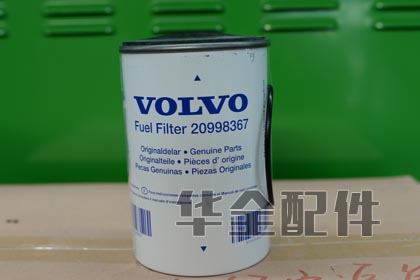
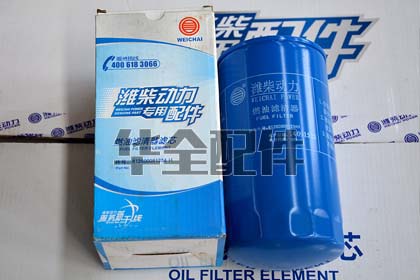
Weichai
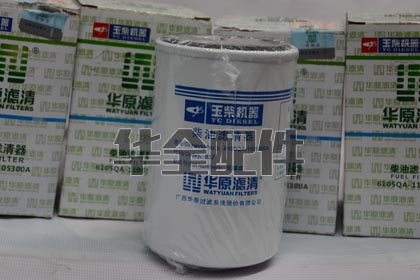
Yuchai
Frequently Asked Questions
What does a generator fuel filter do and why is it critical?
A diesel fuel filter removes water, particulate contaminants, and microorganisms from fuel before it reaches the precision-engineered fuel injection system. Modern common-rail injectors operate at 1,600-2,500 bar (23,000-36,000 PSI) with internal clearances of 1-3 microns — smaller than a human red blood cell (5 microns). A single particle larger than 4 microns passing through an unfiltered fuel system can score an injector plunger, causing internal leakage and spray pattern distortion. The filter prevents: (1) Particle abrasion of injection pump plungers and injector nozzles; (2) Water-induced corrosion and microbial growth (diesel bug); (3) Injector nozzle coking from contaminants. A quality fuel filter is the most cost-effective engine protection investment on any diesel generator.
What micron rating should a diesel generator fuel filter have?
For common-rail diesel engines (post-2005, most modern generators): nominal 2-4 micron filtration at 98%+ efficiency (Beta ratio Beta_4 = 75 or higher, meaning the filter captures 98.7% of 4-micron particles). For older mechanical injection engines: 5-10 micron nominal. The trend toward tighter filtration is driven by modern injector clearance requirements. Fuel filter performance is expressed as Beta ratio: Beta_x = Number of particles larger than x microns upstream / number downstream. A Beta_4 = 75 means the filter captures 98.7% of 4-micron particles. HUAQUAN fuel filters are third-party tested and achieve Beta_4 greater than 75, meeting or exceeding Fleetguard, Donaldson, and Baldwin equivalent performance.
How often should generator fuel filters be replaced?
Standard interval: every 500 operating hours or 6-12 months, whichever comes first. However, fuel quality dictates actual frequency: (1) Clean fuel from reputable suppliers — 500-hour interval is adequate; (2) Fuel stored for extended periods in bulk tanks — water condensation and microbial growth accelerate filter loading; replace every 250 hours or quarterly; (3) Visible water in the fuel-water separator bowl — immediate drain and filter replacement. A vacuum gauge on the filter head provides objective data: replace when vacuum exceeds 5-7 inches Hg (17-24 kPa) — this indicates the filter media is loading. Never exceed the manufacturer's maximum restriction — a fully loaded filter reduces fuel flow, causing power loss and potential injection pump cavitation damage.
Which engine brands are HUAQUAN fuel filters compatible with?
HUAQUAN diesel fuel filters are manufactured for: Cummins (4BT-6CT, ISB-ISL, QSB-QSL, NT855, KTA19/38/50, QSK), Perkins (1103-4008), Deutz (912-2015), Weichai (WD615/618, WP10/12/13/17, 226B, 6160-6200), Yuchai (YC4-YCK), Shangchai (SC4H-SC33W), Doosan, Volvo Penta, MTU Detroit Diesel. Filter types: spin-on canister (with integrated water separator bowl), cartridge/eco element (replaceable inner element with reusable housing), and fuel-water separator assemblies. Cross-reference compatible with Fleetguard (FF/FS series), Donaldson (P55 series), Baldwin (BF series), and Mann-Filter (WK series). Provide your OEM filter number for exact cross-reference matching.
What is the difference between a primary and secondary fuel filter?
A two-stage fuel filtration system is standard on modern diesel generators: Primary filter (fuel-water separator): first stage, typically 10-30 micron nominal, mounted between the fuel tank and the lift pump. Primary function: remove bulk water (via the separator bowl) and larger particulates to protect the lift pump and extend secondary filter life. Drains daily in humid climates. Secondary filter: final filtration stage, 2-4 micron, mounted between the lift pump and the injection pump. This is the 'last line of defense' protecting the high-pressure injection system. Both filters must be replaced on the same schedule. The primary filter can typically be drained of water without replacing the element. HUAQUAN supplies matched primary/secondary filter sets for all major engine platforms.
How do I prime the fuel system after a filter change?
Proper priming procedure: (1) Fill the new spin-on filter with clean diesel before installation — never install a dry filter, as the injection pump will run dry during priming; (2) Install the filter hand-tight plus 1/2 to 3/4 turn (follow the filter markings); (3) Locate the manual priming pump (typically on the fuel lift pump or filter head) and operate until firm resistance is felt — 20-50 strokes; (4) Loosen the vent screw on the secondary filter head and continue pumping until air-free fuel flows out; (5) Tighten the vent screw; (6) Crank the engine for 10-15 second intervals — once it starts, it may run rough for 30 seconds as residual air clears; (7) Run at high idle for 5 minutes, then shut down and recheck for leaks. Never use starting fluid (ether) to start a diesel engine after a dry filter change — the injection pump needs fuel for lubrication.
What causes diesel fuel filter water accumulation?
Water in diesel fuel comes from three sources: (1) Condensation — bulk storage tanks 'breathe' daily as temperature cycles, drawing in humid air. The moisture condenses on the tank walls and settles below the fuel. A 10,000-liter tank in a humid climate can accumulate 1-2 liters of water per month; (2) Supplier contamination — water can enter during fuel transport or transfer; (3) Biodiesel — biodiesel is hygroscopic (absorbs atmospheric moisture), carrying dissolved water that can separate out. Prevention: install a desiccant breather on bulk storage tanks, drain tank bottoms monthly, test fuel quality before filling generator day tanks, and treat fuel with biocide if water cannot be completely eliminated.
What is 'diesel bug' and how does it affect fuel filters?
Diesel bug is microbial contamination — bacteria, fungi, and yeast that live at the fuel-water interface in storage tanks, feeding on hydrocarbons and multiplying rapidly. They produce acidic metabolic byproducts that corrode tank walls and fuel system components. The biomass (living and dead organisms) forms a slimy sludge that rapidly clogs fuel filters — a filter that normally lasts 500 hours can plug in 50 hours during a diesel bug outbreak. The acidic byproducts also corrode injector nozzles. Treatment: (1) Drain all water from tanks; (2) Dose with a diesel biocide (follow manufacturer dosage — typically shock treatment at double-dose); (3) Circulate treated fuel through the system for 24-48 hours; (4) Replace all fuel filters; (5) Repeat biocide treatment as preventative at quarterly intervals. Diesel bug is particularly aggressive in warm, humid climates (Southeast Asia, Africa, Gulf region).
What are the symptoms of a clogged fuel filter?
Clogged filter symptoms progress: (1) Early stage: hard starting — the engine requires longer cranking because fuel flow is restricted; (2) Progressive: power loss under load — the injection pump cannot draw sufficient fuel at high flow rates, limiting maximum power; (3) Advanced: engine surges or hunts at steady load — the governor compensates for fluctuating fuel supply; (4) Severe: engine stalls under load and fails to restart; (5) Technical indicator: vacuum gauge on the filter head reads above 5-7 inches Hg (green zone is 0-5). A partially clogged filter forces the lift pump to work harder, potentially causing pump cavitation damage — a repair far more expensive than timely filter replacement.
Can I drain and reuse a fuel filter?
No — modern fuel filters are single-use components designed to be replaced, not cleaned or reused. The filter media is a precisely engineered depth-loading structure that traps particles throughout its thickness; once particles are embedded, they cannot be removed by backflushing or draining. Furthermore, water-contaminated media promotes bacterial growth that cannot be reliably cleaned. Attempting to drain and reuse risks: (1) Introducing contamination into the clean side of the filter during handling; (2) Compromised filtration efficiency due to disturbed media; (3) Hidden water remaining in the media pleats. The only exception: some heavy-duty fuel-water separators have a reusable stainless steel mesh pre-screen that can be cleaned and reused. The cost of a new filter ($20-80) versus the cost of a damaged injection system ($2,000-8,000+) makes reusing filters a false economy.
What is a fuel filter heater and when is it needed?
A fuel filter heater is an electric heating element (12V/24V DC or 110V/220V AC, typically 100-300W) integrated into the filter head or housing. It prevents diesel fuel waxing (gelling) in cold temperatures. No. 2 diesel begins to cloud (wax crystals form) at approximately -5 to -10 degrees C and gels (cannot flow through filters) at -15 to -20 degrees C. The heater maintains fuel temperature above the cloud point, ensuring the filter media does not become blocked by wax crystals. Required for generators operating in ambient temperatures below -10 degrees C — common in northern China, Canada, Northern Europe, and high-altitude locations. For extreme cold, combine with a fuel tank heater, insulated fuel lines, and winter-grade diesel (No. 1-D or arctic diesel with lower cloud point).
How should I store spare fuel filters?
Storage requirements: (1) Keep in original sealed packaging until installation — the packaging maintains sterility of the clean side; (2) Store in a clean, dry environment at 10-30 degrees C — moisture can rust the steel canister; (3) Do not store near solvents, strong chemicals, or ozone-generating equipment (electric motors) — these degrade the rubber gasket; (4) Shelf life: 5 years for spin-on filters in sealed packaging, 3 years for cellulose-media cartridge elements; (5) FIFO (First-In-First-Out) rotation; (6) Before installing a filter that has been stored more than 2 years, inspect the gasket for cracking, hardening, or permanent set — replace the gasket if uncertain. HUAQUAN filters are vacuum-sealed with desiccant for long-term storage.
What is the difference between a spin-on and cartridge fuel filter?
Spin-on filters: self-contained canister with threaded base — the filter element and housing are one disposable unit. Advantages: quick change (1-2 minutes), no tools required, no housing to clean, less chance of contamination during change. Disadvantage: higher per-unit cost and more waste. Cartridge filters: replaceable inner element inside a reusable aluminum or steel housing. Advantages: lower per-unit cost, less waste (only the paper element is discarded), transparent bowls allow visual water detection. Disadvantages: longer change time, housing must be cleaned, greater risk of contamination during change. Modern engines increasingly use cartridge eco-elements for environmental and cost reasons. HUAQUAN supplies both types.