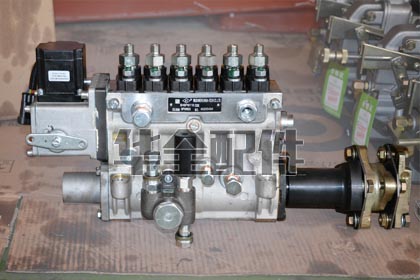
What is a diesel fuel injection pump and how does it work?
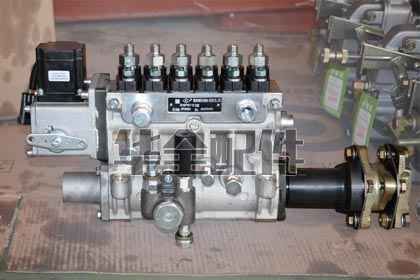
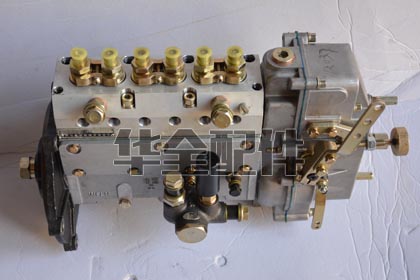
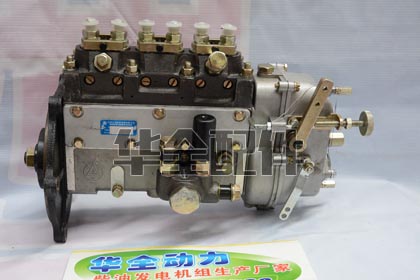
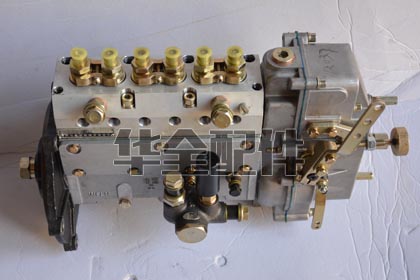
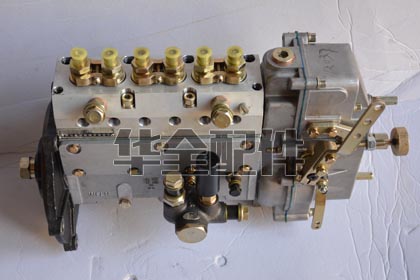
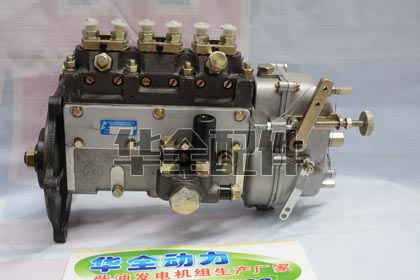
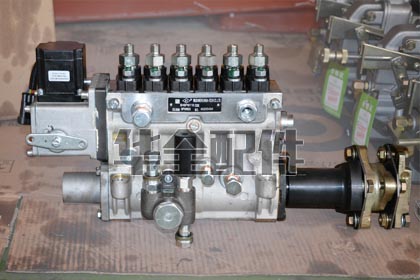
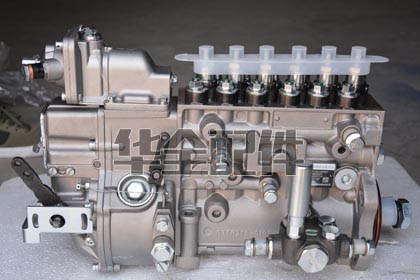
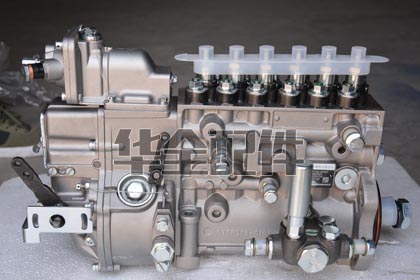
A diesel fuel injection pump is the precision-measuring and high-pressure-pumping heart of the diesel fuel system. Its function: (1) Metering — precisely measures the exact volume of fuel required for each injection event (typically 50-250 mm^3 per stroke depending on load); (2) Timing — delivers fuel at the precise crankshaft angle for optimal combustion (typically 8-18 degrees BTDC, varying by load and speed); (3) Pressurization — generates injection pressure: 200-300 bar for mechanical inline pumps, 800-1,200 bar for electronic unit pumps, and 1,600-2,500 bar for common-rail high-pressure pumps. The pump plunger-to-barrel clearance is 2-4 microns — this is the precision that allows generating extreme pressures without excessive internal leakage. For context, 2,500 bar is equivalent to the pressure at a depth of 25 kilometers in the ocean.
What types of diesel injection pumps are used on generator engines?
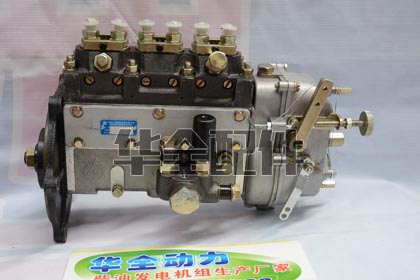
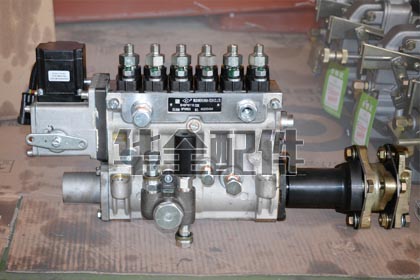
Three main types: (1) Mechanical inline pump (Bosch P, A, MW types): individual plunger-and-barrel pumping elements for each cylinder, camshaft-driven from the engine. Mechanical governor controls fuel quantity. Dominated the 1960s-2000s. Simple, robust, field-repairable, but limited pressure and timing control. (2) Electronic unit pump/injector (EUP/EUI): each cylinder has a dedicated pump-injector unit operated by the engine camshaft, electronically controlled by the ECU for precise timing and quantity. Pressures to 1,200 bar. Used on modern medium-speed generators. (3) High-pressure common rail (HPCR): a single high-pressure pump delivers fuel to a common rail (accumulator) at 1,600-2,500 bar; electronic injectors then precisely meter and atomize fuel. Maximum flexibility in timing, multiple injection events per cycle (pilot-main-post), and independent pressure control. Dominates all modern diesel generators above 100kW.
What are the symptoms of a failing injection pump?
Failing injection pump symptoms: (1) Hard starting — the pump cannot build sufficient pressure for cold cranking speeds, especially noticeable on cold mornings; (2) Power loss — particularly at high load, as the pump cannot deliver rated fuel quantity; (3) Uneven running or misfiring — one pumping element is delivering less fuel than others; (4) Excessive black smoke — the pump timing is retarded or delivery valves leak, causing incomplete combustion; (5) White smoke — severely retarded timing or low compression-compatible pressure causing fuel to burn incompletely; (6) Engine hunting — the governor (mechanical) or ECU feedback loop (electronic) is unstable; (7) Metal particles in the fuel filter — internal pump components are disintegrating — immediate investigation required. Always rule out fuel supply issues (filters, lift pump, air in fuel) before condemning the injection pump.
Which engine brands are HUAQUAN injection pumps compatible with?
HUAQUAN supplies injection pumps for: Weichai (WD615/618, WP10/12/13/17, 226B, 6160-6200 engines), Yuchai (YC4, YC6, YCK), Shangchai (SC4H, SC7H, SC8DK, SC9DF, SC12E, SC25/27), Cummins (4BT, 6BT, 6CT — P7100, VE, PT pumps), Perkins, Deutz, and all Chinese diesel platforms. Pump types: Bosch P-series (P7100, P8500, P3000), A-type, MW-type, VE distributor pumps, and high-pressure common rail pumps (CP1, CP3, CP4 series). Each pump is calibrated on a test bench to the engine manufacturer's fuel delivery curve and supplied with a calibration certificate.
What causes injection pump plunger seizure?
Plunger seizure — the most common catastrophic injection pump failure — is caused by: (1) Water contamination — the number one cause. Water has no lubricity; the 2-4 micron clearance between the plunger and barrel relies on fuel for lubrication. Water displaces fuel and the plunger gall-welds to the barrel within seconds; (2) Abrasive contamination — particles bypassing failed fuel filtration score the plunger surface, creating high-friction spots that overheat; (3) Fuel starvation — running the pump dry during priming or filter changes causes rapid overheating; (4) Incorrect fuel viscosity — using gasoline, kerosene, or overly thin fuel; (5) Bio-diesel blends above B20 — biod has solvent properties that may attack pump seals and has lower lubricity. Prevention: strict fuel filtration, water separation, and never running the pump without fuel.
How is injection pump timing set on a diesel generator?
Timing procedure for mechanical pumps: (1) Bring cylinder #1 to the specified injection timing mark — typically 8-18 degrees BTDC on the compression stroke (both valves closed) — using the flywheel timing marks or a dial indicator on the piston crown; (2) Lock the engine at this position; (3) On the pump, align the timing marks on the pump flange and the gear housing; (4) For inline pumps: verify the delivery valve on cylinder #1 is just beginning to lift using the spill-timing method — connect a gravity fuel supply to the pump inlet, rotate the pump shaft slowly in the direction of rotation, and observe when fuel flow stops (this is the start of injection); (5) If the spill point does not match the engine timing mark, loosen the pump mounting bolts and rotate the pump body slightly — rotating toward the engine advances timing; (6) Tighten bolts and re-verify. Electronic pumps: the ECU controls timing — use the manufacturer's diagnostic software to verify and adjust the timing map.
How often should the injection pump be serviced or overhauled?
Service interval for mechanical pumps: major overhaul at 10,000-15,000 operating hours or when engine overhaul is performed. This includes: plunger-and-barrel replacement, delivery valve replacement, camshaft bearing inspection, governor calibration, and fuel delivery calibration on a test bench. Electronic pumps (EUI/EUP): injectors typically require service at 5,000-8,000 hours; the high-pressure pump itself may run 15,000+ hours. Common-rail pumps (CP3/CP4): designed for 15,000-20,000 hours. The pump should be overhauled at every major engine rebuild regardless of apparent condition — the internal wear cannot be assessed without disassembly and metrological measurement on a test bench. Between overhauls: change fuel filters on schedule (the pump's best protection), monitor fuel consumption as a proxy for pump health, and sample fuel for particle count.
What is the difference between a P7100 pump and a common-rail pump?
The Bosch P7100 is the legendary mechanical inline pump — purely mechanical, camshaft-driven, with individual plunger-and-barrel elements generating 800-1,100 bar. Fuel delivery is mechanically governed. It dominated heavy-duty diesel from 1994-2010 — extremely robust (500,000+ km in trucks), field-repairable with basic tools, and tolerant of less-than-perfect fuel. A common-rail high-pressure pump (CP3/CP4) is electronically controlled, generating 1,600-2,500 bar into a common accumulator rail. The injectors are electronically actuated, allowing multiple injection events per cycle. Advantages: 2-3x higher injection pressure for finer atomization (smoke reduction), infinitely variable timing, and cylinder-selective control. Disadvantage: requires clean fuel and sophisticated ECU control. The transition from P7100 mechanical to common-rail electronics is the single biggest technology shift in diesel injection history.
Can I replace a mechanical pump with an electronic common-rail system?
Converting a mechanical injection engine to common-rail is a major engineering project, not a simple part replacement. It requires: (1) A common-rail high-pressure pump mechanically driven from the engine geartrain (custom mounting adapter needed); (2) Common-rail injectors fitting the existing cylinder head injector bores (unlikely without machining); (3) A high-pressure rail with pressure sensor and pressure-limiting valve; (4) An ECU with complete engine mapping (requires dyno development); (5) Crankshaft and camshaft position sensors; (6) Complete wiring harness. The project cost typically exceeds the value of the generator. HUAQUAN recommends rebuilding the existing mechanical system or replacing the engine with a factory common-rail unit.
What is injection pump calibration and why is it necessary?
Calibration is the process of adjusting each pumping element to deliver exactly equal fuel quantities at multiple speed and rack-position points, performed on a precision test bench using calibration fluid (ISO 4113) at controlled temperature. Without calibration: (1) Unequal fuel delivery between cylinders causes power imbalance — one cylinder works harder, overheats, and may fail; (2) Excessive fuel delivery wastes fuel and produces black smoke; (3) Insufficient fuel delivery limits power. Calibration specifications are typically: at rated speed and full-load rack position, all elements must deliver within +-2-3% of each other. The calibration process uses a test bench with calibrated graduate tubes for each element output, a precision tachometer, and temperature-controlled test fluid. HUAQUAN injection pumps are individually calibrated and supplied with a test certificate.
What should I do if the injection pump loses prime?
Loss of prime (air in the pump) causes the engine to crank but not fire — the air is compressible and the pump cannot generate injection pressure. Procedure: (1) Verify the fuel tank has adequate fuel — obvious but frequently overlooked; (2) Check all fuel line connections from the tank to the pump for tightness; (3) Operate the manual priming pump (lift pump) until firm resistance — this pushes fuel through the filter and fills the pump gallery; (4) Loosen the bleed screw on the injection pump (if equipped) and continue pumping until bubble-free fuel flows; (5) For pumps without a bleed screw: loosen the high-pressure line nut at 2-3 injectors, crank the engine in 15-second bursts, and tighten when fuel pulses out. If the pump repeatedly loses prime overnight, check: tank pickup tube for cracks (air ingress when pump stops and fuel drains back), lift pump check valves, and all banjo bolt sealing washers for compression set.
How does fuel quality affect injection pump life?
Fuel quality is the absolute determinant of pump life. Lubricity: diesel fuel lubricates the injection pump's internal components. The move to ultra-low sulfur diesel (ULSD, under 15 ppm sulfur) removed the natural lubricity compounds along with the sulfur — modern ULSD must have lubricity additives to achieve a maximum wear scar diameter of 460 microns (HFRR test, ISO 12156-1). Fuel not meeting this specification will cause pump plunger wear within 1,000-2,000 hours. Water: 1% water in fuel reduces bearing life by 80%. Cetane number: below 40 increases ignition delay, causing harder combustion (higher peak pressure) and increased pump drive load. Always use fuel meeting the engine manufacturer's minimum specification — the price difference between premium diesel and questionable fuel is negligible compared to an injection pump replacement.