What types of fuel lines are used on diesel generators?
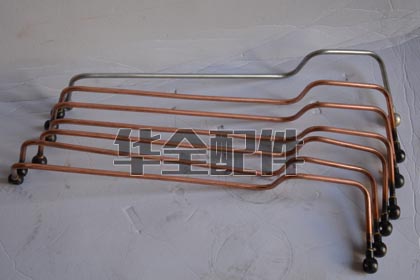
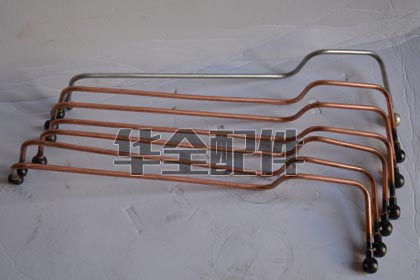
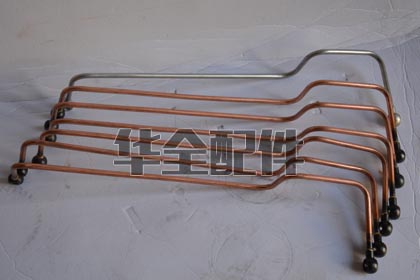
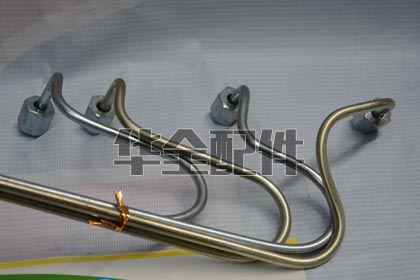
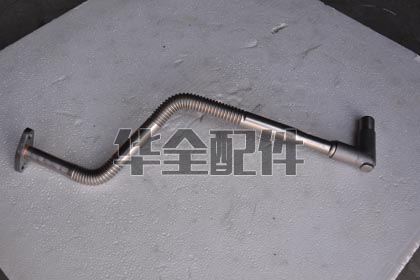
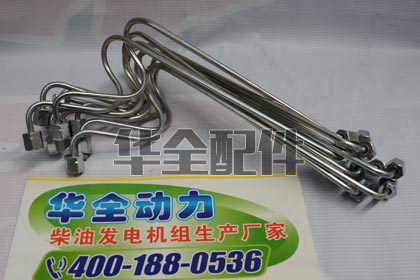
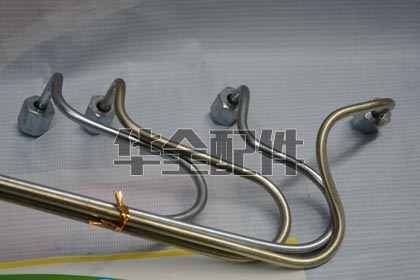
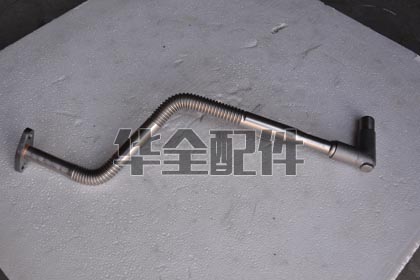
Diesel generator fuel systems use three categories of fuel lines: (1) High-pressure injection lines — thick-walled seamless steel tubes (typically 6mm OD x 2mm wall) connecting the injection pump to injectors. These must withstand pulsating pressures of 800-2,500 bar at firing frequency — enormous cyclic stress. The internal bore is precision-honed to 2-3mm diameter with surface finish smoother than Ra 0.5. Any internal corrosion pit stress-riser can initiate fatigue cracking; (2) Low-pressure supply and return lines — flexible braided rubber hoses (NBR inner liner with textile or steel braid reinforcement) or nylon tubing operating at 0.5-5 bar. These deliver fuel from the tank to the lift pump and return excess fuel from the injectors and injection pump; (3) Fuel tank-to-engine feed lines — larger diameter (8-12mm) resistant to external abrasion, UV, and fuel permeation. All lines must be diesel-rated — gasoline-rated hose will swell, delaminate, and fail in diesel service.
What are the symptoms of a leaking fuel line?
Symptoms: (1) Fuel odor around the generator — the most obvious indicator; (2) Visible wet spots or staining on hoses, fittings, and on the floor beneath the generator; (3) Air in the fuel system — the engine is hard to start or stalls, and the priming pump never achieves firm resistance — a suction-side leak allows air to enter (fuel may not leak out because the crack is on the vacuum side); (4) Reduced fuel pressure — a leak on the pressure side reduces the fuel available to the injection pump, limiting power; (5) Increased fuel consumption without apparent cause; (6) Fuel in the generator enclosure sump — a fire hazard requiring immediate attention. Diesel fuel leaks are a serious fire risk — diesel ignites at approximately 210 degrees C and hot exhaust components can exceed this temperature at full load.
Which engine brands are HUAQUAN fuel lines compatible with?
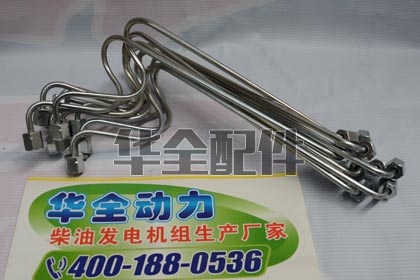
HUAQUAN supplies pre-formed and bulk fuel lines for: Cummins (4BT-6CT, ISB-ISL, QSB-QSL, NT855, KTA19/38/50, QSK), Perkins (1103-4008), Deutz (912-2015), Weichai (WD615/618, WP10/12/13/17, 226B, 6160-6200), Yuchai (YC4-YCK), Shangchai (SC4H-SC33W), and all Chinese diesel platforms. High-pressure injection lines are manufactured from zinc-plated seamless precision steel tube (DIN 73000 compliant), pre-bent to the exact OEM routing with correct flare nuts (M12x1.5, M14x1.5, etc.). Low-pressure hoses are NBR/PVC diesel-rated with crimped or push-lock fittings. Kit includes all required sealing washers (copper or bonded seal).
How often should generator fuel lines be inspected and replaced?
Inspection: visually inspect all accessible fuel lines at every service interval (250-500 hours). Look for: cracking, hardening, swelling, abrasion, chafing, and wet spots. Flex low-pressure hoses — they should be pliable, not hard or cracked. Replacement: (1) High-pressure injection lines — replace at every major overhaul (10,000-15,000 hours) or if any corrosion, dent, or fatigue crack is found. High-pressure line fatigue failure is sudden and catastrophic; (2) Low-pressure rubber hoses — replace every 5-7 years regardless of hours, as rubber compounds degrade with age (ozone, heat, UV); (3) Any line showing damage — replace immediately. The cost of replacing suspect fuel lines is negligible compared to the cost of a fuel fire or an engine shutdown at a critical moment.
What is the correct procedure for bleeding air from fuel lines?
Air bleeding procedure: (1) Fill the fuel tank — air often enters when the tank runs low; (2) Open the bleed screw on the primary fuel filter head (fuel-water separator) and operate the manual priming pump until bubble-free fuel flows — close the bleed screw; (3) Open the bleed screw on the secondary fuel filter head — repeat bleeding; (4) For mechanical injection pumps: locate the pump bleed screw (usually on the governor housing or pump body) — open and pump until bubble-free; (5) Crank the engine in 10-15 second bursts with the throttle at maximum — this purges air through the high-pressure lines and injectors; (6) If the engine does not start after 4-5 cranking attempts, loosen 2-3 high-pressure line connections at the injectors, crank, and tighten when fuel pulses out; (7) Once running, maintain high idle for 5 minutes to expel residual air.
What material should diesel fuel hoses be made from?
Diesel-rated hose must have an NBR (Nitrile Butadiene Rubber — also called Buna-N) inner liner, NOT natural rubber or EPDM which swell and degrade rapidly in diesel. Construction: (1) Inner tube — NBR compound specifically formulated for diesel and biodiesel blends up to B20; (2) Reinforcement — textile braid (for low-pressure) or high-tensile steel wire braid (for medium-pressure); (3) Outer cover — CR (Chloroprene/Neoprene) or CSM (Hypalon) for oil, ozone, UV, and abrasion resistance. The hose must be marked with SAE J30R7 (low-pressure diesel) or SAE J30R9 (medium-pressure, lower permeation) or equivalent ISO 7840 standard. Never use heater hose, water hose, or unmarked hose for diesel — the inner liner will delaminate and plug fuel filters.
How should fuel lines be routed in a generator enclosure?
Proper routing prevents 80% of fuel line failures: (1) Keep away from hot surfaces — exhaust manifolds, turbochargers, exhaust piping (above 200 degrees C surface) — minimum 150mm clearance or use a heat shield; (2) Avoid sharp edges and moving parts — chafing against the enclosure frame, engine vibration, or fan blades will wear through the hose outer cover and then the reinforcement; (3) Support lines every 300-400mm with cushioned P-clamps — unsupported lines vibrate and fatigue; (4) Maintain a minimum bend radius — typically 5x the hose OD for rubber hose — tighter bends kink and restrict flow; (5) Route lines with a gradual upward slope from the tank to the engine to prevent air pockets; (6) Protect lines passing through bulkheads with grommets; (7) Secure flexible lines so they absorb engine movement without rubbing. A fuel line routed against a hot exhaust manifold is a fire waiting to happen.
What causes high-pressure injection line failure?
Failure mechanisms: (1) Fatigue cracking — the number one cause. The line experiences pressure pulses at firing frequency (typically 25-37.5 Hz = 1,500-2,250 cycles/minute = 90,000-135,000 cycles/hour). Over thousands of hours, fatigue cracks initiate at stress concentration points: the flare seat, the clamp locations, and any point where the line touches a vibrating surface; (2) Corrosion pitting — external corrosion from water exposure creates pits that act as stress concentrators; (3) Denting — a dent from a wrench or impact creates a local stress riser that reduces the line's fatigue life by 80-90%; (4) Over-tightening flare nuts — too much torque crushes the flare and embeds stress; (5) Vibration — an unsupported line section will vibrate at its natural frequency, rapidly fatiguing. A high-pressure fuel leak from a cracked line creates a high-velocity fuel mist — an extreme fire hazard.
What is a dry break fuel coupling and when is it used?
A dry-break coupling is a quick-connect fitting that seals both the hose side and the tank/engine side when disconnected, preventing fuel spillage. Used on: (1) External fuel connections for trailer-mounted generators — allows rapid connection/disconnection to external fuel tanks without tools or fuel spills; (2) Generator day tanks — for connecting the bulk storage tank fuel supply line; (3) Fuel polishing systems. Dry-break couplings reduce: fuel spillage (environmental compliance), fire risk, and fuel contamination during connection. They are mandatory for generators in environmentally sensitive locations. HUAQUAN supplies dry-break couplings in sizes from 1/4 inch to 2 inch with NPT, BSP, or SAE thread standards.
Can I repair a damaged high-pressure injection line?
Never repair a high-pressure injection line — it must be replaced. A high-pressure diesel injection line operates at 800-2,500 bar — attempting to repair with brazing, welding, compression fittings, or epoxy guarantees failure. The localized heat from brazing/welding anneals the precision-drawn steel, reducing its fatigue strength by 50%+ at the repair location. Compression fittings are rated to 300-400 bar maximum — far below injection system pressures. The risk of a high-pressure fuel leak spraying a fine diesel mist (easily ignited) onto hot exhaust components makes a repaired line unacceptable in any professional installation. HUAQUAN supplies exact OEM-pattern replacement lines that match the original routing, flare type, and pressure rating.
How should I store spare fuel lines and hoses?
Storage for rubber hoses: (1) Keep in original packaging or loosely coiled — do not hang on a single hook (creates a permanent kink); (2) Store in a cool, dark, dry environment at 10-25 degrees C — UV light, ozone (from electric motors), and heat accelerate rubber aging; (3) Shelf life: 5-7 years from date of manufacture for uninstalled NBR diesel hose (cure date is marked on the hose); (4) Dispose of any hose showing surface cracking, hardening, or swelling — these are signs of age degradation. Storage for steel injection lines: (1) Keep protective caps on both ends to prevent debris entry and corrosion; (2) Store straight or in original formed packaging; (3) Apply a light oil coating to prevent corrosion; (4) Shelf life: 10+ years in proper conditions.