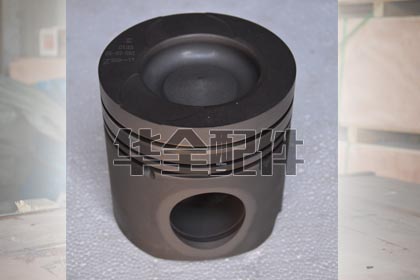
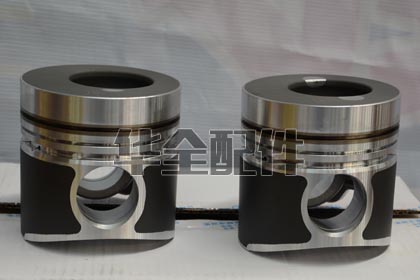
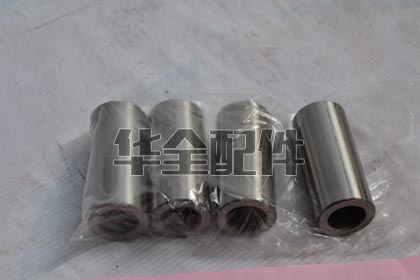
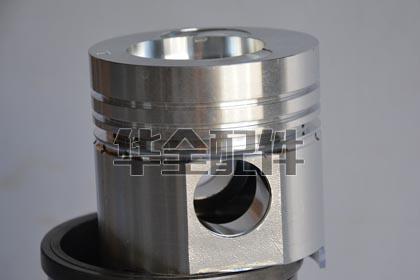
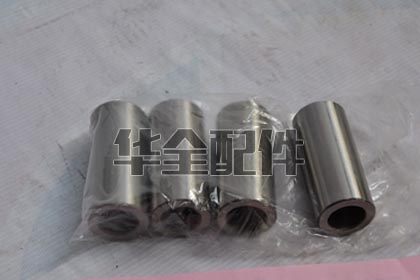
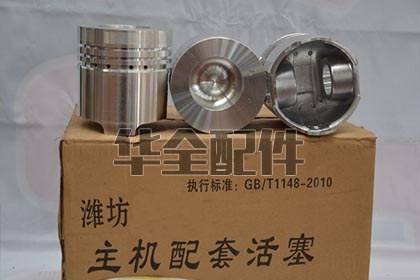
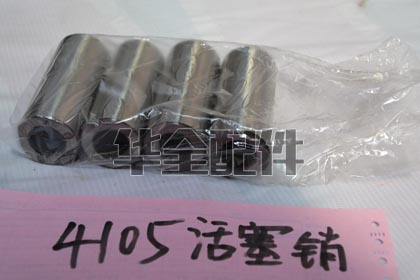
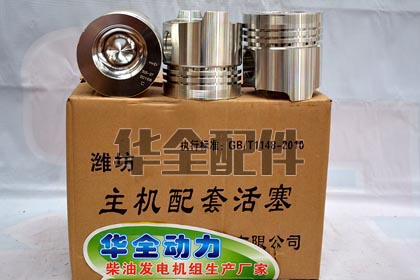
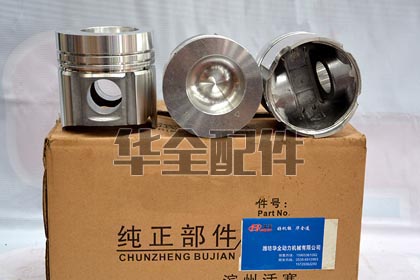
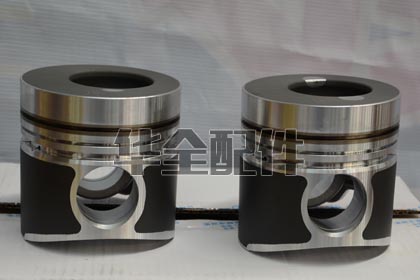
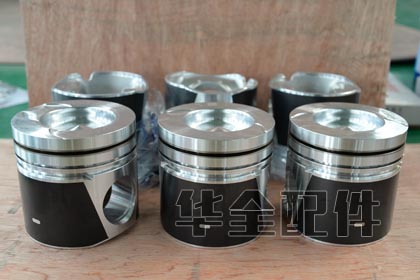
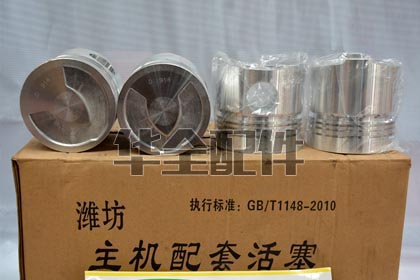
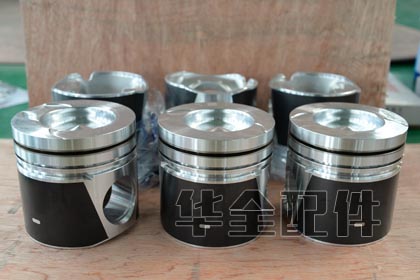
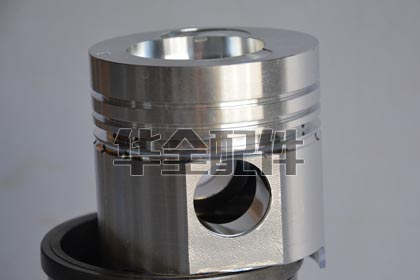
Generator Pistons – Standard & Oversize

Generator Pistons

Generator Pistons – Standard & Oversize

Product Overview

High-performance generator piston assemblies are critical for maintaining engine efficiency, durability, and power output under continuous load. Our piston and piston pin components meet ISO 9001-certified manufacturing standards and undergo 100% dimensional inspection and hardness testing (HRC 58–62) to ensure precise fit and extended service life. Sourced from leading OEM-tier suppliers—including Bolei and Weichai—these parts guarantee reliable replacement performance for industrial diesel generators.

Get Quote

Key Features

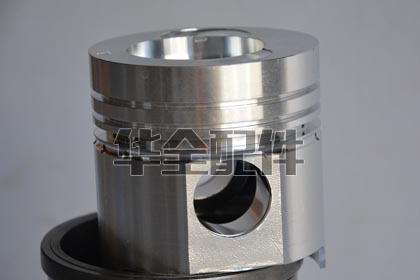
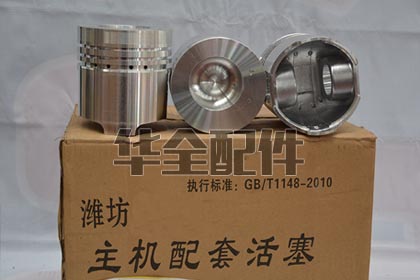
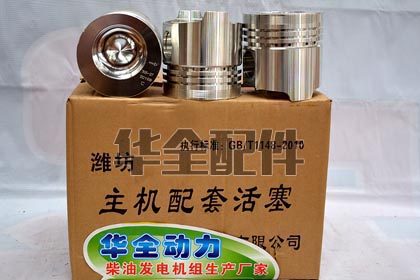
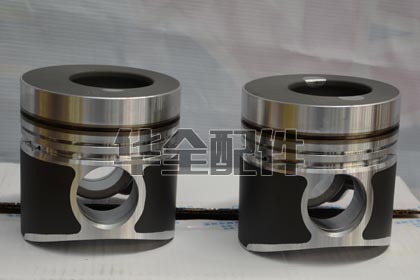
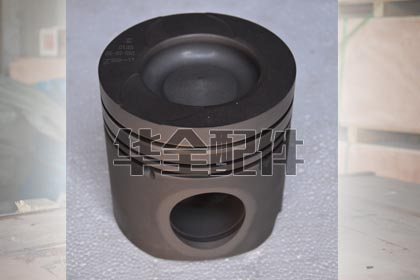
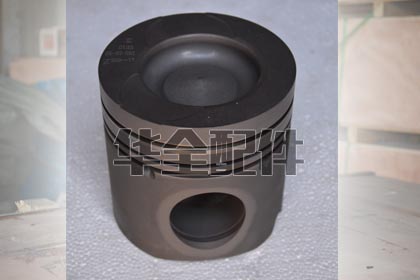
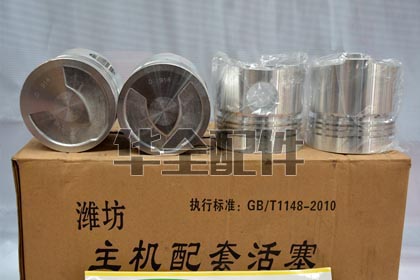
  • Precision-machined aluminum alloy pistons with Teflon-coated skirts for reduced friction and wear
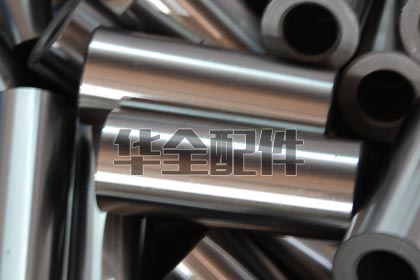
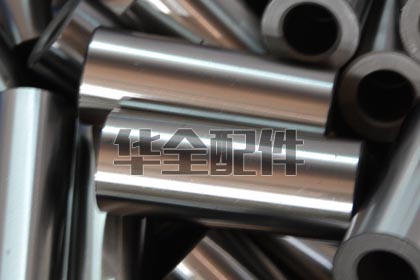
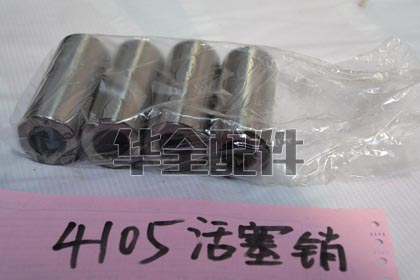
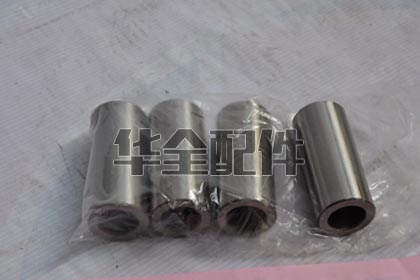
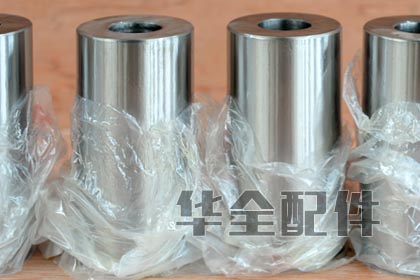
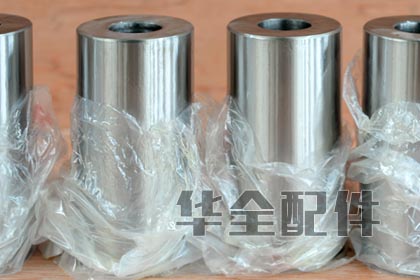
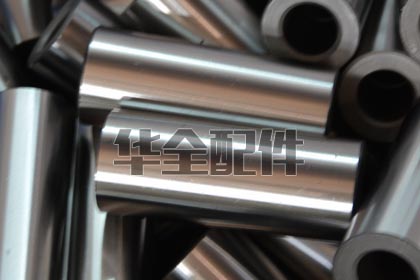
  • Heat-treated alloy steel piston pins (diameter tolerance ±0.005 mm) for optimal bushing clearance
  • OEM-spec ring grooves with ±0.01 mm depth tolerance to maintain compression integrity
  • Anodized surface finish (20–25 μm thickness) for enhanced corrosion resistance in humid environments
  • Standard and oversize options available (up to +1.00 mm bore increments) for cylinder reboring applications
  • Direct-fit replacements validated against original equipment drawings and torque specifications

Product Series

Featured Product
Generator Pistons

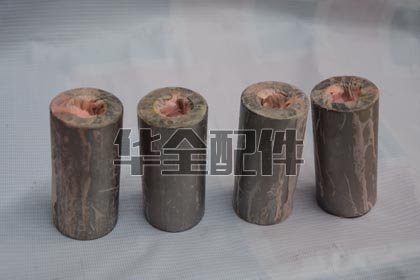
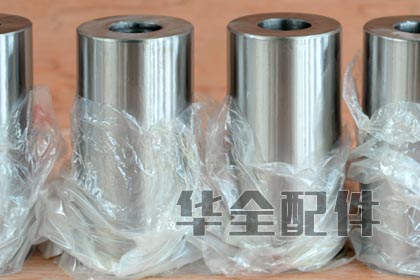
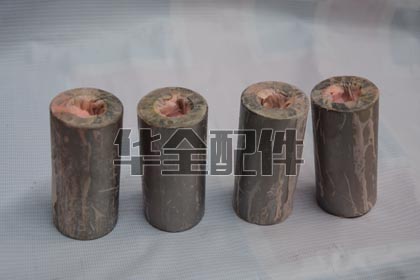
Bolong Piston Pin

Get Quote
Generator Pistons

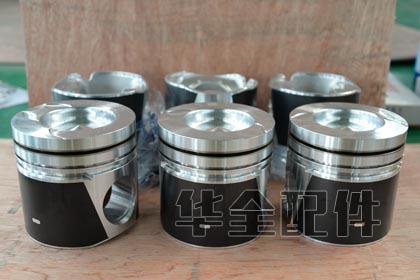
Bolong Piston

Get Quote
Generator Pistons

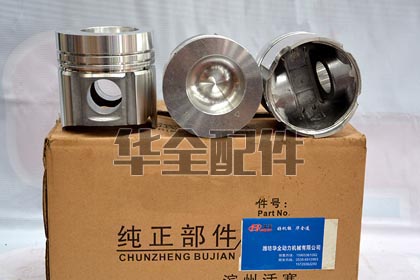
Weichai Piston

Get Quote
Generator Pistons

6113 Diesel Engine Piston

Get Quote

Technical Specifications

ParameterSpecification
MaterialAluminum alloy (A380/A390) / Alloy steel (40CrNiMoA)
Hardness (Piston)HB 120–140
Hardness (Piston Pin)HRC 58–62
Surface FinishAnodized (piston), Hard-chromed (pin)

Compatible Brands & Models

  • Weichai WD615 / WP6 / WP7 series
  • Bolei 6113 diesel engines
  • Type 495, 4100, 4105 industrial diesel engines
  • Shandong Weifang 30 kW diesel generator sets (4100-based)

Applications

These piston kits are engineered for heavy-duty backup and prime-power diesel generator sets operating in telecom base stations, data centers, construction sites, and remote off-grid installations. They support extended runtime cycles (up to 12,000 hours between overhauls) and perform reliably under variable loads, high ambient temperatures, and intermittent fuel quality. Ideal for field maintenance, scheduled engine rebuilds, and emergency spare part stocking.

Selection Guide

  1. Identify your engine model and serial number from the generator nameplate or crankcase casting mark
  2. Measure cylinder bore diameter using a micrometer to determine standard or oversize requirement (+0.25 mm, +0.50 mm, or +1.00 mm)
  3. Verify piston-to-wall clearance (recommended: 0.03–0.06 mm for 4-stroke industrial engines) using feeler gauges
  4. Match piston pin diameter and retaining clip type (full-floating vs. semi-floating) to avoid assembly errors

FAQ

Q: Do you supply pistons with rings included?

A: Yes — all piston assemblies include top compression ring, second scraper ring, and oil control ring pre-assembled; ring specs comply with JIS B1001 and DIN 7190 standards.

Q: What is the lead time for oversized pistons (e.g., +0.75 mm)?

A: Standard sizes ship within 3–5 business days; oversize pistons (custom-bored) require 10–14 days production lead time with prior engineering confirmation.

Q: Can these pistons be used in Tier 3-compliant engines?

A: Absolutely — our pistons meet EPA Tier 3 and EU Stage IIIA emissions compatibility requirements when installed with certified injectors and turbochargers per OEM service bulletins.

Need Help with Selection or Quote?

Contact Shandong Huaquan Power Co., Ltd
WhatsApp: +86 15905360672 | Email: huaquan@huaquanpower.com

Contact Us

Product Gallery

Boling

Cummins

Various

Weichai

Weifang

Frequently Asked Questions

What is a diesel generator piston and what does it do?
The piston is the component that directly receives the force of expanding combustion gases and converts it into the linear motion that drives the connecting rod and crankshaft. A diesel piston operates in the harshest environment in the engine: (1) Peak combustion pressure: 150-200 bar — equivalent to 1,500-2,000 tonnes force on a 130mm bore piston; (2) Peak gas temperature: 2,000-2,500 degrees C — a sustained 250-350 degrees C at the piston crown surface; (3) Piston speed: 10-15 m/s mean, with 25-30 m/s peak at mid-stroke, reversing direction at TDC and BDC over 12-25 times per second. The piston must withstand these conditions while maintaining a gas-tight seal through the piston rings, transferring 50-70% of its absorbed heat to the cooled cylinder wall, and operating for 10,000-25,000+ hours with sub-50-micron clearance to the cylinder bore. The piston crown incorporates a combustion bowl (omega or re-entrant shape) designed to optimize fuel-air mixing from the direct-injection spray pattern.
What materials are diesel generator pistons made from?
Diesel pistons are manufactured from: (1) Eutectic aluminum-silicon alloy (AlSi12CuNiMg — approximately 12% silicon) — the standard material for medium-duty diesel pistons. Silicon provides excellent wear resistance, low thermal expansion (better dimensional stability when hot), and good high-temperature strength. The piston is typically gravity die-cast or squeeze-cast; (2) Forged aluminum alloy — used for high-output turbocharged diesels. The forging process aligns the grain structure with the piston profile, providing 15-25% higher fatigue strength than a cast piston of the same alloy — critical for the high cylinder pressures of modern common-rail engines; (3) Articulated (composite) pistons — a forged steel crown (for combustion chamber heat resistance) bolted to an aluminum skirt (for lightweight and compatibility with aluminum cylinder block). Used on the largest medium-speed engines. All aluminum pistons receive a phosphate or tin coating on the skirt to prevent cold-start scuffing and an anodized or ceramic coating on the bowl rim to resist thermal fatigue cracking.
What are the signs of a damaged or worn piston?
Piston damage/wear indicators: (1) Ticking or slapping noise from the cylinder — a cold piston slap that diminishes as the engine warms indicates excessive piston-to-cylinder clearance (aluminum pistons expand more than cast iron blocks, so clearance tightens as the piston heats); (2) Excessive blow-by — combustion pressure leaking past the rings into the crankcase; (3) Oil consumption and blue smoke — from worn ring grooves allowing oil pumping; (4) Low compression — measured by compression test; (5) Metal particles in the oil filter — aluminum particles indicate piston skirt or pin boss wear; (6) Coolant in oil — can indicate a cracked piston crown (from overheating or detonation) allowing combustion pressure to crack into the cooling gallery; (7) Uneven cylinder exhaust temperatures — a damaged piston changes the combustion characteristics of that cylinder. Confirmation requires: borescope inspection through the injector hole (look for cracks, erosion, melting), compression test, and/or cylinder head removal for direct inspection.
Which engine brands are HUAQUAN pistons compatible with?
HUAQUAN pistons are manufactured for: Cummins (4BT, 6BT, 6CT, ISB, ISC, ISL, NT855, KTA19/38/50), Perkins (1103-4008), Deutz (912-2015), Weichai (WD615, WD618, WP10/12/13/17, 226B, 6160-6200), Yuchai (YC4, YC6, YCK), Shangchai (SC4H-SC33W), and all Chinese diesel platforms. Available in: standard bore, +0.25mm, +0.50mm, +0.75mm, +1.00mm oversize. Each piston includes: piston body (with ring grooves and combustion bowl), piston pin (wrist pin), and pin retaining circlips. Piston ring sets, connecting rods, and cylinder liners are available as matched overhaul kits.
What is the difference between standard and oversize pistons?
Standard pistons are manufactured for the engine's original bore diameter. Oversize pistons (typically +0.25mm through +1.00mm in 0.25mm increments) are larger in diameter and are used when the cylinder bore has been machined (re-bored) to remove wear, scoring, or out-of-round during an engine overhaul. A +0.50mm piston is exactly 0.50mm larger in diameter than the standard piston. Critical: (1) The cylinder must be precisely bored and honed to the exact oversize — installing an oversize piston in a standard bore will cause seizure within seconds of start-up; (2) All cylinders do not need to go to the same oversize — the machine shop bores each cylinder to match the specific oversize piston that will go into it; (3) Oversize pistons require matching oversize piston rings. HUAQUAN can supply both the pistons with matching rings.
What causes piston seizure (scuffing)?
Piston seizure — the piston welding or galling to the cylinder wall — is caused by: (1) Insufficient piston-to-cylinder clearance — the piston expands when hot and, if clearance is below specification, it contacts and friction-welds to the cylinder. This is why clearance specifications are critical and must account for the specific aluminum alloy's thermal expansion coefficient; (2) Overheating — coolant loss, restricted airflow, or overloading causes the piston to expand beyond the available clearance; (3) Oil starvation — the oil film between the piston skirt and cylinder wall fails, allowing metal-to-metal contact; (4) Fuel dilution — fuel leaking past the rings washes the oil film off the cylinder wall, causing scuffing at the next stroke; (5) Foreign object — debris (broken ring, valve fragment, carbon chunk) becomes trapped between the piston and cylinder, gouging both surfaces; (6) Improper break-in of new rings/pistons — the surfaces did not adequately tribo-chemically condition. Prevention: precise measurement of piston-to-bore clearance, correct oil viscosity, proper break-in procedure.
What is the function of the piston cooling gallery?
The cooling gallery is a hollow channel cast inside modern diesel pistons through which engine oil is circulated for piston cooling. Oil is sprayed by a dedicated piston cooling nozzle (jet) in the crankcase into the gallery inlet at the piston underside — at 3-5 bar, delivering 2-5 liters per piston per minute on large engines. The oil flows through the gallery, removes heat from the piston crown (the hottest part), and exits back to the oil pan. This reduces the piston crown temperature by 50-80 degrees C compared to a solid piston with no cooling gallery — the difference between a piston that survives 25,000 hours and one that thermally fatigues and cracks in 5,000 hours. Piston cooling galleries became essential when turbocharged diesel outputs crossed approximately 25 bar BMEP (brake mean effective pressure). HUAQUAN pistons for turbocharged engines incorporate cooling galleries machined to OEM specifications.
What is piston protrusion and why must it be measured?
Piston protrusion (also called piston height or piston deck clearance) is the distance the piston crown extends above (or below) the cylinder block deck surface when the piston is at Top Dead Center (TDC). This measurement is critical because: (1) It determines the compression ratio — the clearance volume between the piston crown and the cylinder head at TDC. Pistons installed 0.10mm too low reduce the compression ratio enough to cause hard starting and white smoke; 0.10mm too high risks piston-to-head contact — catastrophic; (2) It determines the correct cylinder head gasket thickness — the gasket thickness is selected based on the measured protrusion to achieve the design clearance. Procedure: (1) Install the piston and torque the connecting rod to the crankshaft; (2) Bring the piston to true TDC using a dial indicator; (3) Measure the distance from the piston crown edge to the block deck surface with a depth micrometer or dial indicator at multiple points; (4) Record for each cylinder and select the cylinder head gasket thickness accordingly.
How should I inspect a piston during engine overhaul?
Inspection checklist: (1) Visual — use a bright light and magnifying glass to inspect the piston crown for cracks (especially around the combustion bowl rim and valve pockets), erosion, melting, or impact marks from foreign debris; (2) Ring grooves — measure groove width with feeler gauges against the new ring thickness — excessive clearance (over 0.15mm for top groove) allows ring flutter and oil pumping; (3) Piston pin bore — measure with a bore gauge and check the pin fit — a loose pin creates a knocking noise and accelerated wear; (4) Piston skirt — measure the skirt diameter with a micrometer at the specified measuring point (usually 10-20mm from the bottom of the skirt, perpendicular to the pin axis). Compare to the cylinder bore measurement to calculate clearance; (5) Cooling gallery — shake the piston — you should hear oil moving inside the gallery. If not, the gallery may be blocked with carbonized oil. Inspect with a borescope through the oil inlet/outlet holes. Any piston showing cracks — replace immediately. Erosion or pitting on the crown — measure depth; deeper than 0.5mm, replace.

Frequently Asked Questions

What is a diesel generator piston and what does it do?
The piston is the component that directly receives the force of expanding combustion gases and converts it into the linear motion that drives the connecting rod and crankshaft. A diesel piston operates in the harshest environment in the engine: (1) Peak combustion pressure: 150-200 bar — equivalent to 1,500-2,000 tonnes force on a 130mm bore piston; (2) Peak gas temperature: 2,000-2,500 degrees C — a sustained 250-350 degrees C at the piston crown surface; (3) Piston speed: 10-15 m/s mean, with 25-30 m/s peak at mid-stroke, reversing direction at TDC and BDC over 12-25 times per second. The piston must withstand these conditions while maintaining a gas-tight seal through the piston rings, transferring 50-70% of its absorbed heat to the cooled cylinder wall, and operating for 10,000-25,000+ hours with sub-50-micron clearance to the cylinder bore. The piston crown incorporates a combustion bowl (omega or re-entrant shape) designed to optimize fuel-air mixing from the direct-injection spray pattern.
What materials are diesel generator pistons made from?
Diesel pistons are manufactured from: (1) Eutectic aluminum-silicon alloy (AlSi12CuNiMg — approximately 12% silicon) — the standard material for medium-duty diesel pistons. Silicon provides excellent wear resistance, low thermal expansion (better dimensional stability when hot), and good high-temperature strength. The piston is typically gravity die-cast or squeeze-cast; (2) Forged aluminum alloy — used for high-output turbocharged diesels. The forging process aligns the grain structure with the piston profile, providing 15-25% higher fatigue strength than a cast piston of the same alloy — critical for the high cylinder pressures of modern common-rail engines; (3) Articulated (composite) pistons — a forged steel crown (for combustion chamber heat resistance) bolted to an aluminum skirt (for lightweight and compatibility with aluminum cylinder block). Used on the largest medium-speed engines. All aluminum pistons receive a phosphate or tin coating on the skirt to prevent cold-start scuffing and an anodized or ceramic coating on the bowl rim to resist thermal fatigue cracking.
What are the signs of a damaged or worn piston?
Piston damage/wear indicators: (1) Ticking or slapping noise from the cylinder — a cold piston slap that diminishes as the engine warms indicates excessive piston-to-cylinder clearance (aluminum pistons expand more than cast iron blocks, so clearance tightens as the piston heats); (2) Excessive blow-by — combustion pressure leaking past the rings into the crankcase; (3) Oil consumption and blue smoke — from worn ring grooves allowing oil pumping; (4) Low compression — measured by compression test; (5) Metal particles in the oil filter — aluminum particles indicate piston skirt or pin boss wear; (6) Coolant in oil — can indicate a cracked piston crown (from overheating or detonation) allowing combustion pressure to crack into the cooling gallery; (7) Uneven cylinder exhaust temperatures — a damaged piston changes the combustion characteristics of that cylinder. Confirmation requires: borescope inspection through the injector hole (look for cracks, erosion, melting), compression test, and/or cylinder head removal for direct inspection.
Which engine brands are HUAQUAN pistons compatible with?
HUAQUAN pistons are manufactured for: Cummins (4BT, 6BT, 6CT, ISB, ISC, ISL, NT855, KTA19/38/50), Perkins (1103-4008), Deutz (912-2015), Weichai (WD615, WD618, WP10/12/13/17, 226B, 6160-6200), Yuchai (YC4, YC6, YCK), Shangchai (SC4H-SC33W), and all Chinese diesel platforms. Available in: standard bore, +0.25mm, +0.50mm, +0.75mm, +1.00mm oversize. Each piston includes: piston body (with ring grooves and combustion bowl), piston pin (wrist pin), and pin retaining circlips. Piston ring sets, connecting rods, and cylinder liners are available as matched overhaul kits.
What is the difference between standard and oversize pistons?
Standard pistons are manufactured for the engine's original bore diameter. Oversize pistons (typically +0.25mm through +1.00mm in 0.25mm increments) are larger in diameter and are used when the cylinder bore has been machined (re-bored) to remove wear, scoring, or out-of-round during an engine overhaul. A +0.50mm piston is exactly 0.50mm larger in diameter than the standard piston. Critical: (1) The cylinder must be precisely bored and honed to the exact oversize — installing an oversize piston in a standard bore will cause seizure within seconds of start-up; (2) All cylinders do not need to go to the same oversize — the machine shop bores each cylinder to match the specific oversize piston that will go into it; (3) Oversize pistons require matching oversize piston rings. HUAQUAN can supply both the pistons with matching rings.
What causes piston seizure (scuffing)?
Piston seizure — the piston welding or galling to the cylinder wall — is caused by: (1) Insufficient piston-to-cylinder clearance — the piston expands when hot and, if clearance is below specification, it contacts and friction-welds to the cylinder. This is why clearance specifications are critical and must account for the specific aluminum alloy's thermal expansion coefficient; (2) Overheating — coolant loss, restricted airflow, or overloading causes the piston to expand beyond the available clearance; (3) Oil starvation — the oil film between the piston skirt and cylinder wall fails, allowing metal-to-metal contact; (4) Fuel dilution — fuel leaking past the rings washes the oil film off the cylinder wall, causing scuffing at the next stroke; (5) Foreign object — debris (broken ring, valve fragment, carbon chunk) becomes trapped between the piston and cylinder, gouging both surfaces; (6) Improper break-in of new rings/pistons — the surfaces did not adequately tribo-chemically condition. Prevention: precise measurement of piston-to-bore clearance, correct oil viscosity, proper break-in procedure.
What is the function of the piston cooling gallery?
The cooling gallery is a hollow channel cast inside modern diesel pistons through which engine oil is circulated for piston cooling. Oil is sprayed by a dedicated piston cooling nozzle (jet) in the crankcase into the gallery inlet at the piston underside — at 3-5 bar, delivering 2-5 liters per piston per minute on large engines. The oil flows through the gallery, removes heat from the piston crown (the hottest part), and exits back to the oil pan. This reduces the piston crown temperature by 50-80 degrees C compared to a solid piston with no cooling gallery — the difference between a piston that survives 25,000 hours and one that thermally fatigues and cracks in 5,000 hours. Piston cooling galleries became essential when turbocharged diesel outputs crossed approximately 25 bar BMEP (brake mean effective pressure). HUAQUAN pistons for turbocharged engines incorporate cooling galleries machined to OEM specifications.
What is piston protrusion and why must it be measured?
Piston protrusion (also called piston height or piston deck clearance) is the distance the piston crown extends above (or below) the cylinder block deck surface when the piston is at Top Dead Center (TDC). This measurement is critical because: (1) It determines the compression ratio — the clearance volume between the piston crown and the cylinder head at TDC. Pistons installed 0.10mm too low reduce the compression ratio enough to cause hard starting and white smoke; 0.10mm too high risks piston-to-head contact — catastrophic; (2) It determines the correct cylinder head gasket thickness — the gasket thickness is selected based on the measured protrusion to achieve the design clearance. Procedure: (1) Install the piston and torque the connecting rod to the crankshaft; (2) Bring the piston to true TDC using a dial indicator; (3) Measure the distance from the piston crown edge to the block deck surface with a depth micrometer or dial indicator at multiple points; (4) Record for each cylinder and select the cylinder head gasket thickness accordingly.
How should I inspect a piston during engine overhaul?
Inspection checklist: (1) Visual — use a bright light and magnifying glass to inspect the piston crown for cracks (especially around the combustion bowl rim and valve pockets), erosion, melting, or impact marks from foreign debris; (2) Ring grooves — measure groove width with feeler gauges against the new ring thickness — excessive clearance (over 0.15mm for top groove) allows ring flutter and oil pumping; (3) Piston pin bore — measure with a bore gauge and check the pin fit — a loose pin creates a knocking noise and accelerated wear; (4) Piston skirt — measure the skirt diameter with a micrometer at the specified measuring point (usually 10-20mm from the bottom of the skirt, perpendicular to the pin axis). Compare to the cylinder bore measurement to calculate clearance; (5) Cooling gallery — shake the piston — you should hear oil moving inside the gallery. If not, the gallery may be blocked with carbonized oil. Inspect with a borescope through the oil inlet/outlet holes. Any piston showing cracks — replace immediately. Erosion or pitting on the crown — measure depth; deeper than 0.5mm, replace.
Scroll to Top