
Generator Batteries and Chargers — Complete Guide
The battery and charging system is the single most common point of failure for standby generators. Studies consistently show that battery-related issues account for 40-55% of all generator failure-to-start incidents. A generator with a perfect engine, full fuel tank, and flawless controller is useless if the batteries cannot deliver sufficient cranking current when called upon. This guide covers battery selection, charger types, maintenance, and troubleshooting.
Battery Types for Generator Starting
| Battery Type | Voltage | CCA Range | Cycle Life | Best Application | Cost |
|---|---|---|---|---|---|
| Flooded Lead-Acid (FLA) | 12V (single) or 24V (two in series) | 500-2000 CCA | 200-300 cycles to 50% DoD | Standard choice for most generator applications; proven reliability | $ |
| AGM (Absorbent Glass Mat) | 12V | 600-1800 CCA | 400-600 cycles to 50% DoD | Generators where battery is difficult to access for maintenance; vibration-resistant | $$ |
| Gel Cell | 12V | 400-1200 CCA | 500-800 cycles to 50% DoD | Deep-cycle applications; sensitive to overcharging (needs temperature-compensated charger) | $$$ |
| Lithium Iron Phosphate (LiFePO4) | 12V (12.8V nominal) | Varies by BMS | 2000-5000 cycles to 80% DoD | Premium applications; extreme cold requires battery heater; lightweight | $$$$ |
| Nickel-Cadmium (NiCd) | 1.2V per cell; 10-cell for 12V | High current capability | 1000-2000 cycles | Extreme temperature environments (-40°C to +60°C); very long service life | $$$$$ |
Battery Charger Types
| Charger Type | Charging Method | Float Voltage (12V) | Advantages | Limitations |
|---|---|---|---|---|
| Constant Voltage (Basic) | Fixed float voltage; no charge stages | 13.5-13.8V | Simple, inexpensive, reliable | Slow recharge after discharge; can overcharge if voltage drifts high; no battery temperature compensation |
| Three-Stage (IUoU) | Bulk (constant current) → Absorption (constant voltage) → Float | 13.2-13.8V | Fast recharge; prevents overcharge; extends battery life | More expensive than constant voltage; must match charger current to battery capacity |
| Temperature-Compensated | Same as three-stage but adjusts float voltage based on battery temperature | 13.5V @ 25°C; higher when cold, lower when hot | Maximizes battery life in varying temperature environments; prevents thermal runaway | Requires temperature sensor at battery; more complex |
| Battery Management System (BMS) Integrated | Required for LiFePO4; manages individual cell voltages, temperature, and current limits | 14.0-14.6V (lithium-specific) | Essential for lithium battery safety and longevity; often includes remote monitoring | Most expensive; lithium-specific; requires compatible battery |
Battery Sizing for Generator Starting
| Generator Size | System Voltage | Recommended Battery | Minimum CCA | Typical Configuration |
|---|---|---|---|---|
| 5-15 kW | 12V | Group 24, 27, or 31 | 600-800 CCA | Single 12V battery |
| 15-50 kW | 12V | Group 31 or 4D | 800-1200 CCA | Single 12V battery |
| 50-150 kW | 24V | Two Group 31 in series | 800-1000 CCA each | Two 12V batteries in series for 24V |
| 150-400 kW | 24V | Two 4D or 8D in series | 1200-1500 CCA each | Two 12V batteries in series for 24V |
| 400+ kW | 24V | Two 8D in series, or dual battery banks | 1400-1800 CCA each | Two 12V in series; dual banks for redundancy |
Frequently Asked Questions
1. How often should generator batteries be replaced?
Flooded lead-acid and AGM batteries in generator service should be replaced every 3-4 years, regardless of apparent condition. The failure mode of lead-acid batteries in float service is often sudden — the battery appears fine during monthly tests until the one time it cannot deliver enough current. Gel batteries may last 5-7 years. NiCd batteries can last 15-20+ years with proper maintenance. Lithium batteries have a calendar life of 10-15 years, typically reaching EOL when capacity drops to 80%.
2. Should I use a battery maintainer or a full charger?
For standby generators, you need a battery charger that can both maintain float charge (maintainer function) and recharge the batteries after a start (charger function). A simple trickle charger / maintainer (1-2 amps) cannot replenish the 50-100 amp-seconds consumed during a start attempt. The charger must be rated for at least 10% of the battery’s amp-hour capacity in amperes. Most dedicated generator battery chargers are 5-20 amps, which is appropriate.
3. Why do generator batteries fail so frequently?
The combination of factors makes generator battery service uniquely demanding: (1) vibration from engine operation accelerates plate shedding, (2) heat in the generator enclosure reduces battery life (every 8°C above 25°C halves battery life), (3) the battery charger may be incorrectly set (overcharging or undercharging), (4) batteries sit at partial state of charge for extended periods if the charger fails unnoticed, and (5) battery terminals corrode due to acid fumes and humidity. All of these are preventable with a proper maintenance program.
4. Can I use a car battery for my generator?
Automotive starting batteries can work for small portable generators but are not recommended for stationary standby generators. Automotive batteries are designed for high-current short-duration starting followed by immediate recharge — not for extended float service. Generator-specific deep-cycle or dual-purpose batteries are constructed with thicker plates that withstand the constant float charging and occasional deep discharge better than automotive batteries.
5. How do I test if my generator battery is good?
The only reliable test is a load test: apply a carbon-pile or electronic load tester set to half the battery’s CCA rating for 15 seconds. The battery voltage should remain above 9.6V (for 12V battery) at the end of the test, and the battery must be fully charged before testing. A simple voltage check tells you almost nothing — a failing battery can show 12.6V at rest but collapse to 6V under load. Load test annually and replace on a 3-4 year schedule regardless.
6. What is the correct float voltage for my generator battery?
For flooded lead-acid batteries at 25°C: 13.2-13.5V (12V system) or 26.4-27.0V (24V system). For AGM: 13.5-13.8V (12V). For gel: 13.2-13.5V (12V). These values must be temperature-compensated: increase by 0.03V per °C below 25°C, decrease by 0.03V per °C above 25°C. Check your charger’s output voltage with an accurate multimeter during float — many chargers drift over time and need recalibration.
Related Articles
- Generator Starter Motors Guide
- Generator Starting System — Complete Components Guide
- Generator Controller Parts
- Generator Troubleshooting Guide
- Complete Generator Maintenance Guide
- Generator Engine Parts — Systems Overview
- Diesel Engine Spare Parts for Generators
Product Gallery
Cummins
Various
Frequently Asked Questions
Generator starting batteries are typically lead-acid batteries in one of these configurations: (1) Voltage: almost all industrial/commercial generators use 12V or 24V starting systems. Small portable generators (under 10kW): 12V. Medium and large generators (10kW+): 24V (two 12V batteries connected in series). Some very large engines (1MW+) use 24V with multiple battery banks in parallel for increased cranking current; (2) Battery type: starting/cranking batteries (SLI — Starting, Lighting, Ignition). These are designed for short, high-current bursts (500-1,500 CCA — Cold Cranking Amps) rather than deep cycling. Deep-cycle batteries (designed for sustained discharge/recharge, like in solar systems or electric vehicles) are NOT suitable for generator starting — their internal construction (thicker plates, denser active material) limits the instantaneous current output; (3) Chemistry: flooded lead-acid (the most common — requires periodic water level checks), AGM (Absorbed Glass Mat — maintenance-free, vibration-resistant, can be mounted in any orientation except inverted, higher CCA for the same size), or gel (similar to AGM but less common for starting due to lower CCA for a given size); (4) Size (BCI group): Group 24, 27, 31, 4D, and 8D are the most common. Group 31 is the workhorse of the generator industry — approximately 13 x 6.8 x 9.4 inches, ~950-1,100 CCA, commonly used on 20-200kW generators. Group 8D (larger, ~20.75 x 11 x 10 inches, ~1,400-1,600 CCA) is used on larger engines.
Battery maintenance checklist: (1) Monthly: check the battery float voltage at the terminals with a multimeter. A fully charged 12V lead-acid battery should read 12.6-12.8V with the charger disconnected and the battery at rest. With the float charger connected: 13.2-13.8V (temperature-compensated). For 24V systems: double these values. If float voltage is below 13.0V (12V) / 26.0V (24V), the charger may be undersized or the battery may have a bad cell; (2) Quarterly: clean the battery terminals — disconnect (negative first), use a wire brush or terminal cleaner to remove any white/green corrosion (lead sulfate), apply petroleum jelly or terminal protectant spray, and reconnect (positive first). Check the electrolyte level on flooded batteries — the plates must be covered by 1/4 inch (6mm) of electrolyte. If low, add distilled water only (tap water contains minerals that contaminate the electrolyte and accelerate self-discharge); (3) Semi-annually: perform a load test — use a battery load tester or measure the voltage drop while cranking. The voltage should not drop below 9.6V (12V system) or 19.2V (24V system) during the cranking cycle. If the voltage drops lower, the battery may have reduced capacity and should be replaced; (4) Annually: check all battery cable connections for tightness and corrosion. Check the cables for cracked insulation, swelling, or heat damage. Resistance in a cable connection drops voltage to the starter — a seemingly small 0.5V drop at 500A is 250W of heat wasted at the terminal instead of turning the engine. (5) Replacement interval: generator starting batteries typically last 3-5 years in good conditions. In hot climates (ambient above 35 degrees C), expect 2-3 years. Replace batteries proactively at the end of their expected service life — a battery that fails during a power outage is a generator that cannot start.
Charger sizing: (1) Float charger (trickle charger): maintains the battery at full charge to counteract self-discharge. Size: 1-5% of the battery Ah rating. For a Group 31 battery (typically 100-120 Ah), a 2-5A float charger is sufficient; (2) Equalization charger: periodically applies a higher voltage (typically 14.4-15.0V for a 12V flooded battery) to equalize the charge across all cells and prevent sulfation. The charger must have an automatic equalization mode or be manually adjustable. Equalization is NOT recommended for AGM or gel batteries unless the manufacturer specifically allows it; (3) Full recharge after a start: after a start, the battery has been discharged (a 20-second crank at 500A consumes approximately 2.8 Ah). The alternator on the engine recharges the battery once the engine is running, so the charger does not need to be sized for rapid recharge — it needs to maintain float; (4) Temperature compensation: the float voltage must be adjusted for ambient temperature. At 25 degrees C: 13.5V (12V flooded) / 13.8V (12V AGM). For every degree C below 25 degrees C, increase by 0.03V. For every degree above, decrease by 0.03V. A quality generator battery charger includes a temperature sensor (mounted on the battery case) that automatically adjusts the float voltage; (5) HUAQUAN supplies chargers from 2A to 25A, 12V and 24V, with and without temperature compensation. For critical standby generators, always use a temperature-compensated charger — it maximizes battery life and ensures the battery is fully charged regardless of ambient temperature.
Chronic battery discharge diagnosis: (1) Parasitic draw — the generator controller, ECM (on electronic engines), and other electronics draw a small current even when the generator is not running. Typical parasitic draw: 50-200mA. Over 24 hours: 1.2-4.8 Ah — within a week (7 days): 8.4-33.6 Ah, enough to significantly discharge a 100 Ah battery. The charger must supply enough current to offset this parasitic draw PLUS maintain float. If the charger is undersized (e.g., a 1A charger on a system with 150mA parasitic draw), the battery slowly discharges; (2) Failed charger — the charger appears to be working (indicator light is on) but is not actually delivering current. Test: measure the battery voltage with the charger connected, then disconnect the charger — if the voltage drops significantly (more than 0.2V), the charger is not maintaining float; (3) Bad cell in the battery — one of the 6 cells (in a 12V battery) has failed, typically due to sulfation from chronic undercharging. A battery with a bad cell may show 12.6V but collapse under load; (4) Corroded connections — high resistance at the battery terminals or cable connections reduces the charging current reaching the battery. The charger appears to be delivering voltage, but the battery actually receives much less; (5) Battery age — beyond 3-5 years, battery capacity naturally declines. Even with a functioning charger, an old battery may not hold enough charge for a reliable start.
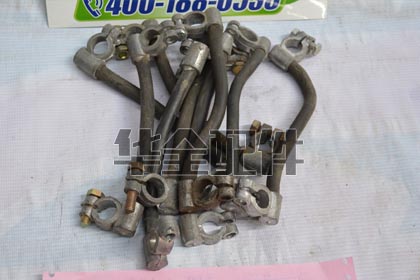
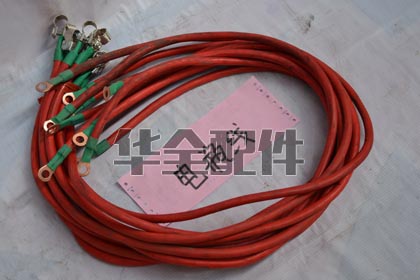
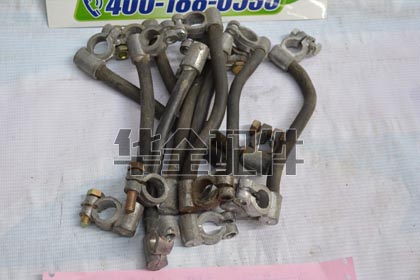
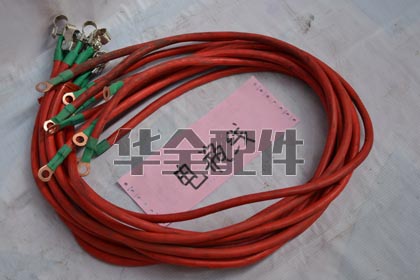
24V system wiring: (1) Series connection: connect the POSITIVE terminal of Battery A to the STARTER positive terminal. Connect the NEGATIVE terminal of Battery A to the POSITIVE terminal of Battery B using a short jumper cable (typically 12-18 inches, using the same gauge as the main battery cables — 2/0 or 4/0 AWG for large engines). Connect the NEGATIVE terminal of Battery B to the engine ground (starter mounting bolt or dedicated ground stud). The total voltage is 12V + 12V = 24V; (2) Critical rules: the two batteries MUST be identical — same brand, model, age, capacity (CCA and Ah), and state of charge. Mixing an old and new battery in series causes the weaker battery to be over-discharged during cranking and overcharged during charging, rapidly destroying both. Replace both batteries as a pair; (3) Cable sizing: for engines up to 100kW (typical starting current 300-500A): 2/0 AWG copper (70mm2). For engines 100-300kW (500-800A): 4/0 AWG copper (120mm2). For engines 300kW+ (800-1,500A): dual 4/0 AWG in parallel. Cable length from battery to starter should be as short as practical — every foot of cable adds voltage drop; (4) Charger connection: the 24V charger connects to the series pair — POSITIVE to Battery A positive, NEGATIVE to Battery B negative. Do NOT connect a 12V charger to each battery individually while they are connected in series — the chargers will conflict, and one battery may be overcharged; (5) Testing: after installation, measure the voltage at the starter terminals during cranking. The voltage drop from the battery terminals to the starter should be less than 1V for a 24V system. A higher drop indicates excessive cable resistance (undersized cables, corroded connections, or loose terminals).