Diesel Engine Spare Parts for Generators — Complete Guide
Diesel engines dominate the generator market from small 10 kW portable units to massive 3 MW+ industrial prime power installations. Their reliability, fuel efficiency, and long service life make them the preferred choice for standby, prime, and continuous power applications. However, like all internal combustion engines, diesel generators require spare parts throughout their operational life — from routine maintenance consumables to major overhaul components. This guide covers everything you need to know about diesel generator engine spare parts.
Diesel Engine Spare Parts Categories
| Category | Key Spare Parts | Replacement Frequency | Criticality |
|---|---|---|---|
| Routine Service Consumables | Oil filters, fuel filters, air filters, engine oil, coolant, drive belts, fuel-water separators | Every 250-500 hours or annually | High — neglected filters cause accelerated engine wear |
| Fuel Injection Components | Fuel injectors, injection pump, fuel lines, injector nozzles, delivery valves, sealing washers | Service: 3000-5000h; Replace: 8000-15000h | Critical — injector failure can cause piston damage |
| Cylinder Head & Valve Train | Cylinder head gasket, intake/exhaust valves, valve guides, valve seats, valve springs, rocker arms, push rods | Overhaul: 8000-15000h | High — head gasket failure causes coolant-oil mixing |
| Piston & Liner Kit (Overhaul) | Pistons, piston rings, cylinder liners, piston pins, circlips, connecting rod bearings | Major overhaul: 10000-25000h | Critical — defines engine rebuild scope |
| Bottom End / Rotating | Main bearings, connecting rod bearings, thrust bearings, crankshaft seals, crankshaft | Major overhaul: 15000-30000h | Critical — bearing failure = catastrophic engine failure |
| Gaskets & Seals | Complete gasket set (head gasket, manifold gaskets, oil pan gasket, valve cover gasket, O-rings, oil seals) | Per repair or overhaul | Medium — individual leaks manageable; head gasket critical |
| Cooling System | Water pump, thermostat, radiator cap, coolant hoses, fan belt, fan clutch | Water pump: 5000-10000h; Hoses: 2000-4000h | High — cooling failure causes rapid overheating |
| Lubrication System | Oil pump, oil cooler, pressure relief valve, oil pressure sensor | Oil pump: 10000-20000h | Critical — oil pump = engine heartbeat |
| Turbocharger | Turbocharger assembly (cartridge), oil feed line, oil drain line, gaskets | 15000-25000h | High — turbo failure can send debris into engine |
Common Diesel Generator Engine Brands and Parts Availability
| Engine Brand | Common Generator Range (kW) | Parts Availability | OEM vs Aftermarket Options |
|---|---|---|---|
| Cummins | 20-3500 | Excellent worldwide dealer network; extensive aftermarket | OEM and premium aftermarket (Fleetguard/Fleetrite) |
| Perkins | 10-2500 | Strong global dealer network; good aftermarket support | OEM Perkins Powerpart; extensive aftermarket options |
| Volvo Penta | 75-700 | Good dealer network; limited aftermarket for some models | Primarily OEM; some aftermarket filters and gaskets |
| MTU (Rolls-Royce) | 300-3000+ | Direct dealer network; limited third-party parts | Dominantly OEM; premium aftermarket emerging |
| John Deere | 30-500 | Good dealer network in Americas; growing globally | OEM JD parts; strong aftermarket for common models |
| Doosan | 60-600 | Growing global network; good in Asia-Pacific | Mix of OEM and aftermarket; filters widely available |
| Yuchai | 10-800 | Strong in China and Southeast Asia; expanding globally | Wide aftermarket availability from Chinese manufacturers |
| Weichai / Baudouin | 20-1000 | Good in Asia and Africa; growing European presence | Competitive OEM pricing; growing aftermarket |
Diesel Generator Spare Parts Planning
| Generator Role | Recommended Spare Parts Inventory | Rationale |
|---|---|---|
| Residential Standby (<50 kW) | Oil filter (×2), air filter (×1), fuel filter (×2), oil (1 service fill), drive belt, battery | Low hours; parts degrade by age more than use |
| Commercial Standby (50-300 kW) | Full filter set (×3 service changes), oil, coolant, belt set, battery, fuel-water separator elements, thermostat, radiator cap, injector sealing washers | Business continuity critical; must be able to service during extended outage |
| Prime Power (300-800 kW) | Full filter set (×6), oil drum, injectors (1 set), water pump, starter motor, alternator, complete gasket set, hoses, sensors (oil pressure, temperature, speed), turbocharger | Continuous operation; downtime = revenue loss; order lead times may be weeks |
| Mission Critical / Continuous (>800 kW) | Complete overhaul kit, full filter inventory, spare injector set, spare turbocharger, spare cylinder head assembly, spare water pump, spare oil pump, complete sensor set, spare ECU | Zero downtime tolerance; comprehensive spares avoid multi-week lead times for critical parts |
Signs That Your Diesel Generator Needs Spare Parts
- Increased Oil Consumption: More than 0.5% of fuel consumption indicates worn piston rings, valve stem seals, or turbocharger seals.
- Hard Starting: Weak battery, failing glow plugs, or low compression (worn rings/valves). Diagnose before it becomes a no-start situation.
- Black / Blue / White Exhaust Smoke: Black = over-fueling (injectors, air filter). Blue = oil burning (rings, turbo seals). White = unburned fuel or coolant (injectors, head gasket).
- Loss of Power: Restricted air filter, fuel starvation (clogged filters), turbocharger underperforming, or compression loss.
- Unusual Noises: Knocking (injector or bearing issue), whistling (boost leak), squealing (belt), rattling (loose component).
- Rising Oil Analysis Wear Metals: Iron (cylinder wear), aluminum (piston wear), copper/lead (bearing wear), silicon (dirt ingestion). Trending is more valuable than absolute values.
Frequently Asked Questions
1. Should I stock spare parts or order as needed?
For critical standby generators, stock at minimum: filters and belts for 3 service intervals, one set of hoses, and a spare battery. These items degrade with time regardless of runtime and are the most likely to fail during an extended outage when parts suppliers may be closed. Major components (injectors, turbocharger, water pump) can be ordered as needed unless the generator is mission-critical with zero tolerance for downtime.
2. How can I tell genuine OEM diesel parts from counterfeit?
Counterfeit diesel parts are a serious industry problem. Red flags include: packaging with poor print quality or spelling errors, significantly lower price (if it’s 70% cheaper, it’s almost certainly fake), missing holograms or security features that OEMs use, and parts that don’t match the finish quality of known genuine parts. Always buy from authorized dealers or verified distributors. For critical components (injectors, pistons, bearings), the cost of a counterfeit part is far greater than any savings.
3. What is the shelf life of diesel generator spare parts?
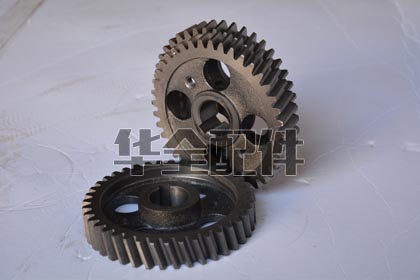
Metal components (pistons, bearings, gears) have indefinite shelf life if stored in original packaging in a dry environment. Rubber components (belts, hoses, seals, O-rings) degrade over 5-10 years depending on storage conditions (cool, dark, ozone-free environment extends life). Filters have a 3-5 year shelf life — the filter media and adhesives can degrade. Oil and coolant have 2-5 year shelf life unopened. Rotate your spare parts inventory to use oldest stock first.
4. Can I mix different brands of spare parts on the same engine?
Yes, for most non-critical external components. For example, using a Fleetguard oil filter with a Mann+Hummel fuel filter is perfectly fine. However, internal components that are manufactured as matched sets should stay together: pistons and rings from the same manufacturer and same specification, bearings from a matched set. Never mix piston brands within the same engine, and always use a complete gasket set from the same manufacturer rather than piecing together individual gaskets.
5. Why do diesel generators need different oil than gasoline engines?
Diesel engines produce more soot and combustion byproducts (from higher compression and different fuel chemistry), creating acidic conditions in the oil. Diesel engine oil (API CK-4, CJ-4 ratings) contains higher levels of detergents, dispersants, and acid neutralizers (measured as Total Base Number or TBN). Using gasoline engine oil in a diesel generator leads to rapid oil degradation, sludge formation, and accelerated engine wear.
6. How often should I test my spare injectors before putting them in service?
New genuine OEM injectors from sealed packaging can be installed without testing. Aftermarket injectors or OEM injectors that have been in storage for more than 2 years should be pop-tested before installation to verify opening pressure, spray pattern, and leak-down. Injector test benches are available at most diesel service shops. The cost of testing (~$25-50 per injector) is negligible compared to the cost of a damaged piston from a malfunctioning injector.
7. What spare parts are most commonly needed during extended outages?
During multi-day outages where a generator runs continuously, the most common failure points are: fuel filters (clogging from stirred-up tank sediment), drive belts (heat and continuous flexing), coolant hoses (heat aging accelerated by continuous operation), and batteries (if the charger is undersized for continuous cycling). For outages exceeding one week, oil and filter change supplies become critical — generators typically need an oil change every 250 hours, which is about 10 days of continuous operation.
8. How do I properly dispose of used diesel generator spare parts and fluids?
Used oil, coolant, and filters are classified as hazardous waste in most jurisdictions. Used oil must be collected in sealed containers and recycled through a licensed waste oil recycler. Used oil filters should be hot-drained and recycled as scrap metal. Coolant must be collected separately (not mixed with oil) and processed by a licensed facility — ethylene glycol is toxic to aquatic life. Metal components (pistons, bearings, gears) can be recycled as scrap metal. Check local regulations for specific disposal and recycling requirements in your area.
Related Articles
- Generator Engine Parts — Systems Overview
- Detailed Generator Engine Components Guide
- OEM vs Aftermarket Generator Parts
- Complete Generator Maintenance Guide
- Generator Troubleshooting Guide
- Generator Fuel System Parts
- Generator Lubrication System Components
- Generator Cooling System Parts
- Generator Turbocharger Parts
- Generator Filters — Complete Guide
X8(宽)X13长_3(厚)X6宽X14长-1.jpg)
X8(宽)X13长_3(厚)X6宽X14长.jpg)
X8(宽)X13长_3(厚)X6宽X14长-2.jpg)