
Generator Exhaust System Parts — Components, Design, and Safety
The exhaust system serves three critical functions on a generator set: safely routing combustion gases away from the engine and building occupants, reducing noise to acceptable levels, and managing exhaust back pressure within engine manufacturer limits. A properly designed exhaust system is essential for safety (carbon monoxide is lethal), regulatory compliance (noise ordinances), and engine performance (excessive back pressure robs power and increases fuel consumption).
Exhaust System Components
| Component | Function | Design Considerations |
|---|---|---|
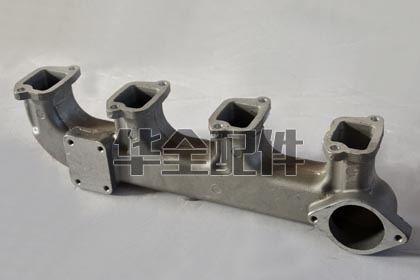
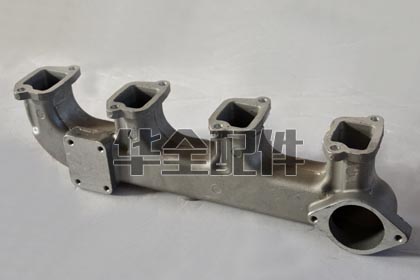
| Exhaust Manifold | Collects exhaust from each cylinder and routes to the turbocharger or exhaust pipe | Should be insulated to reduce engine room temperature and personnel burn risk |
| Expansion Joint / Flexible Bellows | Absorbs thermal expansion and engine vibration; prevents stress on manifold and piping | Must be stainless steel for durability; position close to the engine exhaust outlet |
| Exhaust Piping | Carries exhaust from engine to silencer and discharge point | Use schedule 10 or 40 steel pipe (not thin-wall tubing); galvanized pipe releases toxic fumes when heated — use black steel or stainless steel |
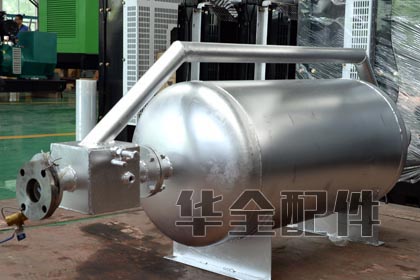
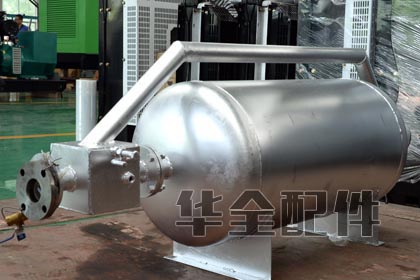
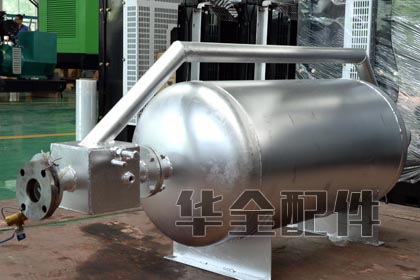
| Silencer / Muffler | Reduces exhaust noise through absorption, reflection, or combination design | Critical for noise compliance; residential grade typically 25-35 dBA reduction; critical/hospital grade 35-50 dBA reduction |
| Rain Cap / Flapper | Prevents rain and debris from entering exhaust when engine is not running | Must open freely with exhaust flow; counterweighted or spring-loaded for vertical discharge |
| Exhaust Insulation / Lagging | Contains heat within the pipe; reduces engine room temperature; protects personnel | Required for indoor installations; reduces surface temperature from 500°C to <60°C |
| Condensate Drain | Drains condensed moisture from low points in the exhaust system | Install at all low points in horizontal runs; must be trapped to prevent exhaust gas leakage |
Exhaust Back Pressure Limits
| Engine Type | Maximum Back Pressure | Effect of Exceeding |
|---|---|---|
| Naturally Aspirated Diesel | 75-85 mbar (1.1-1.2 psi / 3 inches Hg) | Power loss; increased fuel consumption; elevated EGT |
| Turbocharged Diesel | 50-65 mbar (0.7-0.9 psi / 2 inches Hg) | Reduced turbo efficiency; higher EGT; increased fuel consumption; turbo surge possible |
| Naturally Aspirated Gas | 50 mbar (0.7 psi) | Power loss; combustion instability |
| Turbocharged Gas | 35-50 mbar (0.5-0.7 psi) | Significant power loss; turbo efficiency drops; potential knock |
Silencer Grades and Noise Reduction
| Grade | Typical Noise Reduction | Application | Back Pressure |
|---|---|---|---|
| Industrial / Commercial | 12-18 dBA | Industrial areas with minimal noise restrictions | Low |
| Residential | 18-25 dBA | Urban/suburban areas; meets most municipal noise codes | Moderate |
| Critical | 25-35 dBA | Hospitals, hotels, noise-sensitive locations | Moderate-High |
| Hospital / Super Critical | 35-50 dBA | Extreme noise sensitivity; often requires combined silencer + secondary | High (careful back pressure calculation required) |
Frequently Asked Questions
1. How do I size the exhaust pipe for my generator?
Exhaust pipe diameter is determined by: (1) engine exhaust flow rate (CFM) from engine data sheet, (2) total pipe length and number of bends, and (3) silencer back pressure. General sizing guidelines: keep exhaust gas velocity between 30-50 m/s (100-165 ft/s) for adequate noise control without excessive back pressure. A too-small pipe creates excessive back pressure and noise; a too-large pipe increases cost, takes more space, and can cause condensation issues. Always calculate total system back pressure (pipe friction + silencer + bends) and verify it is within the engine manufacturer’s limit.
2. Why is my generator exhaust smoking white?
White smoke from a diesel generator exhaust typically indicates: (1) during cold start: unburned fuel vapor — normal and should clear within minutes as the engine warms up, (2) persistent white smoke after warm-up: coolant entering the combustion chamber (head gasket failure, cracked head, or liner O-ring leak) — sweet smell confirms coolant, (3) white smoke with rough running: injector issue causing incomplete combustion in one or more cylinders, or (4) very light white vapor: normal condensation in the exhaust system on cold, humid days — this is steam, not smoke. Distinguish: white smoke that dissipates quickly is steam; white smoke that lingers and has an odor is unburned fuel or coolant.
3. Can I route my generator exhaust through an existing chimney or vent?
Generally not recommended unless the chimney/vent was specifically designed for generator exhaust. Issues: (1) sizing — a chimney sized for a furnace or water heater will create excessive back pressure for a generator, (2) materials — masonry chimneys without a stainless steel liner deteriorate from acidic diesel exhaust condensate, (3) cross-contamination — other appliances sharing the vent can back-draft generator exhaust into the building, and (4) code compliance — most building and fire codes require dedicated, independent exhaust systems for generator sets. Install a dedicated generator exhaust system meeting the manufacturer’s specifications.
4. How far away from the building should the exhaust discharge be located?
Minimum requirements (verify with local codes): (1) 10 feet (3 meters) from any building opening (windows, doors, fresh air intakes), (2) 10 feet from property lines where adjacent buildings exist, (3) discharge directed away from occupied areas, (4) above roofline if possible to disperse exhaust gases, and (5) not near HVAC condenser units (exhaust soot fouls condenser coils). For rooftop installations: discharge at least 3 feet above the roof surface and 10 feet from any air intake. Carbon monoxide is the primary concern — a CO monitor in the building is essential regardless of exhaust placement.
5. What exhaust insulation or heat shielding is required for indoor generators?
Indoor generator exhaust piping must be insulated: (1) from the engine exhaust manifold/flange to the point where the pipe exits the building, and (2) in any area where personnel can contact the pipe. Insulation requirements: (a) reduces outer surface temperature to below 60°C (140°F) — the threshold for instant burn injury, (b) fire-rated insulation meeting local building codes (typically mineral wool or calcium silicate), and (c) weatherproof jacketing (aluminum or stainless steel) for outdoor sections. Additionally: maintain minimum clearance to combustible materials as specified by local codes — typically 9-18 inches (230-460 mm) for uninsulated pipe and 1-3 inches (25-75 mm) for insulated pipe.
6. How do I calculate the total back pressure of my exhaust system?
Total back pressure = pipe friction loss + silencer loss + fitting (bend) losses. Pipe friction: calculated from pipe diameter, exhaust flow rate (CFM), pipe length, and gas properties using duct friction charts or online exhaust system calculators. Each 90-degree bend adds the equivalent of 3-5 meters (10-15 feet) of straight pipe. Silencer loss: specified by the silencer manufacturer at the rated flow — verify this value is at YOUR engine’s exhaust flow, not some generic rating. If the calculated total exceeds the engine manufacturer’s limit: increase pipe diameter, reduce the number of bends, select a lower-restriction silencer, or shorten the pipe run. A measurement after installation using a manometer at the exhaust manifold confirms the calculation.
Related Articles
- Generator Engine Parts — Systems Overview
- Generator Turbocharger Parts Guide
- Generator Troubleshooting Guide
- Complete Generator Maintenance Guide
- Generator Mufflers and Silencers
- Generator Lubrication System
- Generator Cooling System Parts
Product Gallery
Boling
Cummins
Various
FAQ
Q: What are the main components of a generator exhaust system?
A: A generator exhaust system consists of: (1) Exhaust Manifold — collects exhaust gases from each cylinder into a single outlet. Water-cooled (jacket manifold) or dry (insulated cast iron); (2) Flexible Bellows/Expansion Joint — absorbs thermal expansion and engine vibration, preventing stress cracking of rigid piping. Made of stainless steel bellows with internal liner and external braid; (3) Exhaust Piping — carbon steel (Schedule 40 minimum) or stainless steel for corrosion resistance. Sized for minimal backpressure; (4) Muffler/Silencer — reduces exhaust noise by 15-50 dBA depending on grade (Industrial/Residential/Critical/Hospital); (5) Rain Cap/Cowl — prevents rain, snow, and debris from entering the vertical exhaust stack when not running; (6) Condensate Drain — drains accumulated moisture from the low point; (7) Support Hangers — support piping weight and allow thermal expansion; (8) Insulation/Lagging — thermal insulation for 400-600 degrees C surface temperatures.
Q: What is the maximum allowable exhaust backpressure for a diesel generator?
A: Exhaust backpressure limits are engine-specific and CRITICAL for performance. Typical limits: Naturally aspirated engines: 50-75 mm H2O (0.05-0.075 bar). Turbocharged engines: 75-100 mm H2O (0.075-0.10 bar) measured at the turbocharger outlet. Exceeding limits causes: (1) Reduced engine power — each 25mm H2O above limit reduces power by 1-2%; (2) Increased exhaust temperature — 10-20 degrees C per 25mm excess backpressure; (3) Turbocharger overspeed; (4) Increased fuel consumption. Common causes: undersized piping, too many bends (each 90-degree elbow = 3-5m equivalent straight pipe), clogged silencer, collapsed bellows liner, or stuck rain cap. Measure backpressure at the turbo outlet with a manometer at full load as a commissioning test.
Q: Which generator engines does HUAQUAN supply exhaust manifolds for?
A: HUAQUAN supplies exhaust manifolds (both dry and water-cooled types) for: Cummins (4BT, 6BT, 6CT, ISB/QSB, ISC/QSC, ISL/QSL, ISM/QSM, KTA19/38/50, NTA855), Perkins (1100-4000 series), Deutz (912-2015 series), Volvo Penta (TAD series), MTU (Series 60, 2000/4000), Weichai (WP4-WP13, WD615/618, 12M series), Yuchai (YC4-YC6, YCK series), Shangchai (SC4-SC27), Weifang (4100-6126), SDEC, and other Chinese brands. Available as complete assemblies with gaskets and mounting hardware or individual sections for multi-piece manifold designs. All castings are high-silicon molybdenum ductile iron or Ni-Resist for turbocharged engines with exhaust temperatures up to 750 degrees C.
Q: What type of muffler/silencer does my generator need?
A: Silencer grades by noise reduction: Industrial Grade (15-25 dBA reduction) — for factories, construction sites. Residential Grade (25-35 dBA) — for urban areas. Critical Grade (35-45 dBA) — for hospitals, hotels. Hospital Grade (45-50+ dBA) — for noise-sensitive environments. Three physical types: (1) Reactive/Chamber — uses expansion chambers and tubes, good low-frequency attenuation; (2) Absorptive — uses sound-absorbing material (fiberglass, mineral wool), better high-frequency attenuation; (3) Combination — reactive chambers + absorptive packing, best all-around. Silencer size increases with exhaust flow — a 500kW generator requires a silencer 3-4x the volume of a 100kW silencer.
Q: How do I prevent exhaust leaks in the generator exhaust system?
A: Exhaust leak prevention: (1) Use proper gaskets — graphite-impregnated stainless steel or spiral-wound stainless steel at all flanged joints. Never use standard fiber gaskets; (2) Slip joints must allow thermal expansion — use high-temp silicone rated for 350 degrees C continuous or install flexible bellows; (3) Re-torque all bolted flanges after the first heat cycle; (4) Support the exhaust system to prevent weight load on manifold studs; (5) Allow for thermal expansion — a 10-meter carbon steel exhaust pipe at 500 degrees C expands approximately 60mm; (6) Condensate management — the low point collects acidic condensate (pH 2-4). A drain with trap prevents this corrosive liquid from pooling.
Q: Why is exhaust insulation important and what type should I use?
A: Exhaust insulation serves three purposes: (1) Personnel protection — exhaust surface temperatures of 400-600 degrees C cause instant third-degree burns. Insulation reduces surface to below 60 degrees C; (2) Fire safety — uninsulated exhaust pipes radiate enough heat to ignite combustible materials at 300-500mm distance; (3) Performance — insulating upstream of the turbocharger maintains exhaust gas energy for turbo response. Insulation types: removable blankets (fiberglass/mineral wool with silicone cover, stainless fasteners), pre-formed calcium silicate sections with aluminum cladding, or spray-on ceramic insulation. Minimum thickness: 50mm for indoor, 75mm where fire rating is critical.
Q: How do I size the exhaust piping for my generator?
A: Exhaust pipe sizing: (1) Start with the engine’s exhaust outlet diameter — the pipe should be AT LEAST this size everywhere; (2) Calculate the equivalent length: straight pipe + equivalent lengths for fittings (90-degree elbow = 30 pipe diameters, 45-degree = 15 diameters, bellows = 20 diameters); (3) Consult the engine manufacturer’s exhaust backpressure curve — shows backpressure vs pipe diameter; (4) If backpressure exceeds limit, increase diameter — each 25mm increase roughly halves backpressure; (5) Vertical stack must extend above roofline per building codes, typically 1-2m above highest point within 3m radius. HUAQUAN’s application engineers can calculate exact pipe size for your specific generator and site layout.
Q: What are flexible exhaust bellows and when are they required?
A: Flexible bellows (expansion joints) are stainless steel corrugated elements that isolate engine vibration from rigid exhaust piping and absorb thermal expansion. They are MANDATORY in every generator exhaust system. Install as close to the exhaust manifold outlet as possible, BEFORE any rigid support. One bellows at the engine connection, another at building wall penetration if outdoor section is rigidly supported. Never use bellows to correct misalignment — pipes must be perfectly aligned. Inspect annually for braid wire breakage, bellows element cracking (look for soot marks), and inner liner collapse. A failed bellows internal liner partially blocks flow, causing sudden increase in backpressure.
Q: What causes black smoke and how is it related to exhaust system issues?
A: Black smoke (soot) indicates incomplete combustion — too much fuel for available air. Exhaust system causes: (1) High exhaust backpressure — restricted pipe, clogged silencer, or collapsed bellows liner reduces available air; (2) Exhaust leak before the turbocharger — reduces exhaust energy reaching turbine, reducing boost; (3) Wastegate stuck open — bypasses exhaust around turbine; (4) Damaged intercooler — hot intake air has lower oxygen density. Engine/fuel causes (often confused): worn injectors, retarded timing, clogged air filter, or engine overload. Black smoke deposits soot on turbo blades and heat exchanger surfaces, progressively degrading performance.
Q: Why do I need a condensate drain in the exhaust system?
A: Exhaust condensate forms when hot exhaust cools below dew point (~50-60 degrees C) after shutdown. The condensate is acidic (pH 2-4) containing sulfuric and nitric acid. Without a drain: (1) Acidic condensate pools and corrodes through carbon steel pipe in 2-5 years; (2) Condensate can flow backward into the engine through open exhaust valves, causing cylinder corrosion and potential hydrolock; (3) Condensate into the turbocharger on next start causes thermal shock. The drain must be at the absolute lowest point, include a water trap to prevent exhaust gas leakage during operation, and be accessible for inspection. In freezing climates, the trap must be heat-traced.
Q: What is a catalytic converter/SCR system on diesel generators?
A: Diesel Oxidation Catalyst (DOC): flow-through honeycomb coated with precious metals that oxidizes CO and hydrocarbons. 90%+ efficient, requires exhaust above 200 degrees C to ‘light off.’ Diesel Particulate Filter (DPF): wall-flow ceramic filter trapping soot. Must periodically regenerate at 600-650 degrees C. Rare on stationary generators due to steady-state high temperatures. Selective Catalytic Reduction (SCR): injects urea (DEF/AdBlue) into exhaust; urea decomposes to ammonia, reacting with NOx over catalyst to form N2 and H2O. 90%+ NOx reduction. Required for Tier 4 Final/Stage V on generators above 560kW. SCR adds significant complexity: DEF tank, dosing pump, injector, NOx sensors, and catalyst.
Q: How do I prevent corrosion in the generator exhaust system?
A: Exhaust corrosion prevention: (1) Material selection — 304 stainless for outdoor/coastal (3-5x longer life), 316 stainless for offshore/marine. Carbon steel acceptable for dry indoor with proper insulation; (2) Condensate management — slope all horizontal runs 10-20mm/meter toward drain. No horizontal sections without slope; (3) Insulation — covering indoor runs keeps exhaust above dew point, preventing internal condensation; (4) Rain cap — prevents water entry when not running; (5) Routine inspection — check for rust, pitting, wall thickness (ultrasonic gauge every 5 years); (6) Internal corrosion is invisible — when replacing any section, cut open old pipe to assess condition; (7) Avoid cold-idle operation — extended idle keeps exhaust too cold, accelerating corrosion.
Q: What are the safety considerations for generator exhaust systems?
A: Exhaust safety is critical because diesel exhaust contains carbon monoxide (CO), nitrogen oxides (NOx), and particulate matter: (1) CO is odorless and lethal at 400 ppm within hours. Exhaust outlet must be at least 1.5-2m from any building opening and directed away from occupied areas; (2) Prevent exhaust recirculation into generator room air intake; (3) Exhaust pipe is an ignition source — keep fuel tanks and vents well separated; (4) Exhaust surface is 400-600 degrees C — insulation mandatory in personnel areas; (5) Building penetrations — use insulated, fire-rated wall thimbles; (6) Install CO detectors in generator room and adjacent occupied spaces; (7) Disperse exhaust to prevent nuisance odor — tall stack with rain cap directs gas upward for atmospheric dispersion.
Q: How do I troubleshoot excessive exhaust noise from my generator?
A: Excessive noise diagnosis: (1) Identify noise type — sharp ‘crack’ or ‘pop’ indicates exhaust leak at flange/gasket. Rumbling/droning usually normal but poorly attenuated — silencer undersized or packing blown out; (2) Check for exhaust leaks before silencer — look for soot marks at every flange, gasket, and weld; (3) Silencer internal failure — tap shell with hammer. A dead ‘thud’ vs metallic ring indicates packing saturated or gone; (4) Water in silencer — condensate trapped causes bubbling/gurgling. Check drain; (5) Compare noise levels to baseline — measure at 1m from outlet and 7m at property line; (6) Exhaust noise gradually increasing suggests packing degradation. Sudden increase suggests mechanical failure (crack, hole, flange separation). Replace rather than repair absorbent silencers.