What is a generator water pump and how does it work?
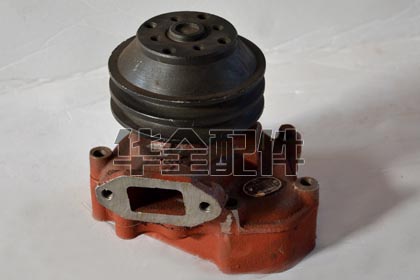
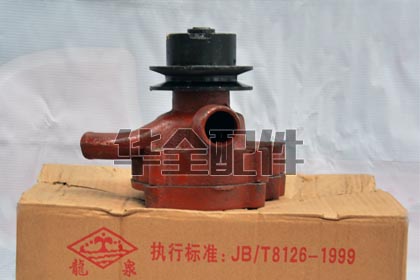
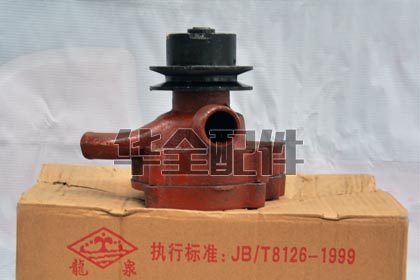
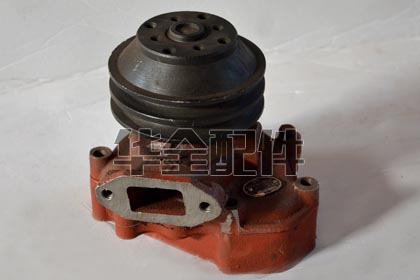
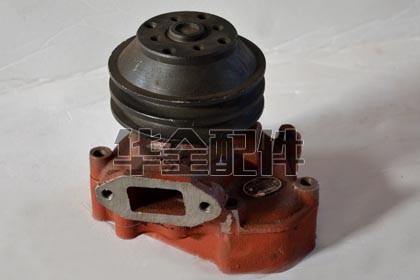
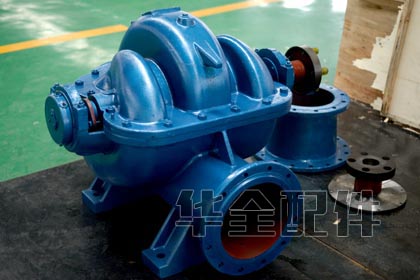
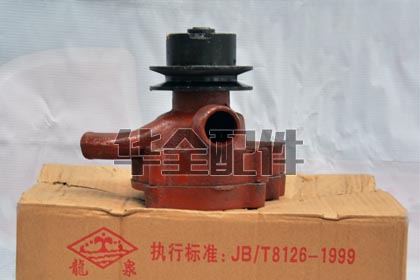
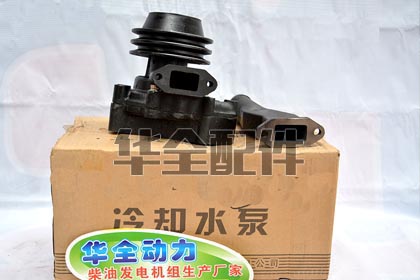
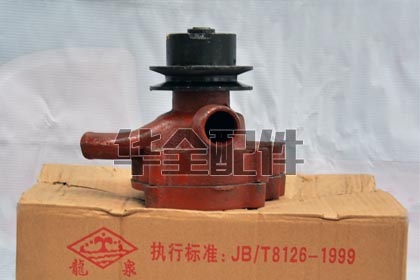
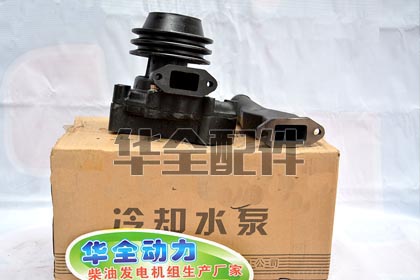
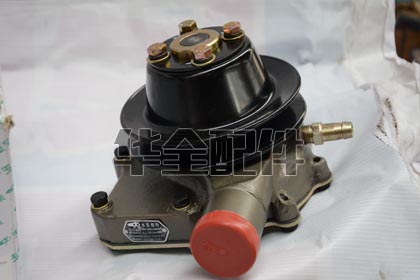
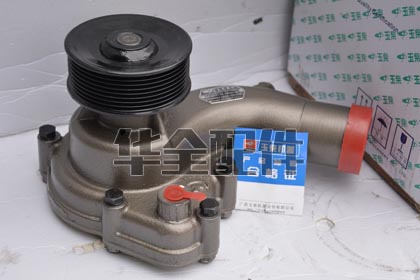
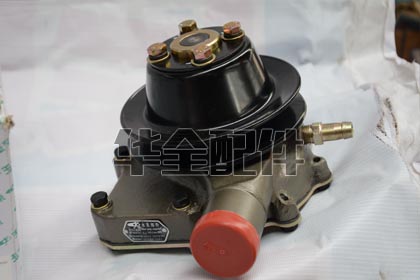
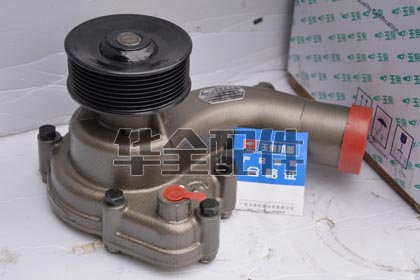
The water pump (coolant pump) is a belt-driven or gear-driven centrifugal pump that circulates coolant through the engine block, cylinder head, and radiator. It operates on the centrifugal principle: an impeller rotating at 1-2x crankshaft speed (1,500-3,600 RPM for a 1,500/1,800 RPM generator engine) spins inside a volute housing, throwing coolant outward from the center by centrifugal force. This creates a low-pressure zone at the center (inlet from the radiator bottom hose) and a high-pressure zone at the periphery (outlet to the engine block). The pump does not create pressure in the sense of a positive-displacement pump — it creates flow by imparting velocity energy to the coolant, which is converted to pressure in the volute. Typical flow: 200-500 liters per minute for a 500-1,000kW generator engine, circulating the entire coolant volume (typically 40-100 liters) through the system every 6-12 seconds. The water pump is a relatively simple component, but its failure is critical — within 2-5 minutes of pump failure, the engine will overheat and require shutdown.
What are the symptoms of a failing water pump?
Failure indicators: (1) Coolant leak from the weep hole — the weep hole is a small port (3-5mm) on the underside of the pump body between the shaft bearing and the mechanical seal. Its purpose is to provide a visible warning when the seal is failing — coolant dripping from the weep hole means the mechanical seal has worn and coolant is bypassing. A few drops is a warning; a steady drip/stream means the seal has failed; (2) Overheating — the pump is not circulating sufficient coolant; (3) Grinding or rumbling noise from the pump — shaft bearing failure. The noise changes with engine RPM; (4) Coolant in the engine oil (milky oil) — the pump shaft seal and bearing have failed to the extent that coolant is migrating along the shaft into the crankcase (through the timing case); (5) Visible corrosion or damage to the pump housing — especially around the hose connections and thermostat housing flange; (6) Wobbling pump pulley — the shaft bearing has excessive play, visible as a pulley that does not track true. A failing water pump must be replaced — it cannot be economically repaired.
How often should a generator water pump be replaced?
Water pumps do not have a strict replacement interval — they are replaced on condition. However, prudent practice: (1) Replace the water pump at every major engine overhaul (10,000-25,000 hours) — the pump bearings and seal have accumulated the same hours as the rest of the engine and are at the end of their statistically reliable life; (2) Replace if the weep hole shows any sign of leakage — do not wait for it to become a steady drip. The mechanical seal is a precision lapped face seal that requires clean coolant to function. Once it begins to wear, it will only deteriorate; (3) Replace if the engine has experienced an overheating event — the high temperature can damage the seal elastomers and cause the impeller to distort; (4) Inspect the impeller at every major service (if accessible) — cavitation erosion or corrosion on the impeller blades reduces flow and will progressively worsen. The cost of replacing a water pump ($100-500 for most generator engines) is trivial compared to the cost of an engine destroyed by overheating.
Which engine brands are HUAQUAN water pumps compatible with?
HUAQUAN water pumps are manufactured for: Cummins (4BT-6CT, ISB-ISL, QSB-QSL, NT855, KTA19/38/50, QSK), Perkins (1103-4008), Deutz (912-2015), Weichai (WD615/618, WP10/12/13/17, 226B, 6160-6200), Yuchai (YC4-YCK), Shangchai (SC4H-SC33W), and all Chinese diesel platforms. Each pump is supplied as a complete assembly with: pump housing, impeller, shaft, bearings, mechanical seal, and gasket/O-ring. Pumps are pressure-tested to 1.5x rated pressure and flow-tested on a calibration bench. Also available: water pump repair kits (bearings, seal, gaskets — for pumps with reusable housings).
What is a water pump mechanical seal and how does it fail?
The mechanical seal is the component that prevents coolant from leaking out along the pump shaft where it exits the pump housing. It consists of two ultra-flat lapped faces (one ceramic and one carbon-graphite, or two ceramic faces) — one stationary in the pump housing, one rotating with the shaft — pressed together by a spring. The faces are lapped to a surface finish of 0.1-0.2 microns Ra and rotate against each other, separated by a microscopic film of coolant that lubricates and cools the faces. Failure mechanisms: (1) Abrasives in the coolant — sand, rust particles, or casting sand from the engine block trapped between the seal faces score the precision surfaces; (2) Chemical attack — degraded coolant (acidic) etches the ceramic face; (3) Dry running — the pump is operated without coolant (dry start after draining without refilling), causing the seal faces to friction-weld within seconds; (4) Overheating — the coolant temperature exceeds the seal's maximum rating (typically 120-135 degrees C for standard seals), the seal elastomers harden, and the spring loses tension; (5) Vibration/bearing failure — a failing bearing allows the shaft to wobble, unseating the seal faces intermittently.
What causes water pump cavitation?
Cavitation occurs when the pressure at the pump inlet drops below the coolant's vapor pressure, causing vapor bubbles to form. These bubbles collapse violently when they reach a higher-pressure region (the impeller vanes), creating microscopic water-hammer impacts that erode the impeller and housing. Causes: (1) Restricted radiator or coolant passages — the pump inlet pressure is too low because the system is restrictive; (2) Overheating — coolant at 105+ degrees C has a higher vapor pressure and cavitates more easily; (3) High RPM — pumping too fast for the inlet system design (rare on generator engines at fixed speed, but possible if the engine has been repowered with a higher-speed engine); (4) High-altitude operation — lower atmospheric pressure reduces the margin to the vapor pressure; (5) Pump inlet hose collapse — a soft old hose can collapse under suction at high RPM, momentarily starving the pump inlet. Cavitation damage appears as pitting, erosion, or a 'spongy' appearance on the impeller blades and pump housing. Prevention: maintain coolant level, use the correct pressure cap, and replace collapsing hoses.
What is the correct drive belt tension for a water pump?
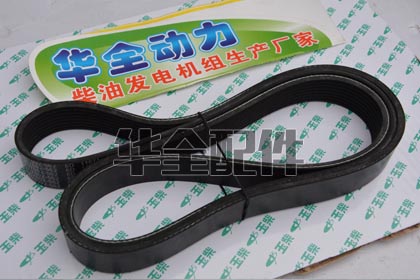
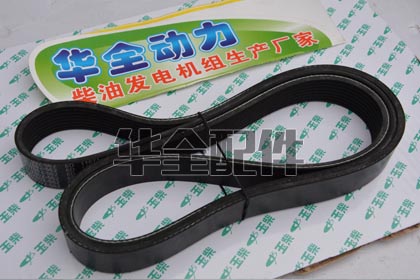
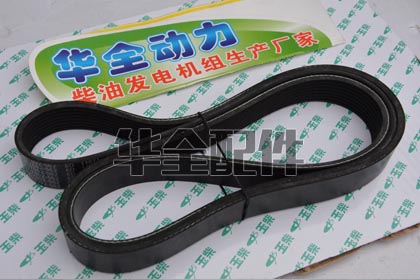
Belt tension specification (for belt-driven pumps): typically 10-15mm deflection with moderate thumb pressure (10-12 kg force) at the midpoint of the belt span between pulleys. More precise: use a belt tension gauge — typical specification 400-600N (40-60 kg) for a new V-belt, 300-450N for a used belt. Consequences of incorrect tension: too loose — the belt slips, especially at start-up when the pump requires maximum torque to accelerate the coolant column. Slipping glaze the belt and pulley, reducing friction further in a vicious cycle. The pump under-delivers flow, and the engine overheats. Too tight — the belt transfers excessive radial load to the pump shaft bearing, reducing its life by 50-80%. The belt also stretches and fails prematurely. Tension adjustment: loosen the alternator or tensioner mounting bolts, pivot the component to achieve the correct tension, and tighten while maintaining tension. Always check tension after the first 50-100 hours on a new belt — new belts stretch initially.